Sensors placed under city to measure geothermal heating potential
Geothermal heating uses the Earth’s natural underground heat, akin to a natural radiator.
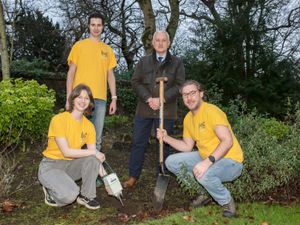
Sensors monitoring Aberdeen’s geothermal heating potential are being installed underground throughout the city.
The 100 sensors, or seismic nodes, are being placed across a mixture of public and private green spaces to record the natural and manmade vibrations from waves, wind and traffic.
They will remain in place for one to two months, and will be used to create what researchers have called a 3D subsurface map.
Geothermal heating uses the Earth’s natural underground heat, akin to a natural radiator.
Water is pumped underground where it is heated up, and it is then pumped back out to be used to heat buildings.
The sensors are around 10cm x 10cm x 30cm in size and are being covered by a thin layer of soil.
The seismic noise recorded is intended to measure 5km in depth beneath the city.
The sensors, installed by volunteers, will cover the area spanning the Bridge of Don to Nigg, and inland as far as Hazlehead.
The data obtained by researchers will show them where geothermal heating will work best in the city.
The project, titled the Aberdeen Geothermal Feasibility Pilot, aims to find new ways to bring in low-carbon heating and is led by researchers from the University of Aberdeen.
It is being funded through a £1 million grant from UK Research and Innovation, and is supported by a number of organisations, including NHS Grampian, Aberdeen City Council, other universities, and the British Geological Survey.
The project will also involve a 500 metre-deep borehole being drilled on the university’s King’s College Campus, which will monitor temperature, geology and hydrology.
Dr Amy Gilligan, a researcher on the project, said: “This marks the beginning of an exciting stage of the project.
“By placing these small sensors in the ground, we can safely and quietly listen to natural vibrations and build a picture of the rocks deep below Aberdeen.
“Most people won’t notice the sensors once they are in place but what we learn will help us understand whether geothermal heat could one day provide a clean, local source of heating for homes and public buildings, reducing carbon emissions and support a more sustainable energy future for Aberdeen.”