Palestine Action co-founder wins High Court challenge but group remains banned
Huda Ammori, Palestine Action’s co-founder, took legal action against the Home Office over the ban, which came into force last July.
Palestine Action remains banned as a terror group despite its co-founder winning a High Court challenge.
Huda Ammori took legal action against the Home Office over then-home secretary Yvette Cooper’s decision to proscribe the group under the Terrorism Act 2000.
Judge Dame Victoria Sharp said she won her challenge on two grounds, but the ban would remain to allow further arguments and the Government time to consider an appeal.
The ban, which began on July 5 last year, made membership of, or support for, the direct-action group a criminal offence punishable by up to 14 years in prison, with thousands having since been arrested for supporting the group.
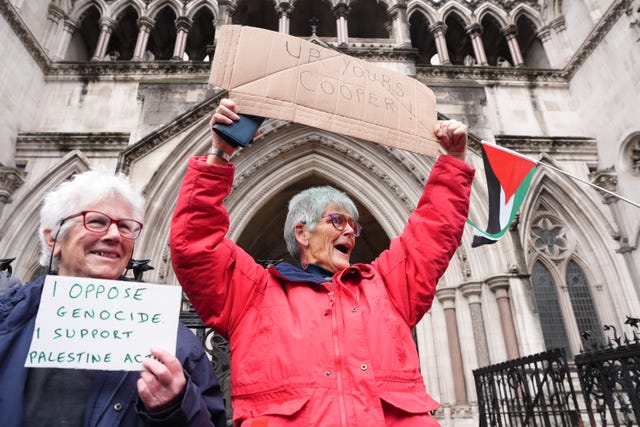
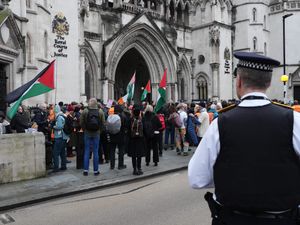
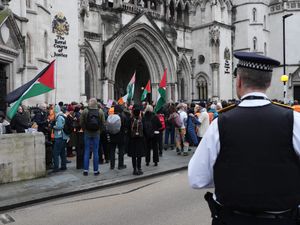
About a hundred people gathered outside the High Court building in central London cheering and chanting “Free Palestine” as the decision was announced.
At a hearing late last year, lawyers for Ms Ammori told the High Court that the ban was an “ill-considered, discriminatory, due process-lacking, authoritarian abuse of statutory power”.
Barristers for the Home Office, which is defending the challenge, said the move “strikes a fair balance” and that those who support Palestine Action can still protest without breaking the law.
Reading out a summary of their ruling, Dame Victoria Sharp, sitting with Mr Justice Swift and Mrs Justice Steyn, said that Ms Ammori’s challenge succeeded on two of four grounds of challenge.
Ms Ammori began her legal challenge against the decision in June before failing in a last-minute bid on July 4 to block the ban from taking effect.
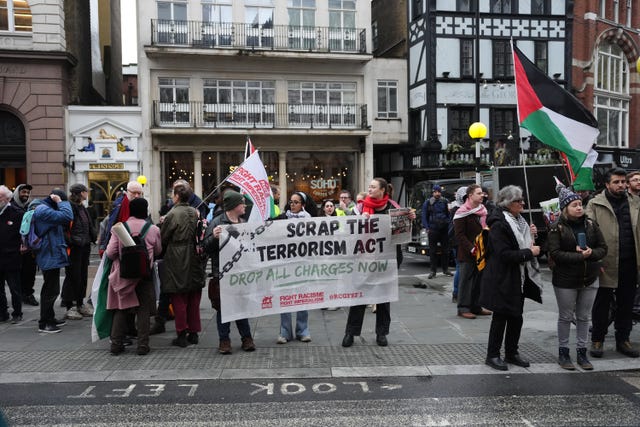
In October, the Home Office lost a Court of Appeal bid to block the challenge from proceeding, with judges dismissing the department’s argument that Ms Ammori should challenge the decision through the Proscribed Organisations Appeal Commission, rather than at the High Court.
Opening the full hearing of the challenge in November, Raza Husain KC, for Ms Ammori, told the High Court that there had been more than 2,000 arrests after Palestine Action’s proscription, including “priests, teachers, pensioners, retired British Army officers” and an “81-year-old former magistrate”.
He continued that the ban was “alien to the basic tradition of common law and the European Convention on Human Rights”.
Owen Greenhall, also for Ms Ammori, said that protesters holding up signs which read “I support Palestine Action” was “very much classic civil disobedience territory that has a huge history”.
He continued: “The breach of unjust laws is absolutely classic civil disobedience territory.
“The consequence of the (Home Secretary’s) position is that Rosa Parks would not have any weight to her right to freedom of expression, simply because she deliberately chose not to move on a bus, and that demonstrates the absurdity of the point.”
On the first day of the hearing, police arrested 143 people after demonstrations took place in support of Palestine Action.
The court also heard written evidence from Normal People author Sally Rooney in support of the challenge, after she previously said she would donate earnings from her books and BBC adaptations of novels to Palestine Action.
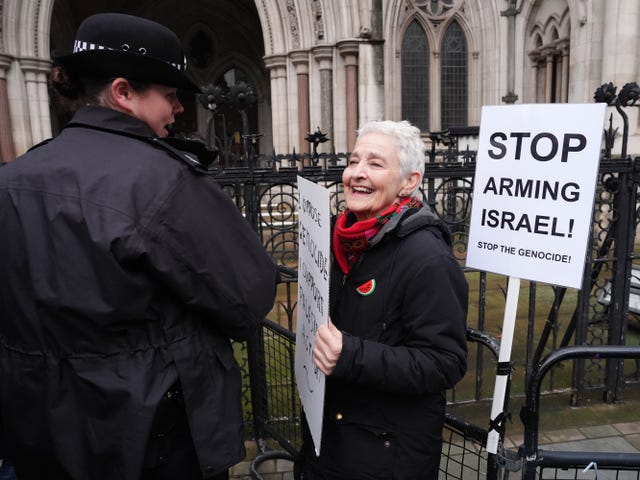
Ms Rooney said it was “unclear” whether any UK company can make payments to her under anti-terror laws and that if she was prevented from profiting from her work, her income would be “enormously restricted”.
The Irish writer also said it is “almost certain” she cannot publish or produce new work in the UK while the ban remains in force.
Sir James Eadie KC, for the Home Office, said the ban “strikes a fair balance between interference with the rights of the individuals affected and the interests of the community”.
In written submissions, he said: “Whilst it has at all times been open to supporters of Palestine Action to protest against its proscription without breaking the law, certain individuals have instead repeatedly sought to flout Palestine Action’s proscription.”
Sir James added that the aim is “stifling organisations concerned in terrorism and for members of the public to face criminal liability for joining or supporting such organisations”.
He continued: “That serves to ensure proscribed organisations are deprived of the oxygen of publicity as well as both vocal and financial support.”