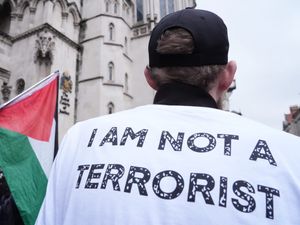
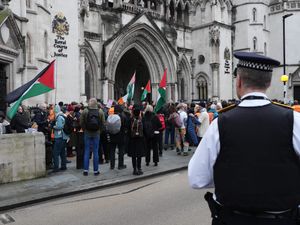
Judges say Palestine Action ban ‘disproportionate’ but group remains proscribed
The group’s co-founder, Huda Ammori, took legal action against the Home Office over the decision to ban the group last year.
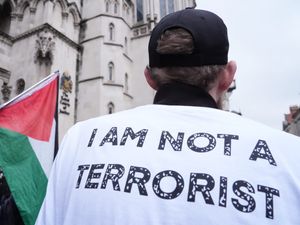
The decision to ban Palestine Action as a terror group was unlawful, “disproportionate” and should be overturned, the High Court has ruled.
The group’s co-founder, Huda Ammori, took legal action against the Home Office over then-home secretary Yvette Cooper’s decision last year to proscribe the group under the Terrorism Act 2000.
In a ruling on Friday, Dame Victoria Sharp said Ms Ammori had won on two of her four grounds of challenge but said the ban would remain to allow further arguments and the Government time to submit an appeal.
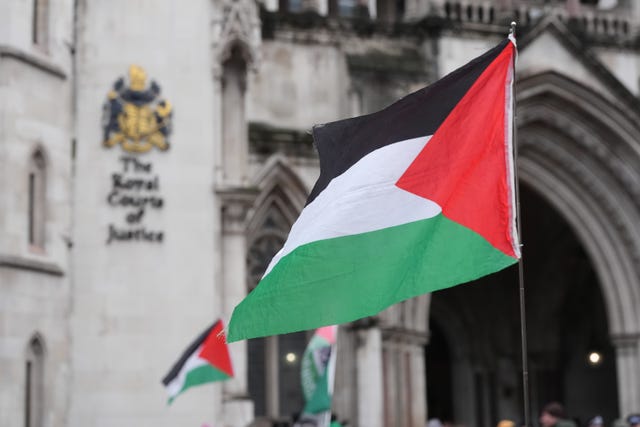
That means it currently remains a criminal offence to be a member of, or support, Palestine Action, with the Home Office stating that it will seek to challenge the ruling at the Court of Appeal.
In a 46-page ruling, Dame Victoria, sitting with Mr Justice Swift and Mrs Justice Steyn, said: “Deciding where the balance should be struck in this case is difficult.
“When striking the balance between issues such as these the court must permit some latitude to the Home Secretary given that she has both political and practical responsibility to secure public safety.
“Nevertheless, we are satisfied that the decision to proscribe Palestine Action was disproportionate.
“At its core, Palestine Action is an organisation that promotes its political cause through criminality and encouragement of criminality. A very small number of its actions have amounted to terrorist action.”
Dame Victoria later said that due to the “heavy penalties” imposed for breaching the ban, “it is reasonable to expect people to be risk averse, to adjust their behaviour and to avoid doing things that run any significant risk that they might commit any of those criminal offences”.
The judge added that people more closely associated with Palestine Action “may self-censor to a greater degree than others”.
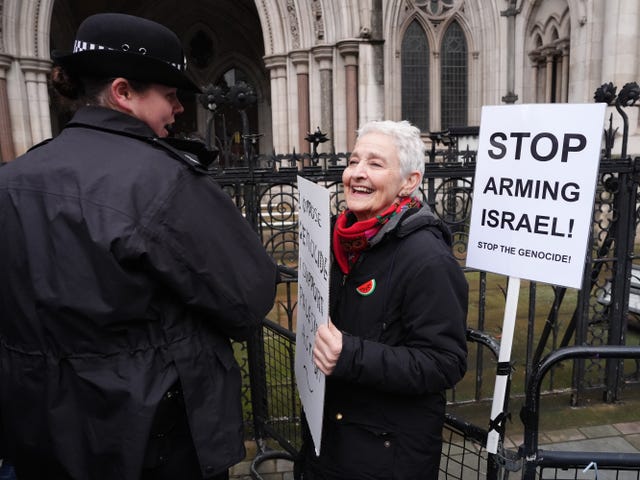
Reading a summary of her ruling in court, she said: “The nature and scale of Palestine Action’s activities falling within the definition of terrorism had not yet reached the level, scale and persistence to warrant proscription.”
The judge concluded in her judgment that “we propose to make an order quashing the Home Secretary’s decision to proscribe Palestine Action”, but said in court that the group remains proscribed pending further legal arguments over whether the quashing of the decision should be paused.
She said lawyers for Ms Ammori and the Home Office had until February 20 to provide written submissions on “the terms of the order that should be made”.
In a statement following the judgment, Ms Ammori said: “This is a monumental victory both for our fundamental freedoms here in Britain and in the struggle for freedom for the Palestinian people, striking down a decision that will forever be remembered as one of the most extreme attacks on free speech in recent British history.”
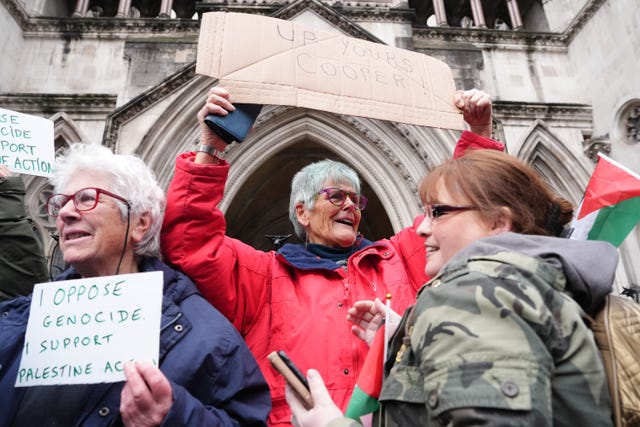
She continued: “This ban was unlawful, resulting in the unlawful arrest of nearly 3,000 people – among them priests, vicars, former magistrates and retired doctors – under terrorism laws for simply sitting in silence while holding signs reading: ‘I oppose genocide – I support Palestine Action’.
“It would be profoundly unjust for the Government to try to delay or stop the High Court’s proposed order quashing this ban while the futures of these thousands of people hang in the balance, many of whom are elderly or disabled and facing up to 14 years’ imprisonment for this entirely peaceful protest.”
Home Secretary Shabana Mahmood said she was “disappointed” by the ruling.
She said: “The proscription of Palestine Action followed a rigorous and evidence-based decision-making process, endorsed by Parliament.
“The proscription does not prevent peaceful protest in support of the Palestinian cause, another point on which the court agrees.
“As a former Lord Chancellor, I have the deepest respect for our judiciary.
“Home Secretaries must however retain the ability to take action to protect our national security and keep the public safe.
“I intend to fight this judgment in the Court of Appeal.”
In response to the ruling, the Metropolitan Police said while it would continue to identify offences where support for Palestine Action was being expressed, officers “will focus on gathering evidence of those offences and the people involved to provide opportunities for enforcement at a later date, rather than making arrests at the time”.
The force’s statement continued: “This is the most proportionate approach we can take, acknowledging the decision reached by the court while recognising that proceedings are not yet fully concluded.
“This approach relates solely to the expression of support for Palestine Action. We will continue to intervene and make arrests where we see people crossing the line from lawful protest to intimidate, to damage property, to use violence, to stir up racial hatred or to commit other offences.”