William impressed by ‘stunning’ nature reserve views on last day of Saudi visit
The future king is a long-term campaigner on wildlife conservation and spent time at Sharaan Nature Reserve.
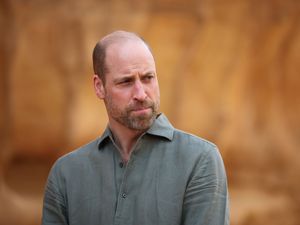
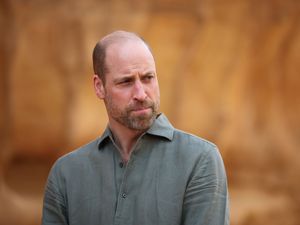
The Prince of Wales enjoyed the “stunning” desert landscape of a Saudi Arabian nature reserve as his Middle East visit drew to a close.
William was driven through towering red sandstone canyons and past sand dunes as he learnt about “exciting” conservation plans to reintroduce native animals including the Arabian leopard.
The future king is a long-term campaigner on wildlife conservation, and spent much of Wednesday morning at Sharaan Nature Reserve in AlUla province, a vast 1,540km square area of desert, mountain and former rangeland.

When the prince saw a formation known as the Dancing Rocks, twisted stone stowers shaped by wind and erosion, in the Raggasat Valley, he said: “It’s stunning scenery, it really is. I love looking down the valley as well.”
A fleet of more than 20 4x4s took William, British Embassy staff and Saudi officials on a driving tour of the sprawling reserve being developed as a leading cultural and heritage destination by culture minister Prince Badr bin Abdullah bin Farhan Al Saud.
William’s first stop was the Alqaliba Mountain viewpoint, with views of the rocky landscape, where he met a group of Saudi rangers who briefed him on their conservation efforts and commitment to the local community.
He asked Prince Badr, governor for the Royal Commission for AlUla (RCU): “Why is AlUla so special? Why the tourism and nature reserve?” and the prince replied: “We have the heritage and the natural topography here so it makes sense for the strategy of AlUla.”
Referring to the work of the rangers and the officials leading the wider regeneration project, William said: “That they have a vision to do this is really exciting – the tourism will come.

“What I find so exciting is it’s so new, this all started in 2019, it’s going to be so exciting to see all the progress. So many others will say, ‘if Saudi Arabia can do it, we can do it’.”
Later William travelled to the dancing stones and was told about the “crown jewel” of the reserve’s conservation plan – the reintroduction of the Arabian leopard into the area by 2035.
In preparation for their release, flora and fauna have been cultivated in the area, including the planting of acacia woodlands and shrubs, and native gazelles and Arabian oryx are being reintroduced as a food source for the big cat.
When William asked: “And the Arabian leopard, was it the apex predator here a long time ago? There’s nothing else bigger than the Arabian leopard?” he was told he was correct.
A Kensington Palace spokesman said: “The crown jewel of this conservation endeavour is to reintroduce the critically endangered Arabian leopard to Dharaan by 2035.

“The Zoological Society of London has a partnership with the Royal Commission for AlUla and supports conservation projects including the rewilding of the critically endangered leopard in Sharaan Nature Reserve.”
William visited another location where he heard about the work of the RCU’s habitat and restoration team, which planted 500,000 trees last year, and plans to plant 10 million across the reserve in the next decade to help restore the local ecosystem.
The royal added one more to the tree population and refused to wear gloves for the planting, raking over the soil around an acacia sapling in a wadi – dry river bed – and said “I like to get my hands dirty”.