Inquiry into death of man who ‘waited 40 hours for ambulance’ to last a week
Gerard Brown died in September 2021.
A Fatal Accident Inquiry into the death of a man who reportedly waited almost two days for an ambulance to arrive at his home during the pandemic will take around a week, a court has heard.
Gerard Brown, 65, from Glasgow, died on September 8 2021 after a fall at home on September 6.
The Herald reported that a concierge at Mr Brown’s property called for an ambulance after he was found collapsed, but by the time paramedics reached him 40 hours later he had already died.
The Crown Office said the Lord Advocate decided that a discretionary Fatal Accident Inquiry (FAI) should take place because the death happened in circumstances giving rise to “serious public concern”.
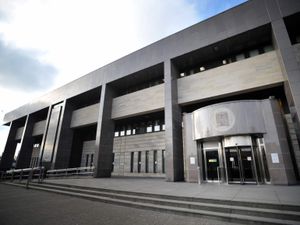
The timescale of the FAI was discussed during a preliminary hearing at Glasgow Sheriff Court on Tuesday.
Fiscal Depute Nicole Lewis said: “Although this is a discretionary inquiry it will be relatively non-complex. We are looking at 48 hours.
“I don’t think it will take more than a week for the actual inquiry.”
She said that the Crown will be calling two expert witnesses.
The Scottish Ambulance Service and a doctor will also be represented at the inquiry.
The inquiry will hear evidence on the facts and circumstances of Mr Brown’s death, with particular focus on call handling and response times by the Scottish Ambulance Service.
Sheriff Cameron set a further preliminary hearing for April 16.
Procurator Fiscal Andy Shanks, who leads on fatalities investigations for the Crown Office and Procurator Fiscal Service (COPFS), said: “The death of Gerard Brown occurred in circumstances giving rise to serious public concern and as such the Lord Advocate has decided that a discretionary Fatal Accident Inquiry should be held.”
Unlike criminal proceedings, FAIs are inquisitorial in nature, and are used to establish facts rather than apportion blame.
Their purpose includes determining the cause of death, the circumstances in which the death occurred, and establishing whether any reasonable precautions could have been taken to minimise the risk of future deaths in similar circumstances.