Sir Keir Starmer: U-turns, judgment fears and public scepticism combine
The Prime Minister is facing a week of uncertainty as critics call for new leadership.
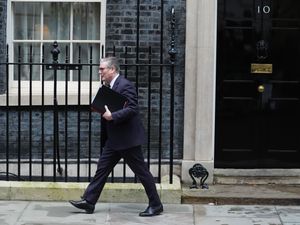
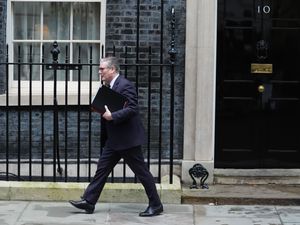
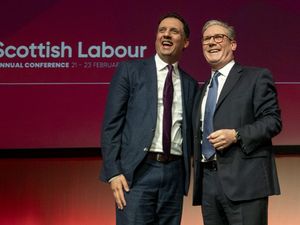
Sir Keir Starmer is facing a daunting battle to save his premiership, with his decision to appoint Lord Peter Mandelson as ambassador to the US prompting Labour MPs to openly question his judgment and political future.
When resigning as the Prime Minister’s chief of staff, Morgan McSweeney said he took “full responsibility” for giving Sir Keir advice that resulted in the “wrong” appointment.
But a growing number of critics have highlighted that Sir Keir made the final decision knowing that Lord Mandelson’s links with Jeffrey Epstein continued after the financier’s conviction for child sex offences.
With an appearance before the Parliamentary Labour Party scheduled for Monday amid intense speculation about a potential change of leadership, Sir Keir’s authority and position remains in doubt.
It is only a just over a decade ago that Sir Keir entered politics after serving as director of public prosecutions between 2008 and 2013.
He was elected MP for Holborn and St Pancras in May 2015, and was made a shadow home office minister by new leader Jeremy Corbyn.
Sir Keir was later among a wave of frontbenchers to resign in the wake of the tumultuous aftermath of the 2016 referendum vote to leave the EU.
When he stood for leader in the aftermath of Labour’s crushing 2019 general election defeat, he ran on a leftish platform with commitments to renationalise water and energy and scrapping university tuition fees.
Succeeding Mr Corbyn as leader in April 2020 meant Sir Keir was relatively inexperienced in political life compared with other previous party leaders – a factor that has been often referenced as he faces his current struggles.

His leadership did not start well.
Sir Keir seriously considered throwing in the towel after Labour fell to a humiliating defeat in the Hartlepool by-election in 2021.
After just over a year in the role as party leader, even allies were questioning whether he had what it took to return them to power after the Tories emerged victorious in the former Labour stronghold.
Sir Keir’s problems were compounded by a series of losses in council elections taking place in England the same day.

In response, the Blairite former minister Lord Adonis suggested he was no more than a “transitional figure” without the “political skills” needed to make it to the top.
Critics on the left, still lamenting Mr Corbyn’s demise, were openly gloating.
Following failure at the ballot box despite making repeated visits to campaign in Hartlepool, Sir Keir said: “I felt like I had been kicked in the guts”.
He told aides that it was a “personal rejection” and he had to go, but his wife, Victoria, was among those who rallied round and persuaded him to carry on.
After his left-leaning leadership campaign, Sir Keir then began to be accused of systematically abandoning his principles, dropping key policies one by one, as he has tacked steadily to the right.
But to his supporters, he was a pragmatist utterly focused on taking Labour back to power, believing real change cannot be achieved from the impotence of opposition.
The early stage of his leadership was overshadowed by the Covid pandemic while the party’s rise in the polls has owed much to the Tories’ implosion, first with Boris Johnson and the “partygate” scandal and then Liz Truss’s calamitous whirlwind premiership.

After the nadir of Hartlepool, he systematically strengthened his grip on the party with a string of by-election victories while claiming the political centre ground, promoting a clutch of Blairites in a shadow cabinet reshuffle in 2023.
His hold over the party was underlined by the relatively muted response to his decision finally to drop a flagship £28 billion “green” investment pledge, seen as too easy a target for Tory claims of Labour fiscal profligacy.
The war in Gaza then emerged as a major challenge for Sir Keir, with a series of frontbench sackings and dismissals prompted by his reluctance to call for an immediate ceasefire.
But his critics in the party were largely sidelined as Labour established a commanding lead in the opinion polls during the 2024 general election campaign.
The landslide victory, which was the Labour’s third best showing in its history and its best performance since 2001, placed Sir Keir among the elite group of Labour leaders to have secured power.
His supporters praised his forensic examination of Mr Johnson’s handling of the pandemic and the reassurance he was able to offer in response to the financial chaos created by Ms Truss as key to the party’s appeal to voters.
During his victory speech, Sir Keir urged Labour members to savour the moment, but warned of challenges ahead as he sought to usher in a period of “national renewal”.
But Sir Keir’s time in No 10 has been characterised by the Prime Minister and his party consistently performing poorly in the polls.
Damaging local election results in 2025 have contributed to a sense of unease as the Government struggled to bring down the cost of living and instil optimism about the future.
Inconsistency on policy has also been a persistent feature, with Labour’s big majority failing to prevent ministers coming under pressure from the backbenches.
After Labour were in power for just over three weeks, Chancellor Rachel Reeves took a significant political risk by tightening eligibility for winter fuel payments, a hitherto universal benefit helping older people with their energy costs.
But when many voters had turned their back on Labour in the subsequent local elections, the Government announced that all pensioners earning up to £35,000 would now be eligible.
In September, the Prime Minister announced a mandatory digital ID scheme for people to prove they have the right to work in Britain.
Criticism from opposition parties and public polling suggesting there was little appetite for the measure, combined with concerns among Labour MPs about the focus on illegal workers rather than the benefits.
The Government announced in January that the digital checks scheme would now be optional.
In her budget last year, Ms Reeves slashed a discount on business rates for pubs introduced during the pandemic.
Following anger from pub owners, a £300 million “lifeline” for pubs was announced in January in a bid to ease concerns.

Winning dozens of rural constituencies was a notable feature of Labour’s electoral success, but farmers were soon driving their tractors into Westminster to protest against a budget announcement that inheritance tax would be applied to farming estates worth more than £1 million.
Rural Labour MPs were not happy about the local backlash to the plans and a high-profile campaign kept the pressure on.
Two days before Christmas, the Government announced it would increase the tax threshold to £2.5 million.
As well as these examples, the Government rowed back on a number of other policies, including welfare reform, a grooming gangs inquiry, a compromise on workers’ rights and ending the freeze on income tax thresholds.
Weeks after the general election, seven Labour MPs lost the whip when they backed an amendment to scrap the two-child benefit cap – a policy seen as a relic of Tory austerity.
But the Chancellor decided to remove the cap in her budget. This may have pleased many in the Labour Party but led to further questions about decision-making in No 10.
Sir Keir remains defiant about his future as he navigates what is considered a week of political jeopardy.
He has told staff in No 10 that they are united by a “driving purpose” of “public duty”.
Speaking to his team about the decision to appoint Lord Mandelson as UK ambassador to Washington, he said: “The thing that makes me most angry is the undermining of the belief that politics can be a force for good and can change lives.
“I have been absolutely clear that I regret the decision that I made to appoint Peter Mandelson. And I’ve apologised to the victims which is the right thing to do.”