Interest rates: Why did the Bank stick to 3.75% and what does it mean?
Here, the Press Association examines what the decision means and what the Bank expects to happen to the economy.
The Bank of England has held interest rates at 3.75%, saying that it needed to keep inflation under control.
It followed a split vote among the rate-setting committee, with five members voting to keep rates unchanged and four preferring a cut.
But the boss of the central bank signalled that further cuts could be on the way this year.
Here, Press Association examines what the decision means and what the Bank expects to happen to the economy.
– What happened to interest rates on Thursday?
The Bank of England’s Monetary Policy Committee (MPC) maintained the base interest rate at 3.75% at its meeting.
Rates had been reduced from 4% in December, which was the fourth time the MPC delivered a cut in 2025.
Interest rates have been gradually coming down from a peak of 5.25% in 2024.
– What does it actually mean?
The base interest rate helps dictate how expensive it is to take out a mortgage or a loan.
Mortgage borrowers typically seek a reduction in interest rates in order to help bring down variable rates, or to allow for lower mortgage rates when they next re-mortgage.
Some lenders have been increasing rates on some of their fixed-term deals in recent days, in anticipation of it taking longer for interest rates to come down.
But experts pointed out that the mortgage market remains competitive and people are likely to be shopping around for deals.
Savings rates are also linked to the base interest rate, and have been dropping in recent months, so the decision to keep it unchanged on Thursday may offer some breathing space for savers.

– What about inflation?
Raising interest rates is the central bank’s main way of reducing inflation – the measure of how fast prices increase over time.
The UK’s main measure of inflation, the Consumer Prices Index (CPI), was reported at 3.4% in December after a spike in airfares over Christmas.
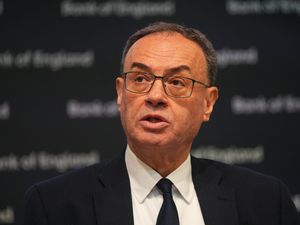
But Andrew Bailey, governor of the Bank of England, said there was some “good news” on the inflation front on Thursday.
He said: “We now think that inflation will fall back to around 2% by the spring. That’s good news.”
The central bank was previously expecting this to happen in 2027.
The speedier return to 2% – which is the Bank’s target level – is largely down to measures announced in the Chancellor’s autumn budget last year, particularly a package of support to bring down household energy bills from April.
– When will rates next fall?
Mr Bailey hinted at further interest rate cuts this year, but these are expected to be fewer and further apart than in 2025.
“All going well, there should be scope for some further reduction in the bank rate this year,” he said.
Economists said the vote split within the MPC has increased the likelihood that interest rates will be cut next month.
Experts had previously been predicting that the next reduction would come in April.
– What did the Bank of England say about other aspects of the economy?
The good news about inflation was somewhat dampened by a gloomier view from the central bank about economic growth and unemployment in the UK.
New forecasts produced by the bank show gross domestic product (GDP) coming in lower for 2026 and 2027 than it had previously predicted.
The report highlighted that consumer demand for goods and services had been weaker, and is expected to remain so this year amid concerns about rising unemployment and continued worries over the cost of living,
The unemployment rate is expected to rise as high as 5.3% this year. The Bank had previously predicted it would peak at 5.1%.
Many firms have been hiring less than they typically would, or choosing not to replace people who leave.
The Bank also suggested that more companies were considering using automation and artificial intelligence (AI) to make them more productive.