Patients with ‘invisible’ cancer ‘waiting years for diagnosis’
There is an urgent need to speed up the diagnosis of neuroendocrine cancer.
Patients with an “invisible” cancer are being turned away by doctors and waiting years for answers, a charity has warned.
There is an urgent need to speed up the diagnosis of neuroendocrine cancer – which impacts more than 6,000 people a year in England, Neuroendocrine Cancer UK (NCUK) said.
The term refers to a group of cancers that start in the nerve and gland cells that make and release hormones.
Analysis by NCUK suggest rates of the disease rose by 371% between 1995 and 2018, compared to 116% for other cancers in the same period – apart from non-melanoma skin cancer.
Diagnosis takes four-and-a-half years on average, the charity said, with almost half of patients not diagnosed at the first referral and 16% returning more than 10 times before getting answers.
More than half of cases are diagnosed at an advanced stage.
There are two main types of neuroendocrine cancer: neuroendocrine tumours (NETs) and neuroendocrine carcinomas (NECs), which are fast growing.
The disease can develop in different parts of the body, such as the stomach, bowel, pancreas and lungs.
Symptoms include unexplained weight loss, tiredness, pain, diarrhoea, bloating, wind, heartburn, asthma-like symptoms, a flushing rash and a persistent cough.
Common misdiagnoses include irritable bowel syndrome, asthma, or menopause, experts said.
Lisa Walker, chief executive of NCUK, said: “A key part of the challenge of neuroendocrine cancer is that it doesn’t align with the common cancer narrative many expect.
“It doesn’t act or look like more known cancers and unlike others, it isn’t always about recovery or decline, it often requires people to live with it for many years. That is why we need a conversation that reflects the reality of the condition.
“Delays to diagnosis and inconsistent care cause serious and lasting harm. Precious time is lost, allowing the cancer to progress before people receive the treatment they need.
“Patients and families describe these experiences as isolating and frightening, leaving them without support when they need it most.
“This is unacceptable and requires urgent attention.”
Professor Raj Srirajaskanthan, a consultant gastroenterologist at King’s College Hospital, said: “In my years as a NET clinician, I have sat across from thousands of patients, and while every story is unique, they often share a hauntingly similar prologue.
“A large number have undergone a long and circuitous journey to their diagnosis, commonly being misdiagnosed with irritable bowel syndrome, asthma, or menopause.
“This period of ‘not knowing’ is often marked by a sense of being unheard, as patients struggle to reconcile their debilitating symptoms with ‘normal’ test results.”
Prof Srirajaskanthan said managing NETs is “often a marathon, not a sprint”.
“Many of my patients have been undergoing treatment for over a decade,” he added.

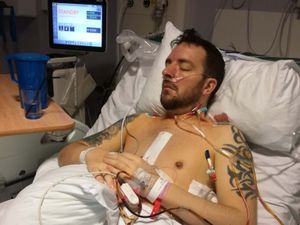
Craig Spiers, 46, from Glasgow, said it took five years of GP appointments before he was diagnosed in 2013.
The father-of-two has neuroendocrine cancer of the small bowel, which has spread to his liver and has also caused heart problems.
“These visits didn’t get me anywhere and I was even told there was nothing wrong with me and that I had to go home and calm down as it was a result of stress from work,” Mr Spiers said.
“My cancer was invisible to the doctor.”
Gordon Brown, 62, is a GP from Ashby De-La-Zouch who “missed” his own cancer.
“I had been experiencing many seemingly benign symptoms but I never thought they were a result of neuroendocrine cancer,” he said.
“I did go to the hospital a couple of times complaining about the abdominal pain/diarrhoea but no one did a scan. I’d ask my GP colleagues for advice but everyone, including myself, felt that the symptoms were not significant enough.”

Martyn Caplin, a professor of gastroenterology and neuroendocrine cancer at the Royal Free Hospital, said faster diagnosis can lead to more treatment options for patients, even if the disease cannot be removed surgically.
“Smaller volumes of neuroendocrine cancer are generally easier to manage than a more advanced disease, and larger tumours are more likely to cause significant symptoms, regardless of where they are in the body,” he added.
“Delays increase both the physical and emotional toll on patients and limit clinical options.”