Fact check: Most humble addresses filed without national security exemption
A 2022 humble address said that ‘redactions shall be solely for the purposes of national security’.
During Prime Minister’s Questions on February 4, Sir Keir Starmer said that whenever his party filed a so-called humble address in the Commons while in opposition, he would include a national security exemption.
The Labour leader told the Commons: “When we were drafting humble addresses in opposition, we always made sure that that exemption was included because we knew how important it was to the then-government. I do not think I have seen a humble address without that exemption.”
Evaluation
Analysis by the Press Association suggests that out of 18 humble addresses that the Labour Party suggested on Opposition Days between 2017 and 2024, one had wording that set a specific exemption for national security.
That was the one address of the 18 which had the most clear national security implication – on the appointment of Lord Evgeny Lebedev.
The rest of the humble addresses dealt with subjects including Brexit, the safety of school buildings, healthcare, universal credit, and the Rwanda asylum deal.
The facts
Humble addresses are messages to the King, considered binding if passed, which are often used to call for the publication of information.
They are uncommon. None was put forward on an Opposition Day between 1992 – the earliest date in a House of Commons Library dataset – and 2017.
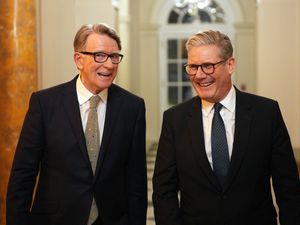
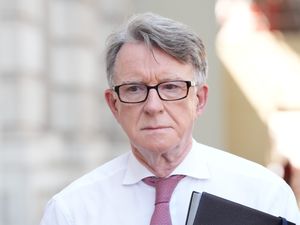
At the time of the Prime Minister’s comments, the Conservative Party was preparing to move a humble address that would force the Government to release information about the appointment of Lord Peter Mandelson as British ambassador to the US.
In 2022, a humble address moved by Labour politicians asked for disclosure about the appointment of Lord Evgeny Lebedev to the House of Lords. That humble address requested a response “in a form which may contain redactions, but such redactions shall be solely for the purposes of national security”.
The Press Association analysed the 18 humble addresses tabled by Labour on Opposition Days between 2015, when Sir Keir entered Parliament, and 2024 when the party won the general election. This is not a complete list of all humble addresses moved in that period.
Out of those, eight were adopted by the House and 10 were not. Sir Keir himself moved three of the 18.
Four dealt with Brexit, two with universal credit, one with Carillion, one with Windrush, two with health, one with a construction development, one with education, one with Covid-19 contracts, one with the appointment of Lord Lebedev, two with the safety of school buildings, one with Teesworks, and one with the Rwanda asylum scheme.
Links
House of Commons Library – Opposition day debates in the House of Commons since 1992 (archived page and spreadsheet)
Press Association analysis (relevant analysis in rows AE to AH)