Shabana Mahmood defends rollout of live facial recognition to all police forces
Home Secretary Shabana Mahmood said the technology is ‘a really big opportunity’ and there is ‘no true liberty’ if people are scared of crime.
The Home Secretary has defended plans for a rollout of live facial recognition to all police forces in England and Wales amid concerns a public consultation on its use is not yet complete.
Shabana Mahmood told LBC there is “no true liberty” if people are too scared of crime to leave their houses while human rights group Liberty accused the Government of ignoring the public’s fundamental rights by announcing the rollout with the consultation still under way.
The Home Secretary said that while it is not “100% bang-on perfect all the time”, evidence from live facial recognition will be tested in criminal trials.
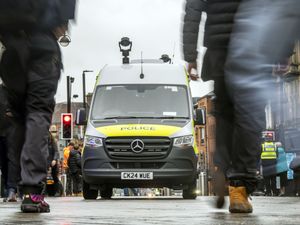
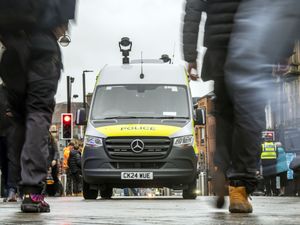
Plans set out on Monday as part of sweeping reforms to policing would see the number of camera vans rise from 10 to 50, and be made available to all forces in England and Wales.
A public consultation is under way on how use of the technology should be regulated but it is understood that the national rollout of vans will be in line with current standards used by the Metropolitan Police, who have been using the technology for several years.
Currently the legal basis for the use of facial recognition is piecemeal, based on common law, data protection and human rights laws.
Ms Mahmood said: “I really believe that new technology has the ability to help us go after criminals and bring more people to justice.
“Of course, it has to be used in a way that is in line with our values, doesn’t lead to innocent people being caught up in cases they shouldn’t have been involved in.
“But this technology is what is working. It’s already led to 1,700 arrests in the Met alone. I think it’s got huge potential.”

She said that evidence would be tested during criminal trials in the same way as DNA or fingerprint evidence.
“As you roll out a technology, you learn more about how it’s operating. I think it’s actually highly accurate.
“In any criminal trial, it’s part of a package of evidence, in the same way that fingerprinting would be or DNA would be.
“And we know, of course, none of these things are 100% bang-on perfect all the time.
“That’s why evidence is tested in a court, and the defence always has the chance to test that evidence and put an alternative view.”
There are currently plans to restrict the number of jury trials.
Ms Mahmood added: “The technology does present a really big opportunity for us, and there are no civil liberties, there’s no true liberty if you are unsafe in your own country.
“If you can’t go out of your front door because you’re afraid of crime on your high street and in your local area.”
On Monday, Conservative MP Sir David Davis said the technology could lead to miscarriages of justice, pointing to lower accuracy rates of facial recognition for some ethnic minorities, and the Post Office scandal as an example where courts had “believed computers rather than people”.
Ruth Ehrlich, director of external relations at Liberty, said the Government was “undermining its own consultation” with the national rollout.
“Rolling out powerful surveillance tools while a consultation is still under way undermines public trust and shows disregard for our fundamental rights,” she said.
“AI and facial recognition are powerful technologies that allow the police to track and monitor people as they go about their daily lives. Attempts by police forces to use these tools so far have been plagued by failure.
“We have seen what happens when facial recognition technology is rolled out without clear safeguards: children are wrongly placed on watchlists, and black people are put at greater risk of being wrongly identified.
“These have created real harm to people’s lives and are the consequence of handing complex, powerful technology to police who lack the expertise to govern it safely.
“The Government must halt the rapid rollout of facial recognition technology, ensure safeguards are in place to protect each of us, and prioritise our rights.
“They must also learn the lessons of the past and ensure that, before handing police further AI tools, a system of strong guardrails is in place and one that puts the rights and privacy of the British public at its core, with genuine transparency and meaningful oversight.”
In November, Greater Manchester, West Yorkshire, Bedfordshire, Surrey, Sussex, Thames Valley and Hampshire police forces were all given access to live facial recognition in an expanded pilot programme, joining the Met, South Wales Police and Essex Police in their use.
A 10-week public consultation on use of the technology was launched in December and is expected to finish on February 12.