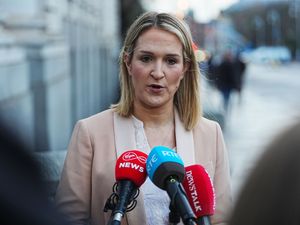
Cuts to number of police forces ‘risks separating police from communities’
Major policing reforms could be ‘complex to deliver’, a policing body said.
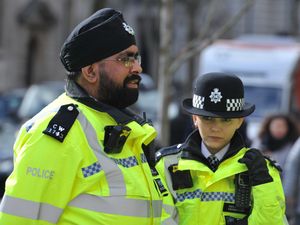
Major policing reforms expected to drastically cut the number of forces across England and Wales would be “complex to deliver” and risk separating police forces from communities they serve, a policing body has warned.
Home Secretary Shabana Mahmood is poised to unveil the largest overhaul of policing in decades on Monday, in an effort to tackle what Government sources called “an epidemic of everyday offences”.
The changes will see the overall number of forces slashed from their current level of 43, and tasked with focusing on serious and organised crime along with complex investigations such as homicides.
At the lower level, each town, city and borough will be formed into a “local policing area” – with neighbourhood officers focused on local crime such as shoplifting and anti-social behaviour.
Ms Mahmood has previously said that the structure of 43 forces in England and Wales is “irrational”, and police chiefs have already called for radical reform of the set-up, backing a system with fewer, larger forces.
But reacting to the expected move, the Association of Police and Crime Commissioners (APCC) said the creation of regional forces would be expensive, time consuming and has the potential to “derail” the ambition of reforms.
PCCs Matthew Scott and Clare Moody said: “The public want neighbourhood policing. There is no evidence to suggest the public would welcome bigger forces and in terms of public accountability, it also risks creating a separation between police forces and the local communities they serve.
“It makes responding to local policing and crime needs more difficult and removes the link between local taxpayers and the police they increasingly directly fund through the policing precept.”
They added financial savings from creating larger force areas “could be outweighed by very significant set-up costs”.
“We also contest the principle behind it – that bigger forces are necessarily better which is not borne out by experience and force performance comparisons.”

Ms Mahmood is understood to believe the current system, which sees each of the 43 forces pay for separate headquarters and administrative staff, wastes money that could be spent on fighting crime.
Sources said the reforms would save money by merging back-office functions, freeing up resources to be invested in more police officers.
The changes are also intended to even out differences in performance between police forces, with ministers believing smaller forces lack the resources to tackle major incidents.
A Government source pointed to Wiltshire Police, which needed support from 40 other forces to respond to the Salisbury poisonings in 2018, as well as vast differences in charge rates for some offences.
They said: “Under this new structure, all forces – regardless of where they are – will have the tools and resources they need to fight serious crime.
“Where you live will no longer determine the outcomes you get from your force.”

But the changes will take time to come into effect, with the mergers only expected to be completed by the end of the next Parliament in the mid-2030s.
And it is not yet known how many forces will remain after the reforms, with the number and location of the new forces to be decided by an independent review.
Similar cuts have been proposed before, with then-Labour home secretary Charles Clarke announcing plans to cut the number of police forces to 24 in March 2006.
But Mr Clarke’s proposals were abandoned by his successor John Reid just four months later after the proposed merger of Lancashire and Cumbria police forces collapsed and senior officers turned against the idea.
Allies of Ms Mahmood stressed her commitment to the reforms, saying the Home Secretary was “a moderniser” and “not scared of bold reform and a political fight”.
But Conservative shadow home secretary Chris Philp said there was “no evidence” that merging police forces would cut crime or improve performance.
He said: “Top-down reorganisation risks undermining efforts to fight crime, inevitably leading to centralised control that will hit towns and villages across the country hardest.
“The biggest force, the Met, has the lowest crime solving rates and falling police numbers. Big is not necessarily better.”
The Police Federation of England and Wales said fewer forces “doesn’t guarantee more or better” community policing but welcomed the Home Secretary’s willingness to make difficult decisions.
A spokesperson for the representative body said: “Policing’s current structure has entrenched a postcode lottery in what the public see but also how officers are led, supported and treated.
“Fewer forces doesn’t guarantee more or better policing for communities. Skills, capabilities and equipment need significant investment if the public and officers are going to see reform deliver in the real world.
“Any proposals must be driven by evidence and best practice, not lowest cost, and must strengthen rather than weaken frontline, investigative and specialist capability, neighbourhood policing and public confidence.”
Ministers have already announced plans to scrap police and crime commissioners in 2028 to save at least £100 million and help fund neighbourhood policing.
Instead, mayors and council leaders will take up the responsibilities of policing arrangements.