Spying, oppression and secret rooms: Security concerns over China’s new embassy
Opponents have argued Beijing’s mega-embassy could become an espionage hub.
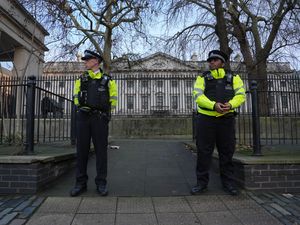
The UK has given the go-ahead to a vast new Chinese embassy in London, despite warnings that it could pose national security risks.
MI5 said that while “it is not realistic to expect to be able wholly to eliminate each and every potential risk,” the “package of mitigations deals acceptably with a wide range of sensitive national security issues”.
Parliament’s Intelligence and Security Committee said national security concerns “can be satisfactorily mitigated,” but highlighted that Beijing targets the UK “prolifically and aggressively”.
Here the Press Association looks at some of the concerns that have been raised and how the Government has responded.
– Cables
The site of China’s proposed mega-embassy is the old Royal Mint Court near the Tower of London, which is in close proximity to fibre-optic cables transmitting sensitive financial data to the City of London.
This has prompted warnings that Beijing could be seeking to spy on the information passing through the network.
The plans include 208 secret rooms and a hidden chamber, which would sit directly alongside the critical internet cables, according to The Telegraph.
The newspaper reported the chamber would include hot-air extraction systems, suggesting the potential use of advanced computers for espionage, and that proposals included the demolition and rebuilding of a wall between data cables.
Opposition politicians, campaigners and even Labour MPs have sounded the alarm, with Tory shadow minister Alicia Kearns warning the embassy would give China a “launch pad for economic warfare” against the UK.
Sarah Champion, the Labour chairwoman of the International Development Committee, who had been targeted with Chinese spyware on her parliamentary computer, this week noted the US had confirmed three major infrastructure hacks in the past 18 months, while the UK had faced hacks on the Electoral Commission, Foreign Office and parliamentarians.
Updating MPs on the decision on Tuesday, security minister Dan Jarvis said: “An extensive range of measures have been developed to protect national security.
“We have acted to increase the resilience of cables in the area through an extensive series of measures to protect sensitive data.”
MI5 and GCHQ said in a letter to the Home Secretary and Foreign Secretary that the package of security mitigations, which was formulated by intelligence agencies and Government departments and will be reviewed regularly, “deals acceptably with a wide range of sensitive national security issues, including cabling”.
MI5 director general Sir Ken McCallum and GCHQ director Anne Keast-Butler also wrote: “MI5 has over 100 years of experience managing national security risks associated with foreign diplomatic premises in London.
“For the Royal Mint Court site, as with any foreign embassy on UK soil, it is not realistic to expect to be able wholly to eliminate each and every potential risk.”

– Spies
Opponents have issues warnings that the expected 200-strong workforce of Chinese nationals could harbour undeclared officers from its ministry of state security and military intelligence.
Tory shadow foreign secretary Dame Priti Patel accused Sir Keir Starmer of “giving Xi Jinping what he wants – a colossal spy hub in the heart of our capital,” while Luke de Pulford, head of the Inter-Parliamentary Alliance on China, argued that more state employees equals more Chinese interference.
But minister Mr Jarvis argued that replacing the seven different sites that make up China’s current diplomatic footprint in London with a single site “brings security advantages”.
With plans for all Chinese diplomats to live on the premises, UK security services will be able to more easily monitor their activities.
“Following deep scrutiny by security officials, the Government has been able to conclude that we can manage the security concerns related to the embassy,” Mr Jarvis told MPs.

– Oppression
There are worries that the new embassy could enhance China’s ability to conduct transnational repression against political dissidents on UK soil.
Hong Kong pro-democracy activists who fled to the UK after Beijing cracked down on dissent have expressed fears they could be at risk when it is built.
Chloe Cheung, 20, said in 2024 the Hong Kong authorities placed a one million Hong Kong dollar (more than £95,760) bounty on her head because of the work she did with the Committee for Freedom in Hong Kong Foundation.
She said if the embassy is approved, it could be easier for them to “facilitate any surveillance” and she would be concerned about her safety.
Their concerns are not without precedent; a Hong Kong pro-democracy protester was dragged into the grounds of China’s consulate in Manchester in 2022 and beaten up, but was rescued by British police who crossed the boundary.
Mr Jarvis said the Government has agreed with Beijing that the publicly-accessible forecourt on the new embassy’s grounds “will not have diplomatic immunity”, allowing it to be policed and preventing the dragging-in of people from the street.
The minister also said it is “completely unacceptable for China or anyone to persecute people in this country” and that he had reaffirmed to Chinese authorities “that the extra-territorial application of Hong Kong’s national security law is unacceptable and will not be tolerated here in the UK”.

– Torture
Dissidents have also aired concerns around being held in the new mega-embassy and what might happen to them in rooms with no identified use on the public plans.
Ministers have seen the unredacted plans for the site and are content that any risks around the secret rooms “are being appropriately managed”, Downing Street said amid suggestions they could be used for torture.
They are aware what the rooms will be used for and there are safeguards in place to ensure it is not torture, it is understood.
– Local residents
Residents living close to the location have vowed to continue to challenge the Government’s approval of the plans over privacy concerns and the security risk to them.
They say this includes potential attacks on the embassy and large demonstrations that have already been staged there.
The Government, in its decision letter, noted there was a “lack of evidence of a specific identified terrorist threat” to the site, and that any large-scale protests “are able to be policed safely”.