Chinese embassy plan approved by Government
The decision could trigger a fresh round of legal wrangling over the site in London.
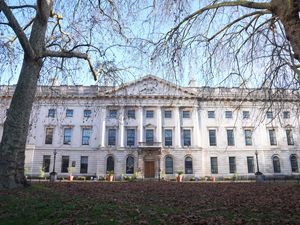
China has been given permission to build a vast new embassy in the heart of London despite criticism from MPs and campaigners that it will be used as a base for spying and security crackdowns.
Local Government Secretary Steve Reed has approved the plans for the building at Royal Mint Court, a site near the Tower of London.
The decision removes a diplomatic hurdle in the relationship with Xi Jinping’s government, clearing the way for Sir Keir Starmer to make a widely-expected visit to China, possibly within weeks.
Residents living close to the site have vowed to continue to challenge the Government’s approval of the plans.
Critics have raised concerns about what are described as hidden rooms proposed for the site, as well as its close proximity to communication cables essential to the UK’s financial sector.
MPs and peers on the Labour-led Joint Committee on the National Security Strategy had called on ministers to reject the plans, warning the embassy, the biggest in Europe, would “create a hub for expanded intelligence-gathering and intimidation operations”.

Mr Reed insisted the decision was made following “a quasi-judicial process”, adding: “This means they must make decisions fairly, based on evidence and planning rules.”
A written statement from the Communities Secretary also said: “All material considerations were taken into account when making this decision.
“The decision is now final unless it is successfully challenged in court.”

A Government spokesperson meanwhile insisted “countries establishing embassies in other countries’ capitals is a normal part of international relations”.
They added: “National security is our first duty.
“Intelligence agencies have been involved throughout the process and an extensive range of measures have been developed to manage any risks.”
The spokesman also insisted there were “clear security advantages” to the Chinese consolidating their seven different embassy sites in London into one large building.
The Government said Mr Reed agreed with the planning inspector “that any ethical or similar objections to the provision of an embassy for a specific country cannot be a material planning consideration”.
He also noted the inspector’s comment that there was “limited evidence to back up” claims of national security concerns levelled at the future occupants, and “considers that non-site-specific national security concerns would be dealt with by other means, via other legal processes and by various agencies, including under the Vienna Conventions,” according to the decision letter.
National security risks linked to China’s new London embassy cannot be wholly eliminated, MI5 director general Sir Ken McCallum warned in a joint letter with GCHQ’s director to the Home Secretary and Foreign Secretary.
Sir Ken and Anne Keast-Butler wrote: “MI5 has over 100 years of experience managing national security risks associated with foreign diplomatic premises in London.
“For the Royal Mint Court site, as with any foreign embassy on UK soil, it is not realistic to expect to be able wholly to eliminate each and every potential risk. (And even if this were a practicable goal, it would be irrational to drive ‘embassy-generated risk’ down to zero when numerous other threat vectors are so central to the national security risks we face in the present era.)
“However, the collective work across UK intelligence agencies and HMG departments to formulate a package of national security mitigations for the site has been, in our view, expert, professional and proportionate.”

They also said “the package of mitigations deals acceptably with a wide range of sensitive national security issues, including cabling”.
Critics of the scheme are already planing to challenge the decision in the courts, with local residents raising money to launch a judicial review against the project.
Mark Nygate, treasurer of the Royal Mint Residents’ Association, said: “The residents are determined to keep fighting today’s decision.”
Luke de Pulford, head of the Inter-Parliamentary Alliance on China, which has campaigned to halt the plans, told the Press Association: “This is the wrong decision for the UK, sending all the wrong signals. Wrong for dissidents, wrong for UK national security.
“Our three Cs China policy is less compete, challenge and cooperate, more cover-up, cave in, and cash out.”
Senior Conservatives lined up to criticise the decision, with shadow communities secretary Sir James Cleverly describing it as “a disgraceful act of cowardice from a Labour Government and Prime Minister utterly devoid of backbone”.
Dame Priti Patel, shadow foreign secretary, meanwhile said: “Keir Starmer has sold off our national security to the Chinese Communist Party with his shameful super embassy surrender.”
Speaking in the Commons Dame Priti said it was “unacceptable” to approve the embassy while dual-British national Jimmy Lai remains in prison in China under the Beijing-imposed Hong Kong National Security Law.
She said it would be a “failure” of British diplomacy if Sir Keir fails to get Mr Lai released when he visits China.
In response Ms Cooper said: “The shadow foreign secretary will know that we have made the strongest of criticisms of the decision on Jimmy Lai, and we continue to pursue this issue with the Chinese government and to stress the urgent need for him to be released immediately on humanitarian grounds.”
The Liberal Democrats described the decision as Sir Keir’s “biggest mistake yet”.
The party’s foreign affairs spokesman Calum Miller said: “The Prime Minister knows his decision today will amplify China’s surveillance efforts here in the UK and endanger the security of our data – not to speak of the safety of the brave Hong Kongers on British soil.
“It’s categorically wrong that he’s embraced these threats to further his flirtation with China.”
Reform UK said the decision “represents a serious threat to national security”.