UK Government told it ‘could have gone further’ on North Sea windfall tax
Patricia Ferguson, chair of the Scottish Affairs Committee, spoke out as the UK Government reaffirmed it would end the levy by 2030 at the latest.
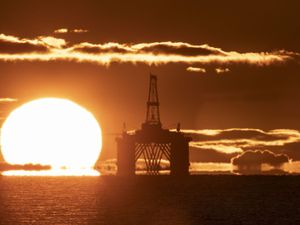
The UK Government “could have gone further” with its plans to reform the windfall tax on oil and gas companies, the chairwoman of a Westminster committee has insisted.
In response to a report from MPs on the Scottish Affairs Committee, ministers made clear they had set a “clear path” for the measure, officially called the energy profits levy (EPL), to end by March 2030 “at the latest”.
The levy, currently set at 38%, has been blamed by leading figures in the sector for job losses, with the committee report in October 2025 stating that a “lack of clarity” on the fiscal regime in the North Sea after the end of this decade had “created uncertainty for industry”.
In its response the UK Government said it had “set a clear path for the energy profits levy to end by March 2030 at the latest”.
But it also stressed that cash raised by it contributed to the drive “towards cleaner energy” and also helped support “the funding of wider public services”.
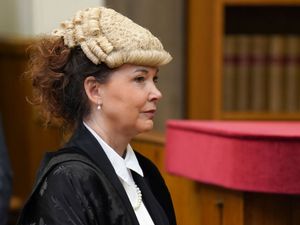
Scottish Affairs Committee chairwoman Patricia Ferguson said she welcomed the “reaffirmation of plans to introduce a reformed windfall tax mechanism after 2030”, adding that this “is a positive step”.
But she said: “The UK Government could’ve gone further. Keeping the energy profits levy in place for another four years risks accelerating the industry’s decline and job losses, even though it’s well known that the UK will need oil and gas in its energy mix for decades to come as we transition to net zero.”
She added that the committee was yet to see “concrete evidence” of delivery on the UK Government’s clean energy commitments.
Ms Ferguson said it was “encouraging” that ministers had made “clear commitments and plans to create more secure clean energy jobs”.
But she insisted: “The proof, of course, will be in the delivery. We’ve yet to see concrete evidence of delivery and implementation of these initiatives.”
MPs on the committee will “continue to monitor the UK Government’s progress closely to ensure it delivers for Scottish workers”, she vowed.
She spoke out in the wake of the UK Government’s response to the committee’s report, which had warned that until clean energy jobs can be created at the scale needed to match job losses in fossil fuels, the UK Government “should avoid accelerating the decline of North Sea oil and gas production”.
Ms Ferguson recalled: “Our report raised serious concerns that clean energy jobs aren’t being created at the pace or scale needed to keep up with job losses in the North Sea oil and gas sector.
“Whilst the UK Government didn’t acknowledge this view in their response, it is encouraging to see clear commitments and plans to create more secure clean energy jobs.”
The Government response however said that the clean energy jobs plan it had published in October last year was a “major step forward in supporting the clean energy transition”.
The “clean energy superpower mission” could see numbers working in the sector and its associated industries double from around 440,000 in 2023 to around 860,000 jobs by 2030, the response added.