Robert Jenrick’s political reinvention leads him to Reform
Mr Jenrick’s supporters say his spell at the Home Office ‘radicalised’ him in favour of a heavy reduction in immigration.
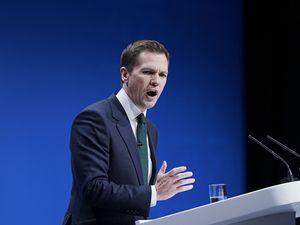
Robert Jenrick’s dismissal from the Tories and switch to Reform UK caps a dramatic political reinvention for the man once derided as the centrist “Robert Generic”.
Less than four years ago, he was installed by Rishi Sunak as immigration minister in what was widely seen as an attempt to moderate the instincts of then-home secretary Suella Braverman.
The intervening time has seen him adopt an aggressive, social media-friendly style, becoming a Conservative firebrand still talked of as a potential replacement for Kemi Badenoch.
But his chances of leading the Tories suffered a fatal blow on Thursday, as he was sacked as shadow justice secretary and suspended from the party, accused of preparing to defect to Reform.
When he later joined Nigel Farage at a press conference to confirm he was joining his party, Mr Jenrick insisted that he was “resolved to leave” the Conservatives before being given the boot but that “I didn’t know I was going to leave today”.
It ends a shadow frontbench tenure lasting little more than a year and marked by both eye-catching campaigns and controversy.

Appointed after coming second to Mrs Badenoch in November 2024, he embraced social media, using viral videos to boost his messages on crime, immigration and “activist judges”.
Those videos also brought criticism. One, in which he challenged fare-dodgers on the Tube, brought a rebuke for failing to get permission to film on the London Underground.
And his appearance at last year’s Tory conference was overshadowed by racism accusations after the leak of a recording in which he complained that, while filming a video in Handsworth, Birmingham, he had not seen “another white face”.
His response was typically unapologetic, telling the BBC he would not “shy away from these issues” of immigration and integration.
That style saw him become something of a problem for Mrs Badenoch, who consistently faced questions about whether he was plotting to depose her or quit the party for Reform.
And in April, she had to reject suggestions that the Conservatives could form an electoral pact with Reform after another leaked recording in which Mr Jenrick suggested creating a “coalition” to “fight” Labour – though his allies later said he had been talking about “voters and not parties”.

Born in Wolverhampton to working class parents – his father was a gas fitter who set up his own business and his mother a secretary – Robert Jenrick was nevertheless privately educated.
His fees at Wolverhampton Grammar School were paid for by his grandmother with the help of a life insurance payout following the death of his grandfather.
The first in his family to go to university, he won a place to read history at Cambridge before going on to qualify as a lawyer, although friends said his heart always lay in politics.
He stood unsuccessfully in the 2010 general election, before finally achieving his dream of becoming an MP in a by-election in Newark in 2014, fending off a strong challenge from Ukip.
He first came to prominence when, as a junior Treasury minister, he joined Mr Sunak and fellow centrist Oliver Dowden in calling on Mr Johnson to stand for the leadership in the wake of Theresa May’s resignation in 2019.
His reward for his early support for the new prime minister was a big step up to the Cabinet, becoming communities secretary at the age of just 37.

Within months he was embroiled in a political firestorm after he overruled a government planning inspector and approved an application by billionaire Tory donor Richard Desmond to build a £1 billion luxury housing development on the Westferry printworks site on the Isle of Dogs in east London.
He subsequently had to admit the decision was unlawful after it emerged Mr Desmond had approached him over the scheme when they were sitting together at a Tory fundraising dinner, even showing him a promotional video on his mobile phone.
In the event, Mr Jenrick issued his approval 24 hours before the levy was due to kick in, saving the tycoon more than £40 million. Shortly afterwards, Mr Desmond donated £12,000 to the Conservatives.
The disclosures prompted furious demands for Mr Jenrick’s resignation, but Mr Johnson stood by him.
Other controversies followed, including over the award of a £25 million government grant to his own constituency from a scheme for “left behind” areas, and claims he had ignored Covid lockdown regulations.
The final straw, however, came when his proposals to ease the planning laws to speed up the rate of house building had to be abandoned to stave off a revolt by angry Tory MPs.
By now, Mr Johnson had had enough and in September 2021 Mr Jenrick was sacked in a Cabinet reshuffle. At that point his future prospects appeared bleak.

The arrival of Liz Truss in No 10 the following year, however, offered the start of a way back with his appointment as minister of state for health.
When she was succeeded in short order by his old ally Mr Sunak, he was given the key post of immigration minister.
While the intention behind this may have been to keep Ms Braverman in check, he was soon echoing her hardline rhetoric, warning that “uncontrolled” migration was threatening to “cannibalise” public compassion.
After Ms Braverman was sacked, and with the Tories showing no sign of recovery in the polls, Mr Jenrick finally turned decisively on Mr Sunak, quitting in December 2023 and dealing a further blow to his premiership.
Mr Jenrick’s supporters say his spell at the Home Office “radicalised” him in favour of a heavy reduction in immigration and against the European Convention on Human Rights.
Others, however, remain unconvinced, seeing instead an ambitious politician prepared to say whatever it takes to reach the top of the greasy pole.
When Mr Farage faced questions of whether he could trust the new recruit to his “front line team”, Mr Jenrick said he had “put aside his own personal ambition” to join Reform.
He accused the Conservative Party of failing to own up to the impact it has had on the country as he set out reasons for his defection, and said as a Tory minister he had been “let down” by Mr Johnson and Mr Sunak.
He said: “The party hasn’t changed and it won’t. The bulk of the party don’t get it. Don’t have the stomach for the radical change this country needs.”