Naming Stakeknife could attract more Catholics into police – Jon Boutcher
The agent was widely believed to be west Belfast man Freddie Scappaticci, who was 77 when he died in 2023.
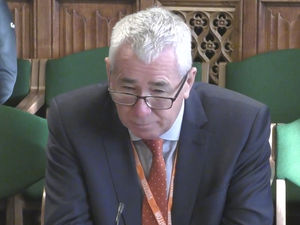
The Government publicly revealing the identity of the agent Stakeknife could help to persuade more Catholics to join the police in Northern Ireland, Jon Boutcher has told MPs.
The Police Service of Northern Ireland (PSNI) Chief Constable also said he did not believe the naming of the of the Army’s spy within the IRA during the Troubles would hamper intelligence efforts in Russia, China or Iran.
Operation Kenova, which delivered its final report in December, looked at the actions of Stakeknife, an agent in the IRA’s internal security unit, who has been linked to at least 14 murders and 15 abductions.
He was widely believed to be west Belfast man Freddie Scappaticci, who was 77 when he died in 2023.

The Kenova report urged the UK Government to publicly reveal the identity of Stakeknife.
The Government has resisted the calls, arguing that departing from its policy of neither confirm nor deny (NCND) in regard to the identity of agents would have implications for national security.
Mr Boutcher, who headed the Kenova team before joining the PSNI, and its current lead officer Sir Iain Livingstone, appeared before the Northern Ireland Affairs Committee on Wednesday.
The Chief Constable told MPs a “compelling” argument had been made why the Government should move beyond NCND in this instance.
He said: “The PSNI are going to be recruiting this week. I am desperate for this society to move forward all communities; not just the two traditional communities, all communities.
“If you look at any of the news outlets in Northern Ireland, a week does not pass by where there’s not a mention of a legacy case.
“And because of our approach to this case and others… the nationalist community see this as a continuation of what’s always happened: protection of wrongdoing by the state.”

He added: “To help society move forward, to help me get Catholic officers into the PSNI, we need to start making some difficult choices.
“And each secretary of state that I’ve dealt with, and I’ve dealt with a number, now get the same advice.
“I’m just asking, please listen to other people who have some considerable experience and understanding and more accountability in policing than in the intelligence agencies.”
Mr Boutcher was asked if naming Stakeknife would pose any risk to current agents.
He pointed to previous incidents where agents had been named and said “the sky didn’t fall in”.
He also referenced the PSNI approach during the inquest into the death of Sean Brown, a Catholic father murdered by loyalists in 1997.
Mr Boutcher said police had provided a “gist” of intelligence information to the proceedings and “that didn’t mean that we lost any agents”.
He added: “There are outside elements, international challenges that they (the Government) also have to consider. Will that have an effect?
“I find it hard to believe that internationally, whether it’s China, Russia, Iran, that people are looking at us naming the agent Stakeknife… that means they’re not going to work for the security forces.
“But I’m happy to listen to arguments to the contrary.”
Northern Ireland Secretary Hilary Benn previously said the Government would wait until the conclusion of a Supreme Court ruling in a separate Troubles case before making a decision on the call from Kenova for Stakeknife to be named.
In December, the Government won an appeal which prevented a coroner in Northern Ireland disclosing certain sensitive material at a Troubles inquest into the death of Liam Paul Thompson in Belfast in 1994.
In its judgment, the court said while it had “considerable sympathy” with the desire of the Mr Boutcher to be transparent, the responsibility lay with the Northern Ireland Secretary over assessing risks to national security.
Sir Iain told MPs he did not see anything in the Thompson judgment which precluded Mr Benn from authorising the naming of Stakeknfe.