Keir Starmer defends digital ID work check plans amid accusations of new U-turn
The Government appears poised to backtrack on its plans to introduce a new mandatory digital identification for right to work checks.

Sir Keir Starmer has insisted there “will be checks” on the right to work in the UK, and “they will be digital, and they will be mandatory”, as he faced fire in the Commons over a U-turn on the Government’s flagship digital ID plans.
The Government appears poised to water down plans for a new mandatory digital identification system for right-to-work checks, aimed at cracking down on illegal working by migrants.
The plan, announced last year, was to introduce digital IDs stored on mobile phones that would only be available to UK citizens and legal residents, and be required as proof of the right to work.
Ministers had also suggested digital ID could be used to provide access to Government services, including welfare and childcare.
On Wednesday morning, Chancellor Rachel Reeves insisted it would still be compulsory to provide ID to prove a right to work in the UK, but she signalled this would no longer be limited to the new digital ID scheme unveiled by the Prime Minister last September.
At Prime Minister’s Questions, Conservative Party leader Kemi Badenoch welcomed the “latest U-turn”, and described mandatory digital ID as a “rubbish policy”.
Responding, Sir Keir suggested the Government is still going to introduce checks to establish people are legally allowed to work in the UK, but did not say this would only be limited to his digital ID.
He told the Commons: “I’m determined to make it harder for people to work illegally in this country, and that’s why there will be checks, they will be digital, and they will be mandatory.”
Ms Reeves earlier told BBC Breakfast: “On the digital ID, for starters, I do think this story has been a bit overwritten.
“We are saying that you will need mandatory digital ID to be able to work in the UK.
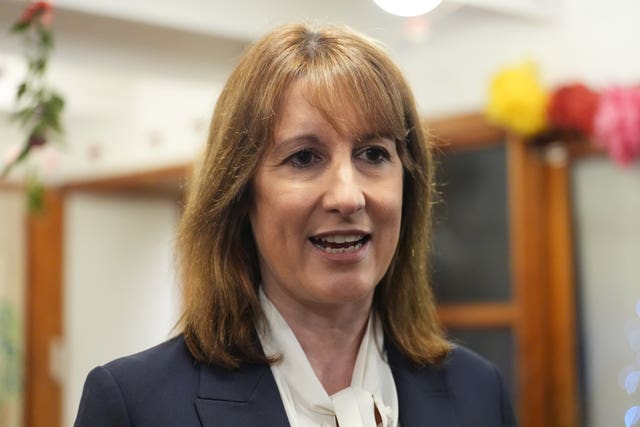
“Now the difference is whether that has to be one piece of ID, a digital ID card, or whether it could be an e-visa or an e-passport, and we’re pretty relaxed about what form that takes.”
She later added during a visit to Leeds: “If you are going to get fixated on whether it is one particular form of digital ID to verify you can work, that’s fine.
“I care about the practicalities, and what we’re trying to achieve, and what we’re trying to achieve is to stop illegal immigration into the UK.”
Business Secretary Peter Kyle echoed this, telling BBC Radio 4’s World At One programme: “Previously, the policy was that we would require a digital ID in order to be eligible to work in the UK.
“That is still true. What we have said and clarify before we even go into the public consultation is that there will be multiple forms of digital ID, including a passport that has a digital chip in it that … all passports have that are newly issued now.”
If work checks were to go digital now, a UK biometric passport would be needed, he confirmed, but said that digital IDs will be rolled out by the time this is planned to happen in 2029.
He said: “We will clarify this near the time what other forms may or may not be useful or needed in those circumstances.
“But let’s be really clear, this means linking people’s biometric data to their immediate identity, and it is done so in a way that is instant, and Government can check instantly their eligibility to work.”
It is the latest in a series of U-turns by the Labour Government, including last week’s decision to provide additional support for pubs facing large hikes in business rates.
It has reversed course at least 11 times so far, including by raising the inheritance tax relief threshold for farmers after months of protest and scrapping a raft of benefits cuts under threat of a backbench revolt.
Health Secretary Wes Streeting told a conference in London on Tuesday that ministers should aim to “get it right first time”.
Government officials have insisted they had “always been clear that details on the digital ID scheme will be set out following a full public consultation, which will launch shortly”.
The change leaves open the possibility the digital ID programme would be entirely voluntary.
When Sir Keir first announced the policy on the eve of last year’s Labour Party conference, he said: “Let me spell it out: you will not be able to work in the United Kingdom if you do not have digital ID.”