‘I donated umbilical cord blood, and another mum’s donation saved my daughter’
Cord blood is rich in stem cells, and can be used to treat cancer, immune conditions and genetic disorders.
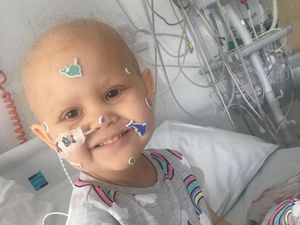
A mother who donated umbilical cord blood after giving birth has described how her daughter’s life was saved by a similar donation just a few years later.
Cord blood is rich in stem cells and is found in the placenta and umbilical cord after the birth of a baby.
It can be used to treat a number of cancers, immune conditions and genetic disorders.

Natasha Kirkpatrick donated her daughter Ellaria’s cord blood when she was born in 2017 at Luton and Dunstable University Hospital.
In 2022, Ellaria herself needed a cord blood donation to treat blood cancer.
Mrs Kirkpatrick said that without the donation Ellaria “would not be here”.
Ellaria, now eight, was diagnosed with acute lymphoblastic leukaemia on Christmas Eve in 2019 when she was just two. She relapsed after chemotherapy.

Ellaria was due to have a stem cell transplant in 2022 but it was cancelled at the last minute when the donor caught Covid-19.
Instead she received an emergency cord blood transplant at Bristol Royal Hospital for Children.
Mrs Kirkpatrick, 37, a teacher from Marston Moretaine near Bedford, said: “I knew about cord blood because I’d donated Ellaria’s own cord blood when she was born.
“The actual stem cell transplant is not scary – it’s syringes and the stem cells going into the blood – but it was a very hard time overall, Ellaria had a virus and was an inpatient for a good five months.
“She is still being monitored and she has some after-effects that affected her heart and brain a little. You would not know what she has been through from looking at her, but what she has been through is just incredible.

“She’s now in Year 4 at primary school. She is a typical girl; loves her music like Elvis, K-Pop and the Spice Girls, her dancing. She is funny. She’s quite a girly girl but with a boy’s sense of humour.”
The mum-of-three, who is pregnant with her fourth baby with her husband Jonathan, added: “I cannot thank the mum who donated the cord blood Ellaria received enough.
“Without the doctors and without that transplant, she would not be here.
“There are really no words to express how I feel. I just think it’s great that people do it -and I was proud to do it myself.”
It comes as NHS Blood and Transplant (NHSBT) announced that it has issued its 1,000th unit of baby umbilical cord blood for stem cell transplants.

The NHSBT cord blood bank in Filton, Bristol, which opened in 1996, is the fourth largest cord blood bank in the world and holds nearly 20,000 donations available for clinical use.
The bank sent out its 999th and 1,000th units, for the same young adult with leukaemia to receive, at the start of the year.
Women giving birth at certain hospitals – University College Hospital, Luton and Dunstable Hospital and St George’s Hospital – can opt to donate once the placenta has been delivered.
The cord blood is then frozen and stored at minus 196C until a match is found.
The donation can be used decades after donation.

NHSBT said that the last 20 cord blood transplants have been issued to hospitals in London, Bristol, Manchester, Birmingham, Glasgow, Canada and the Netherlands, mostly to treat leukaemia but also genetic immunodeficiencies in child patients.
On the 1,000th transplant, Alex Ross, head of NHS Blood and Transplant’s Cord Blood Bank, said: “This was a special moment for our Cord Bank that we’ve been looking forward to for months.
“We thank every generous mum who has donated over the years.
“Cord blood is rich in stem cells. They are extracted from the placenta and umbilical cord after your baby is born.
“The placenta and cord are usually thrown away but when donated they can save lives.
“A transplant from stem cells found in cord blood can be a very effective type of treatment for certain conditions, for example in patients with acute leukaemia or severe immunodeficiencies.
“Stem cells from cord blood can be safely stored for years. Your baby may be grown up by the time they save a life, perhaps even older than the recipient – it’s a very special way to donate.”