‘Disruptive’ snow and rain could hit parts of England this week, forecasters say
The Met Office said that even parts of the south may see some snow on higher ground on Thursday and Friday.
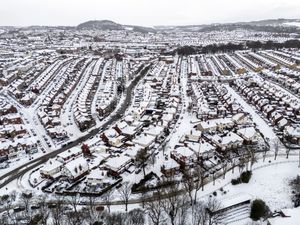
Disruptive snow, wind and rain could hit parts of southern England this week, as an Atlantic low-pressure front meets an Arctic airmass over the country.
The Met Office said that even parts of the south may see some snow on higher ground on Thursday and Friday, while northern and central areas of England could face more snow, with rain and strong winds, depending on the path of an approaching Atlantic low-pressure system.
Forecaster Aidan McGivern said in a video posted on the Met Office’s X account that there is a 20% chance the system takes a northern route, which would bring widespread “disruptive” wind and rain to much of England and Wales, and possibly more snow in northern England, southern Scotland and Northern Ireland.
But he said there was a 30% chance that the front moves through northern France, bringing disruptive snow to southern counties in England, especially in higher areas.
The most likely outcome is wind and rain in southern parts of the UK, with central England seeing the risk of disruption from snow, he added.
Rain turning to snow will hit Scotland and northern England on Tuesday, with 1–5 cm likely in northern England and up to 10–15 cm in central and eastern Scotland, the Met Office said.

Two amber snow warnings have been issued in northern parts of Scotland until Tuesday evening, while there are also yellow snow and ice warnings across southwest England, northern England, eastern England and Wales.
A yellow ice warning is in place in Northern Ireland.
A yellow warning means some disruption is possible, such as travel delays, but many people can continue with their daily routine, according to the Met Office.
An amber warning indicates a higher risk, with severe weather likely to cause travel disruption, power cuts and the potential risk to life and property and people are advised to take precautions.
The UK Health Security Agency (UKHSA) has issued amber cold health alerts for England as an early warning that adverse temperatures are likely to affect health and wellbeing, running until Friday.
Overnight into Tuesday temperatures will once again fall below freezing for much of the country, with the lowest temperatures over lying snow possibly dipping to minus 12C, the Met Office said.
Hundreds of schools were shut on Monday across the UK, while flights were cancelled and trains disrupted.
Temperatures dropped to minus 10.9C at Shap in Cumbria overnight into Monday, and 52cm of snow was recorded by the Met Office at Tomintoul in Banffshire.
Train services in northern Scotland will be disrupted until the end of the day on Tuesday, National Rail said, although ScotRail said services on the route between Aberdeen and Dundee would run in the morning.
CalMac Ferries said services on the west coast of Scotland would be disrupted during Tuesday.

Liverpool John Lennon Airport posted on X on Monday morning to say the runway closed because of the weather and some flights were “subject to delay and there have been some cancellations”.
It reopened later in the day.
Meanwhile, hundreds of thousands of households are getting £25 cold weather payments to help with heating costs amid the dropping temperatures, the UK Government said.
They are made to vulnerable people, including pensioners, to help them pay for heating when the temperature dips below freezing.
Cold weather payments have been triggered on four separate days – December 30, January 1, January 2 and January 3 – covering a total of 451 postcode areas in England, Wales and Northern Ireland.
The Alzheimer’s Society urged people to check in with family and neighbours with dementia to ensure they are kept warm by dressing in layers, keeping rooms warm, using blankets or hot water bottles, staying active, getting natural daylight, maintaining routines, taking care on icy surfaces and eating and drinking regularly.
Angelo Makri of the Alzheimer’s Society said: “There are currently around one million people in the UK with dementia, and for many families caring for a loved one with the condition, winter can be a worrying time.
“Knowing how to best support someone with dementia during the challenging colder months, by regularly checking in with them and following these useful tips, can help to make sure they are comfortable, safe and able to stay as independent as possible. This can also give carers important peace of mind.”