UK manufacturing recovery picked up pace in December as demand grew
The S&P Global UK manufacturing PMI survey, watched closely by economists, showed a reading of 50.6 in December, up from 50.2 in November.
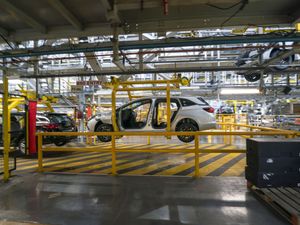
The UK’s manufacturing sector grew at the fastest pace in 15 months in December, as the impact of uncertainty about the autumn Budget and the Jaguar Land Rover cyber attack began to fade, a new survey shows.
The S&P Global UK manufacturing PMI survey, watched closely by economists, showed a reading of 50.6 in December, up from 50.2 in November.
Any reading above 50.0 indicates that activity is growing while any score below means it is contracting.
Manufacturing output increased for the third month in a row and the level of new orders for firms rose for the first time since September 2024, according to the survey.
Some businesses benefited from conditions improving at the turn of the year having come under pressure from challenges in parts of the market.
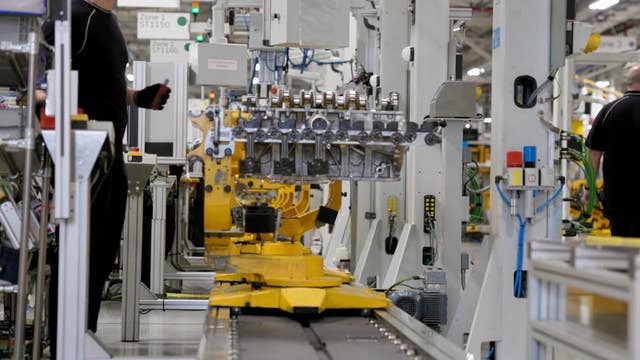
This includes those across the supply chain affected by production shutdowns at Jaguar Land Rover (JLR) after the British carmaker was impacted by a major cyber attack at the end of August.
The incident was linked to a drop in overall motor manufacturing during September.
Sentiment also showed signs of improving since the autumn Budget at the end of November, which provided some certainty over tax and policy measures impacting the UK’s industrial sectors.
Demand within the UK was the main driver of growth in new orders for manufacturers last month, with intakes of new work from overseas contracting for nearly four years.
However, the rate of decline in new export businesses was mild, with UK firms pointing to signs of recovery in demand from the US, the Asia-Pacific and Middle East regions last month.
Rob Dobson, director at S&P Global Market Intelligence, said: “The domestic market remained a positive spur to growth, while new export business, despite having now fallen for almost four consecutive years, took a sizeable stride towards stabilising.
“UK manufacturers benefited from several reduced headwinds towards the end of the year, as the negative impacts of the uncertainty surrounding the autumn Budget, tariffs and the JLR cyber attack all moderated.
“The start of 2026 will show if growth can be sustained after these temporary boosts subside.”
Mr Dobson said the drivers of growth need to “shift more towards rising demand” and away from firms clearing backlogs of work.
Employment within the sector also fell for the 14th month in a row, but at the slowest rate since the period of job shedding began.
Chris Barlow, head of manufacturing at accountancy and advisory firm MHA, said its clients are expecting hiring to continue to slow in 2026 and are “instead looking to find ways to work more efficiently, often by automating or improving their processes”.
He added: “Government measures, such as the confirmed increase to the minimum wage, alongside the impact of the salary sacrifice cap, are making businesses cautious about hiring new staff.”
He also said improving demand in the UK would be “vital for manufacturing’s prospects in 2026 given the path ahead for global trade is not expected to get any easier”.