NI health service problems would become more acute, official warned in 2005
A health department official said there was strong attachment in NI to the NHS model.
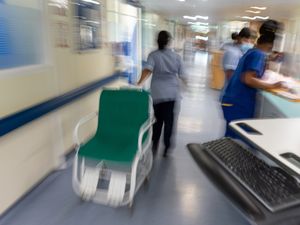
Health services in Northern Ireland faced “difficult problems” in 2005, with a senior civil servant warning that the pressures will “become even more acute over the coming years”.
However, the author of a health review was also told that there was “strong political and public attachment to the NHS model” in the region and that it had provided an “impartial community resource” throughout the Troubles.
Professor John Appleby had begun an independent review into health and social care services in Northern Ireland in 2005.
Declassified papers at the Public Record Office in Belfast show that then-Department of Health permanent secretary Clive Gowdy prepared a paper for the academic where he said the HPSS (Health and Personal Social Services) was “struggling under the combined effect of increasing demands and public expectation, rising standards of clinical and social care governance and spiralling costs”.
He said: “There is strong political and public attachment to the NHS model in NI.
“The HPSS is virtually the only provider of health and social care services here.
“The private sector is small – with, for example, only two small private hospitals – and comparatively few people can afford private health insurance.
“Figures relating to the uptake of private medical insurance show that in 2002 19% of the population in England were covered by such insurance compared to 10% of NI households.”

He added: “The value of the HPSS is also demonstrated by the fact that throughout the 30 years of civil disturbance, the HPSS was viewed as an impartial community resource, providing essential services fairly and equitably across the community and political divide.
“The HPSS dealt with, and indeed continues to deal with, both the injuries and illness directly associated with the conflict and also with the illnesses arising from the economic stagnation, long term unemployment and poverty to which the Troubles contributed.”
Mr Gowdy said services were “faced with the difficulties of coping with the ever-increasing pressures on our health and social care services”.
He added: “It is clear that these pressures will become even more acute over the coming years.
“This will present real resource problems and this issue, which is a problem for health systems world-wide, can not be ignored in Northern Ireland.
“We need an open and honest political consideration of how these demands should be met.”
The permanent secretary concluded: “The reality is still that, while the HPSS is providing essential services across the board to the community, it is falling short on the quality of service it can offer to the public.
“It has not been possible to meet all of the demands from the public and the worst manifestations of this shortfall have been the lengthy waiting lists for inpatient and outpatient services, the trolley waits in A&E Departments, the inability to provide new drug therapies to all patients who need them or would benefit from them, and the shortfall in community social services to vulnerable people and to children.”