Emergency departments in ‘big trouble’ as corridor care ‘normalised’ – expert
The Royal College of Emergency Medicine has questioned why there is not ‘howls of outrage’ about deaths linked to long waits.
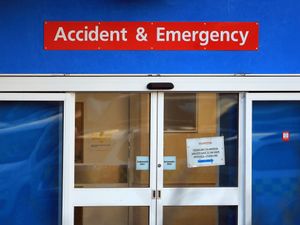
There should be “howls of outrage” about deaths linked to long emergency department waits, a leading medic has said, as he warned that corridor care in NHS hospitals has been “normalised” among patients, staff and health leaders.
Dr Ian Higginson, president of the Royal College of Emergency Medicine (RCEM), said that only a “few” hospitals around the UK have managed to avoid caring for patients on trolleys in corridors.
He warned that emergency departments around the country “are in big trouble” – with corridor care being the main issue.
Patients are now “not surprised” when they are cared for in a corridor because the issue has been “normalised”, Dr Higginson told the Press Association.
But he warned that doctors “can’t deliver care in corridors”.
Earlier this year the college released estimates that suggested there were more than 16,600 deaths of patients linked to very long waits in A&E for a hospital bed last year – the equivalent of approximately 320 deaths a week.
“If we had 16,000 patients a year dying in bus crashes or in aircraft crashes or anywhere else there would be such howls of outrage something would be done about it,” he told PA.
“And yet, we can’t understand why those awful statistics don’t provoke really determined action at the highest level across governments, and they don’t.”
Separate analysis, released earlier this month, found that almost one in five patients treated in UK emergency departments in March were being cared for in “escalation areas”, which were classed as any area not routinely used for care – such as corridors.
Dr Higginson said: “It will be worse now.”
Asked whether the service was in for a bad winter, he said: “If you look at general trends, things are getting worse and worse and worse and worse and worse.
“NHS England has talked about the green shoots of recovery. We just don’t see those at all. I think that is wishful thinking.”
Earlier this month Health Secretary Wes Streeting pledged to end corridor care in hospitals in England by the next general election, “if not sooner”.

Dr Higginson said that efforts to resolve the crisis in hospitals around the UK are focusing on “bits that they think are quick and easy and cheap” – such as “trying to persuade us not to go to hospital, or looking for alternatives to admission, or setting up things like NHS 111”.
“It’s like trying to put out a fire with buckets of water, whilst at the same time chucking fuel on it from the other side, it’s just, it’s not going to work,” he said.
“The solutions are to make hospitals more efficient; to provide more staff to beds in hospitals and to improve community based and social care so that patients can leave hospital where they need to.”
The emergency care doctor told PA: “Emergency departments across the UK are in big trouble at the moment.
“The main problem we have is that we have patients in our corridors – we’re full to bursting.
“And that’s because there aren’t enough beds in our hospitals for us to admit our patients to, and that makes it really difficult for us to look after our patients properly, because we can’t deliver care in corridors.
“And it also creates difficult working conditions for our staff – our staff at the moment are run ragged, exhausted and suffering from a mixture of either burnout, moral injury or exhaustion, PTSD or a mixture of all of the above.
“And the biggest frustration is that this is a completely fixable problem. We know it is. It just requires the political will, the prioritisation and the leadership to make big inroads in it and to make it better.”
Asked if there were any hospitals that are not treating patients in corridors, Dr Higginson went on: “There are probably a very few hospitals that aren’t. They’re likely to be children’s hospitals and children’s emergency departments.
“But I think you’d find it very hard to find emergency departments that do not have patients in their corridors.
“So it’s a problem that is now so widespread that we have normalised it.
“And I think the fact that we’ve normalised it makes it even harder to persuade people that it’s a problem, because it just becomes an expectation.
“Patients expect when they come to our departments to have to wait a long time, and they’re not surprised when they are in a corridor.
“Staff are not surprised where patients are in corridors and and I think our leaders and politicians just accept it as normal and therefore don’t have the same urgency behind it as they would do if it was something that’s completely abnormal.”

Professor Nicola Ranger, chief executive and general secretary of the Royal College of Nursing, said: “Doctors and nursing staff are clear that corridor care is unsafe, undignified and unacceptable.
“But what’s almost as shocking as the normalisation of this devastating collapse in care standards is the lack of urgency in sorting it.
“It has been over 18 months since nursing staff declared a national emergency over corridor care.
“The failure to get to grips with the issue means that patients are routinely coming to harm and even dying unnecessarily.
“That situation threatens to worsen further this winter as cold weather hits – it will mean care in non-clinical areas will spread further, as it already has, beyond emergency departments and to wards and other parts of the NHS estate. It is incredibly dangerous.
“Nursing staff want to see a fully funded action plan setting out eradication. This starts with real investment in beds, the nursing workforce in hospitals and the community, and crucially, long-overdue action to boost capacity in social care to improve discharge.
“Patients don’t have years to wait and every day corridor still exists is a policy failure with devastating human consequences.”
Dr Helen Neary, co-chairwoman of the British Medical Association’s consultants committee, said: “Corridor care is a symptom of a broken system.
“Patients are lying in corridors, being assessed in cupboards and treated in waiting rooms because there are no beds and too few staff to provide safe care.
“As any emergency doctor will tell you, this is the everyday reality, not an exception.
“The Government says it wants to end this crisis but words have not changed conditions on the ground.
“Unless urgent action is taken to expand properly staffed bed capacity and rebuild core services, corridor care will remain embedded in the NHS and patient safety will continue to deteriorate.”
Official NHS figures show the number of people waiting more than 12 hours in A&E departments from a decision to admit to actually being admitted in England stood at 50,648 in November.
An NHS England spokesperson said: “It is totally unacceptable that patients are waiting over 12 hours to be admitted to a hospital bed, and in some cases, this wait is occurring in corridors.
“The NHS is working hard to free up beds by ensuring patients are discharged as soon as they are medically fit to leave hospital or cared for closer to home by improved access to appropriate services in the community.
“This winter, specialist NHS productivity and regional experts are working closely with hospitals to drive down incidences of corridor care, and ensuring patients receive the quality of care they deserve.”
A Department of Health and Social Care spokesperson said: “No one should receive care in a corridor – the situation we inherited is unacceptable and undignified, and we are determined to end it.
“Although things are tough right now and the road ahead is long, our investment and modernisation are making a difference and the NHS is showing signs of recovery.
“Compared to last year, more patients are being seen within four hours of arriving at A&E, and ambulance response times are 10 minutes faster for conditions like stroke or chest pain.”