Bruton contacted Major about Sellafield concerns as legal action was explored
Then-taoiseach John Bruton raised the issue with British prime minister John Major after several safety incidents over a short period in the 1990s.
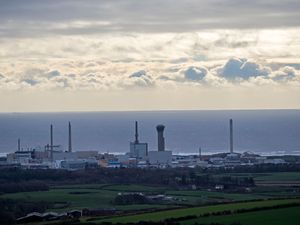
The Irish government considered taking legal action against Sellafield in the mid-1990s, according to archive documents.
Then-taoiseach John Bruton raised the issue with British prime minister John Major after several safety incidents over a short period in the 1990s.
Documents published as part of the annual release of National Archives in Dublin showed that possible legal action over Sellafield and other nuclear incidents was explored at the time.

This was then reviewed by Ireland’s departments of both justice and energy, as well as the offices of the Attorney General and Taoiseach.
“The Attorney-General has previously advised that any such legal action would have to be based on scientific evidence as to the injurious effects of operations at Sellafield-Thorp on Ireland,” a briefing note dated November 29 1995 said.
“The Attorney-General has retained a Senior Counsel who is appearing for the State in the Shortt/BNFL proceedings to review the material and advise him on the matters at issue.”
The briefing document also mentioned that the opinion of the attorney general was sought in relation to an incident involving a Magnox reactor in Wylfa, North Wales, on July 31 1993.
Earlier that year, the Irish government had raised with the British government its concerns about the incident in Wylfa as well as another incident at Dungeness A power station in Kent, England.
The British government was told that the incidents were “a cause of ongoing deep concern” to the Irish government and the Irish public.
Mr Bruton also raised nuclear safety with Mr Major during an informal meeting of EU leaders in Majorca in 1995.
Mr Major wrote to Mr Bruton afterwards to say that he could understand how “people in the Irish Republic may have been alarmed” due to “sensational reports” of the incidents.

Moving to reassure Mr Bruton, he said that safety was the “highest” priority for his government – with the word “highest” underlined.
Mr Major added: “Although some isolated safety incidents have occurred, overall the companies in the nuclear industry have an excellent safety record.”
He also said that they would “not permit any weakening in the current regulatory regime or of the safety standards currently in force”.
“I must emphasise that the HSE is satisfied that no-one was exposed to actual danger as a result of the Wylfa incident,” Mr Major added.
Mr Bruton replied on December 6 to ask that experts from the Radiological Protection Institute of Ireland attend safety inspections of some of the installations involved.
He said: “The precise details of this formal arrangement, if acceptable to you, would perhaps best be left to be agreed between our Department of Transport, Energy and Communication and your Department of Energy.”
Mr Bruton added: “While the two incidents at the Magnox plants may be of relatively little radiological significance, the number of incidents within a relatively short period in the UK gives rise to continued concerns about the safety of the UK’s nuclear industry and the potential for a serious accident with trans-boundary effects for Ireland.”
– This article is based on documents contained in the file labelled 2025/115/541 in the National Archives of Ireland.