Report on risk of holding breath in shallow water driven by authors’ experiences
In 2022, Edinburgh University professor Andrew Baker, one of the authors of the report, and his daughter had to rescue and resuscitate his son George.
Authors of a report on the dangers of holding your breath in shallow water came together to spread awareness after being driven by shared personal tragedy and near-tragedy.
The scientists joined with a collective of experts to write a new report titled The Physiology Of Survival: Breath Hold Shallow Water Diving.
The report focuses on how anyone including young, fit, healthy people can lose consciousness underwater due to shallow water blackout (SWB) and hypoxic blackout (HB).
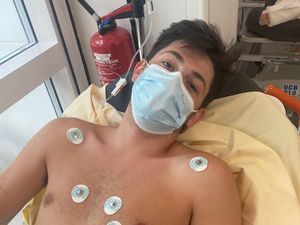
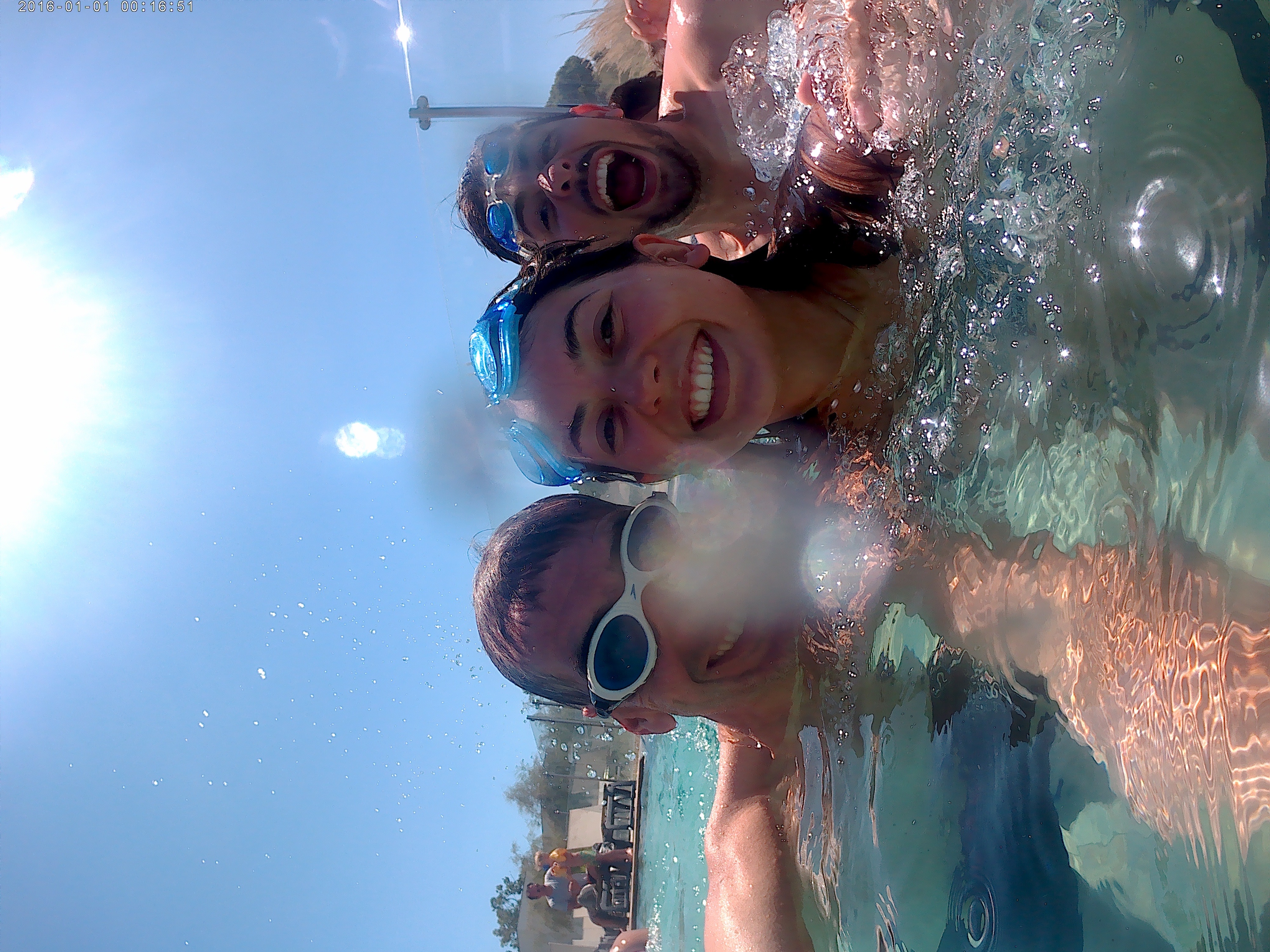
In July 2022, Edinburgh University professor Andrew Baker, one of the authors of the report, and his daughter had to rescue and resuscitate his son George after he lost consciousness swimming underwater in a pool.
The professor working on cardiovascular disease said his son had experienced hypoxic blackout after hyperventilating before holding his breath to dive underwater.
He said: “None of us had ever heard of hypoxic blackout or knew of the risks George was taking.
“We were so lucky that the situation allowed a complete recovery for George.
“I can’t imagine life without him, but I think about that every single day.”
Prof Baker noticed that George had lost consciousness and together with his daughter Serena performed chest compressions and called the emergency services.
George survived and spent four days at Nimes hospital undergoing numerous tests to identify an underlying cause for his cardiac arrest but none were found.
Prof Baker said: “We were so, so lucky that the situation allowed a complete recovery for George. I can’t imagine life without George, but I think about that every single day. We went to the edge of the abyss, but luckily returned.”
He contacted Professor Hugh Montgomery, who lost his son to the water in 2020.
Together they initiated the creation of the new report to raise awareness of the risks of HB and SWB and how to avoid them.
Prof Montgomery said his son Oscar died while snorkelling despite being a confident swimmer.
He said: “Oscar, my 17-year-old son, was extraordinarily fit – a keen rugby player whose true passion was the sea.
“He’d been swimming since the age of three, first used a mask and snorkel at four, and was a skilled spear fisher by 12.
“By 16, every spare moment, even over Christmas, was spent in the water – no matter how cold or rough. He died snorkelling in calm, clear waters.”
The report shows that SWB and HB can be fatal and they usually occur near the surface of the water.
Recommendations the report outlines for pool swimming include warning pool users about the dangers of extended breath-holding.
It also says that extended breath-holding should only be permitted in a structured, organised session led by a competent instructor or coach.
Recommendations for open water swimming include always taking a swimming partner along and that coaches, lifeguards and competent lifesavers should be prepared to act, and should have ready access to rescue equipment, first aid equipment and a defibrillator.
Lead author Professor Mike Tipton, from the University of Portsmouth’s Extreme Environments Laboratory and chairman of the National Water Safety Forum, said: “Everyone is at risk, including the young, fit, and healthy.
“The key to preventing a problem is understanding how it happens.
“For both HB and SWB, this means figuring out the physical and biological reasons they occur – in other words – the cause of death.
“HB typically occurs during breath-hold swimming, such as swimming lengths underwater.
“When muscles work, they use oxygen and oxygen levels in the blood can drop rapidly especially when working hard and holding your breath underwater.
“This rapid fall means that the time between the initial drive to breathe and unconsciousness can be very short.
“If the drive to breath is overridden to achieve a goal (e.g. distance swum underwater) unconsciousness and drowning can occur.
“SWB occurs during breath-hold diving (e.g. free-diving or spear fishing) when returning to the surface.
“The reduction in pressure near the surface causes oxygen levels to fall and can result in unconsciousness and drowning.
“Hyperventilating just before a dive increases the risk because it removes carbon dioxide from the body and therefore delays the urge to get back to the surface and breathe.”