Sunak: I would do the same again on Covid business loans despite fraud risk
Mr Sunak, who served as chancellor during the pandemic, defended the rollout of the Bounce Back Loan Scheme as he appeared at the UK Covid-19 Inquiry.
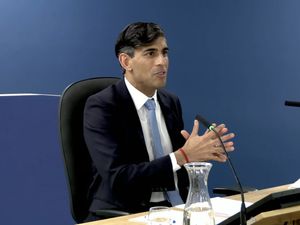
Rishi Sunak has said he would make the exact same choices again in setting up a Covid-19 business loan scheme which has since been criticised for the fraud risks it presented.
The Tory MP, who served as chancellor during the pandemic, defended the rollout of the Bounce Back Loan Scheme as he appeared for a second day at the UK Covid-19 Inquiry, as the probe turns its attention to the government’s economic response to the crisis.
The Conservative former prime minister also told the inquiry that Britain would have faced “widespread business Armageddon” if the government did not intervene, as he was questioned about the Coronavirus Business Interruption Loan Scheme (CBILS), another fund which helped prevent small businesses going bust in the early days of lockdown.
Fraud and error linked to financial support programmes during the coronavirus pandemic cost taxpayers £10.9 billion, a report by the Covid counter fraud commissioner recently found.
Tom Hayhoe, the commissioner, also warned in the report that Bounce Back Loans were among the schemes rolled out with significant fraud risks.
Speaking at the inquiry, Mr Sunak defended his approach during the pandemic.
“I would make the same choice again in the same situation, I would do the same thing again,” he said.
Mr Sunak earlier said the government had “eyes wide open about” the risk of fraud in the scheme, which were backed by a 100% guarantee from the government, “and made the judgment that the risks were outweighed by the need”.
He added: “Over time, we built in more protections. So if this happens in the future those protections will be there, but at the moment we launched this it was not as if we were sat there and just forgot to do something, that two weeks, four weeks, six weeks later we scratched our head and said we wish we had done that.
“That was just not the case. It was a straightforward choice – we can launch this thing now and get going with it so the money gets to businesses, or we can wait, and I think that is the misunderstanding of this.
“Waiting, sure you could have lowered the ultimate fraud levels by waiting and building some of these checks, but you have to then be confident that you were going to accept the loss of business that would result from that.”
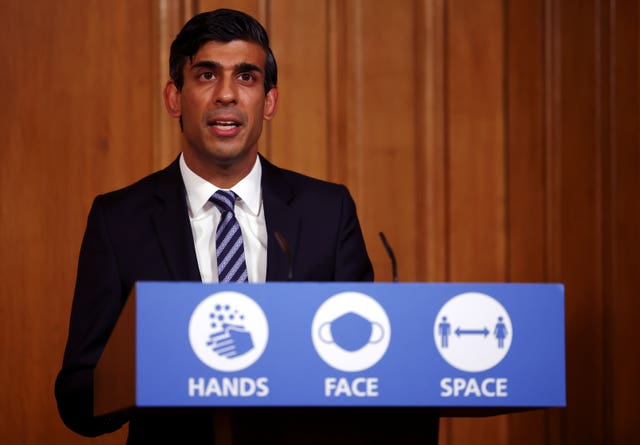
Mr Sunak had earlier insisted the risks of businesses not paying back CBILS loans was “unequivocally” worth it, when balanced against the risks of inaction.
He told the inquiry the first few weeks of the pandemic felt “existential”, adding: “We were facing a situation where businesses, I think it actually came from the British Chambers of Commerce, I think something like half of all small and medium-sized businesses had less than a month’s cash in the bank.
“You were facing widespread business Armageddon and that is why there was an imperative to act at scale and at pace to prevent what I think would have been catastrophic loss of businesses and jobs.
“The independent evaluation has suggested up to three million jobs and half a million businesses that were saved as a result of these interventions.”
Mr Sunak cited evidence given to the inquiry which suggested 4% of Covid loans had been estimated to be fraudulent, comparing it with similar levels of fraud in various areas of the welfare system.
He added: “None of that is acceptable, everyone wants to see those numbers lower.
“But in the context of a scheme that was stood up in days and then implemented over the course of weeks in a crisis, and necessarily having a different approach to these checks, ending up with an estimated fraud level of where it is at the moment, at 4%, which is broadly in line with peacetime schemes elsewhere in government, I think should be seen as a sign that this is far better than I think it was expected at the time.”