Northern Irish leaders use Council Summit to push Starmer on budget
British and Irish leaders have met at the fourth British-Irish Council Summit in Wales.
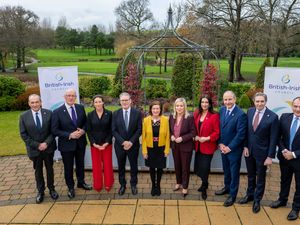
The Taoiseach and Tanaiste have met British and Northern Irish leaders, including Prime Minister Sir Keir Starmer, at the 44th British-Irish Council (BIC) Summit.
The event was hosted by the Welsh Government in the Vale of Glamorgan on Friday.
The BIC was created in the Good Friday Agreement and brings together the leaders of the UK and Irish Governments and leaders from Scotland, Northern Ireland, Wales, the Isle of Man, Jersey and Guernsey.
While the event’s focus was on the creative industries, with leaders discussing the cultural and economic importance of the sector in their areas, they also used the opportunity to raise other issues.
Northern Ireland’s deputy First Minister said she told the Prime Minister she felt the UK’s budget was a “missed opportunity”, a phrase later repeated by First Minister Michelle O’Neill.
Emma Little-Pengelly said there were a number of key things that “didn’t happen”, including a VAT reduction pilot for Northern Ireland and tackling issues with agricultural relief.
She later said: “We are not simply coming to the UK Government to ask for more money, what we are asking them for is to work in partnership with us, acknowledging that in Northern Ireland we need core transformation, particularly within our health service, particularly in big issues, in tackling economic activity.”
The First Minister said she had put directly to the Prime Minister the “anger” felt by families struggling to meet their food bills.
Ms O’Neill said she felt “the policy changes being made in London reflect the needs of the people we represent at home.”
She added: “We’re not asking for special treatment, we’re asking for what is right and proper.”
Ms Little-Pengelly said she also pressed the Prime Minister to extend grace periods for new post-Brexit trade rules, including those around veterinary medicine, which are due to come into force on January 1.
She said “many many pet owners” had received emails telling them their animal’s medicine would be withdrawn from the Northern Irish market.
She said she also raised the issue of the derogation for GB-registered new cars, which is also due to end.
She said the grace periods should be extended while “discussions with the EU are ongoing”.
Ireland’s decision to withdraw from next year’s Eurovision was raised by reporters during the afternoon press conference.
RTE said on Thursday it would not be taking part, or broadcasting the event, after the European Broadcasting Union (EBU) agreed to allow Israel to take part.
Taoiseach Micheal Martin described the decision as “an act of solidarity with those journalists who were killed in breach of international humanitarian law during the war in Gaza”.
Ms O’Neill said the decision sent a “strong message”, and Ms Little-Pengelly said “boycotting a singing competition is not going to make one jot of difference” to the situation in the Middle East.
The next BIC Summit will be hosted by the Government of Guernsey in summer 2026.