Starmer declines to rule out manifesto-busting tax rises in Budget
The Prime Minister refused to repeat Labour’s manifesto pledge on tax.
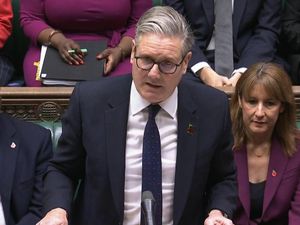
Sir Keir Starmer has declined to say he would stand by Labour’s manifesto pledge not to raise VAT, income tax or national insurance in next month’s Budget.
The Prime Minister said the Government will “lay out our plans” at the November 26 statement, as he sought to blame the previous Tory government for worse-than-expected productivity forecasts from the Office for Budget Responsibility (OBR).
His remarks will fuel expectations that Rachel Reeves’ Budget will involve further major tax rises as she seeks to close a multi-billion pound gap in her plans.
Conservative leader Kemi Badenoch challenged Sir Keir during Prime Minister’s Questions over his refusal to rule out hiking VAT, income tax or national insurance, asking “what’s changed in the past four months?”
The Labour leader replied that no prime minister or chancellor would ever set out their plans in advance.
He continued: “I can say this, Mr Speaker, because the figures on the productivity review that’s being undertaken, this is a judgment on their record in office.
“Those figures are now coming through, and they confirm that the Tories did even more damage to the economy than we previously thought.
“We will turn that around. We’ve already delivered the fastest growth in the G7 in the first half of this year. Five interest rate cuts in a row, trade deals with the US, EU and India.
“They broke the economy. We’re fixing it.”
The Institute for Fiscal Studies (IFS) warned earlier this month that Ms Reeves could need to find £22 billion of tax rises or spending cuts if she is to restore the £10 billion of headroom she left herself against her debt targets in the spring.
That gap is the result of higher borrowing costs, more persistent inflation and weaker growth, along with spending commitments such as partially reversing the cut to winter fuel payments and watering down plans to cut welfare.
Ms Reeves will hope that better-than-expected inflation figures and a slight improvement in some growth forecasts will help ease the pressure.
But the gap could be even bigger than feared, following media reports that the OBR is preparing to downgrade its productivity forecasts by 0.3 percentage points.
Each percentage point downgrade means the Chancellor needs to find around £7 billion to meet her plans, and the IFS forecast suggested a downgrade of only 0.2 points.
This could leave the Chancellor with a gap of almost £30 billion, even before she tries to pay for the expected abolition of the two-child benefit cap.