Met chief: Forces will more often have to release details about suspects earlier
Sir Mark Rowley said in the future ‘we would always want to be more transparent in terms of the data we release’.
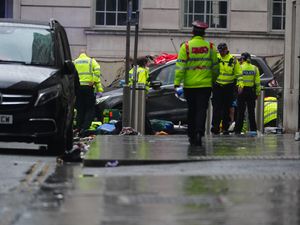
The head of the Metropolitan Police said forces will more often have to release personal details about suspects earlier, after Merseyside Police confirmed the ethnicity of the suspect in the Liverpool car incident within hours.
Metropolitan Police Commissioner Sir Mark Rowley was asked if Merseyside Police were right to release the ethnicity of the suspect.
It comes after the force confirmed they had arrested a 53-year-old white British man from the Liverpool area around two hours after the incident that left dozens of people hurt.
Merseyside Police was criticised in the wake of the Southport murders last summer for not releasing more information after false rumours were started online that the killer was a Muslim asylum seeker.
Sir Mark told BBC Radio 4’s Today programme: “I’m not going to criticise another police chief who makes a judgment in a really difficult, complex situation.
“Every case needs judging on its merits. I think as we go forward in the future, we would always want to be more transparent in terms of the data we release.
“Sometimes the nature of the investigation, the nature of case, makes that difficult, but in principle of course, transparency is good.”
Asked if moving in the direction of declaring a suspect’s ethnicity sooner is the way to go, Sir Mark added: “In general, I think we have to be realistic and more often… put more personal details in public, earlier.”
He added that we are in an age of citizen journalism and “some content will be all over social media very, very quickly” and people will be “making guesses and inferences” so “in that world, putting more facts out is the only way to deal with it”.
Sir Mark also said if those facts “embolden racists” in some cases then “we need to confront those individuals”, and added: “Trying to avoid truths when half the truth is in the public domain is going to be quite difficult, going forward.”
Chairman of the National Police Chiefs’ Council, Gavin Stephens, said while transparency would help stop the spread of misinformation and disinformation, the public would also have to trust officers when they are not able to give out details about suspects.
He told journalists at a briefing in Westminster: “Some of this information is going to appear online very quickly from other sources, people’s own mobile phone footage, the passing cyclist with a helmet camera, and assumptions will get made on the back of that material that’s already in the public domain.
“It’s incumbent upon policing to be as transparent as we can be in order to protect wider public safety and be open with the public.
“What we can’t do, of course, and nor would we ever want to, is jeopardize any ongoing court proceedings that might arise.
“There will be cases where policing will have to say, ‘we are not releasing that information now for very good reason’, and sometimes we might not be able to give that reason publicly.
“But hopefully, in demonstrating transparency on those cases where we definitely can be transparent, hopefully, it will help to build trust that if we do say, look, on this occasion, we can’t, that people will understand why.”
On Tuesday, former Metropolitan Police chief superintendent Dal Babu told BBC Radio 5 Live the speed at which police released the race and ethnicity of the suspect in the Liverpool car incident is “unprecedented”.
In March, Chief Constable Serena Kennedy told MPs she wanted to dispel disinformation in the immediate aftermath of the Southport murders by releasing information about attacker Axel Rudakubana’s religion, because he came from a Christian family, but was told not to by local crown prosecutors.
Police did disclose that the suspect was a 17-year-old male from Banks in Lancashire, who was born in Cardiff.
Widespread rioting followed the murders, with some disorder targeting mosques and hotels housing asylum seekers.