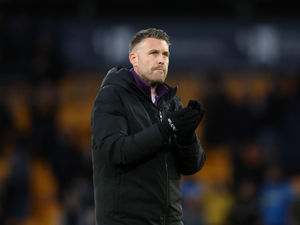
Blog: Questions for Jez Moxey's Wolves exit
To mention that Jez Moxey has divided opinion over the years is a huge understatement, writes Wolves blogger Tom Tracey.
News broke on Thursday that the Fosun takeover of Wolves had been completed.
It was also announced that after 16 years as chief executive officer, Jez Moxey is set to step down from his role within three months.
Many have been clamouring for his resignation over the years, most recently when a petition to reconsider the shirt sponsorship agreement with the Money Shop reached over 13,000 supporters.
When Jez Moxey joined Wolves' board in 2000 at the age of 37, he had already held authoritative roles at Partick Thistle, Rangers and Stoke City.
During his tenure at Wolves, he has overseen three promotions and three relegations.
Wolves' average position in the footballing pyramid has been 27th – or seventh place in the Championship - just outside the play-off spots that have so often been the target of the club's ambitions.
Although Wolves have progressed massively under Moxey's tenure in comparison to the prior years, achieving four Premier League seasons, the club are still in the same league as in 2000.
The same league where big money has begun filtering down from the Premier League riches, meaning some clubs are able to bid eight-figure sums for players.
Wolves have struggled to compete, last season especially. However, Steve Morgan and Jez Moxey have overseen a considerable advancement in infrastructure.
It includes the new North Bank and the revamped Compton training ground and academy.
Since its inception, the Category One status awarded to the best academies in the country has been bestowed on Wolves. But Moxey is the archetypal pantomime villain at Wolves.
However, over the last year or so his peers have chosen him to represent the Championship clubs on both the Football League's board and the FA's board.
His Championship peers also voted him the league's 'CEO of the year' back in November, showing that he is highly regarded by his fellow professionals.
His strongest skills as a CEO have been in negotiating transfer deals for outgoing players such as Ade Akinbiyi, Joleon Lescott, Matt Jarvis and Steven Fletcher.
He's ran the club prudently and not allowed it to fall into debt, as so many other clubs in England are.
Since 2000, Wolves have spent roughly over £20m surplus on transfers, equating to just over a million pounds net spend on transfers each season.
His ability to keep Wolves in the black would have made the club a more attractive prospect to any potential buyers.
It means that along with the 100% ownership of the club they get a blank slate in terms of finances.
All big earners are also off the books, with many of the remaining players on low wages compared to other Championship clubs.
He is certainly not without criticism though. Wolves' prudency in the transfer market has frustrated fans that could view it as a lack of ambition.
The flipside to Moxey's tight negotiating when selling players is that the club have missed out on targets such as Scott Dann, because of better deals elsewhere.
With Fosun's money behind them, the club can be bolder and not look only to bargain deals. Similarly, there is a sense of disconnect between Moxey and the fans.
A key moment in recent seasons was his undelivered promise that the club would replace Bakary Sako, which failed to materialise.
He was later quoted at a Fans' Parliament meeting, claiming that 'replacing him like for like was never likely to happen.'
Back in 2007, an FA Cup tie at home to rivals West Brom became a PR disaster and caused a huge rift between Moxey and the fans.
The 5,000 away ticket allocation saw the Baggies fans handed the South Bank for the day, whilst the exiled Wolves fans were offered a pie and a pint by way of recompense.
Moxey's salary is another common criticism, with many believing that he has been paid too much in recent years, especially with the recent double relegation.
We will perhaps never find out the real reason why Moxey has chosen to depart the club when it was believed he would stay on.
We will also never know if his presence helped the club or inhibited it, as the newfound wealth means that the Steve Morgan and Fosun eras cannot be fairly compared.
What we do know is that the club now has to find the right person, with the right blend of footballing knowledge and managing operations, to take up the role and lead Wolves to new heights.