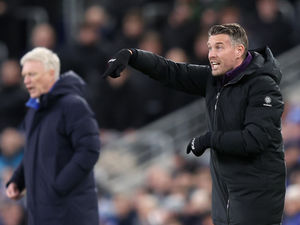
Core values that made West Brom's Tony Pulis 'the lucky one'
'Out of all the family, I was the lucky one, I was the one that got out, so I don't regret anything and I don't want for anything.'
Today is a landmark one for Albion head coach Tony Pulis.
It's his 1,000th game in management after 24 years at the coalface, and although he's divided opinion among supporters for the majority of that time, he's also climbed up the divisions to become one of the most recognisable characters in British football.
It's been a long journey from humble beginnings in Pillgwenlly, South Wales.
"There were eight of us living in a three-bedroom terraced house, and if mum ran out of milk she would go next door and the neighbour would give her a bottle of milk," he reminisced. "That would happen through the street, through the area, everybody helped everybody.
"I remember the miners' strike in the early 70s, nobody could get coal, or this or that, and people went round houses. If people were short, people would look after them."
That community spirit has stuck with Pulis ever since, and it shines through in his football ethos.
The 58-year-old has witnessed a lot of changes in the game over the past quarter of a century, but there are some constants, like teamwork and hard graft.
"I have always instilled – which is so important to me as a manager of people – the DNA get on together," he said. "Everyone was prepared to work together, and everyone either won or lost together."
The former Stoke boss is well aware of his reputation, and the lazy pundits who label his tactics 'anti-football'.
Modern Premier League football is a pantomime, with heroes and villains, and it's all too easy to cast Pulis as the latter because of his 'agricultural' approach.
But if it was that simple then surely the coach who's never been relegated would have been found out by now.
"People say about me and my style of play," he says. "I tell you what I do, I go into football clubs, try and find out what systems suit those players and try to get the damnedest out of the players.
"That's what I've done everywhere I've been. If I've got a load of centre-halves who can't pass, you don't want them to pass out from the back. You have to look at the strengths and work around that."
Is it irritating though, being one of the longest-serving managers in British football, but saddled with such a one-dimensional reputation?
"That is life, you get pigeon-holed and you accept it or you fight it. I have accepted it, that is what people think. There is enough people out there that see it differently."
Although he's quick to point out how lucky he's been, there is a slight annoyance that he's never been given the best squad, in any division.
Gillingham, Portsmouth, Plymouth; they were all struggling when he took charge, and he left all three in a better position. The same can be argued for Stoke and Crystal Palace.
One day, he'd love 'the opportunity of working with real quality'. "The basic principles would remain," he assures. "But you'd give them more leeway to express themselves and make decisions themselves."
The closest he ever came to that was at Palace, when the style evolved into something more exciting, more entertaining.
"Palace is an ideal scenario," he said. "When I went there, the players and the team were all over the place. We managed to get some players in during the window. But during that early time the biggest thing was finding a way to win."
That doesn't mean he's not unashamedly old school. The piece of advice that has stuck with him since his early days came from former Roma, QPR and Fulham boss Alec Stock: "Tony, believe your eyes, never go away from that."
And he still does to this day, far more than any modern gizmos like heart-rate monitors.
"There was one pre-season when I didn't use it, and somebody said how can you monitor them?
"I said, if they are sweating and moaning they are working, and that was my motto.
"Sometimes when they have monitors on they are not sweating or working and you think, is it all up to speed?"
There's also been some memorable scraps. He refused to go into detail about specific incidents – like the infamous naked head-butt on striker James Beattie – but he did say: "If someone has been top cock, I've knocked him down. Some respond, some don't. As Cloughie used to say, there's no room for two big heads in this club."
But football has changed since the days of Brian Clough. There are no more dressing room brawls, no more pinning players against the wall.
"There was a time and place for that, but that was years ago," said Pulis. "There are times when I still lose my temper and go after one or two players but it would never come to that. You couldn't do it."
Money has changed the dynamics of football, and not necessarily for the better. Pulis say players are 'film stars' now, paid extortionate amounts of cash far too young, and it is detrimental to their development as people.
His solution? A day working in the local industry to bring them back down to earth.
"One day at Stoke we took them to the pots," he said. "Show them what kids will have to do when they leave school rather than playing football, being given 30 pairs of boots, being paid a lot of money. They need a reality check."
There are still plenty of good eggs though, such as Ryan Shawcross, of whom he's incredibly proud.
But he's managed plenty of rascals too. So what's the best excuse he's ever heard?
"Ricardo Fuller must have had about 40 aunties and uncles, every season he would want to go off and have a week in Jamaica because one of his relatives had passed away. He would have to get back, and it was always a 10-day ceremony!"
Although it's been nearly a quarter of a century in various hot seats, Pulis has no plans of retiring any time soon, there's plenty more petrol left in the tank.
The passion still burns away inside, and the defeats still hurt as much.
"I've got a little room which I just go in," he revealed. "There is a just a television in there and my wife brings my food and a glass of wine. Then she leaves me till the next morning."
But the fiery coach has mellowed with age, thanks in part to the arrival of grandchildren. "They are lovely, they bring you back down to earth."
To casual observers, Pulis is just a baseball cap and a pair of toothpaste-white trainers.
"I had a shoot with the BBC and they wanted me to put trainers on, and I asked why. They said 'you get a brand new pair every game?' I said 'What? This is West Bromwich Albion. They get washed!'"
Reducing a manager of such longevity to two items of clothing is borderline insulting, and there's obviously much more to the man than that.
A Napoleon enthusiast, when he eventually retires he would like to complete one of the Frenchman's marches across the Italian Alps and there are plenty more strings to his bow that he won't reveal.
"Every manager has a different side to him which is never shown or seen," he says. "You have to."