Barbara Windsor’s widower campaigns on Alzheimer’s as he ‘owes it to her legacy’
EastEnders and Carry On actress Dame Barbara was diagnosed with Alzheimer’s disease in 2014 and died in 2020 aged 83.
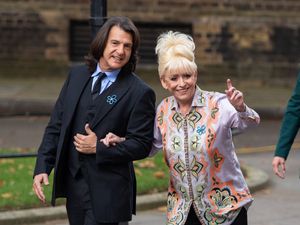
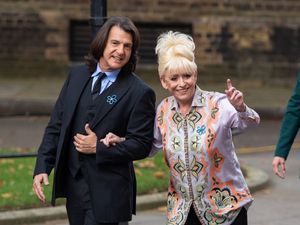
The husband of late actress Dame Barbara Windsor has spoken about her “heartbreaking” Alzheimer’s diagnosis and said he campaigns over the condition as he owes it to her and her legacy.
EastEnders and Carry On actress Dame Barbara was diagnosed with Alzheimer’s disease in 2014 and died in 2020 aged 83.
Her widower, Scott Mitchell, who married the actress in 2000, has campaigned for organisations such as Alzheimer’s Society and has called for the Government to improve its care for dementia patients.

Previously he was an ambassador for Alzheimer’s Research UK but stepped down last year and has ran the London Marathon multiple times to raise money for the condition.
The 62-year-old actors’ agent, who said he is now an independent campaigner for Alzheimer’s, told the Press Association he thinks the Government needs to let the public know that dementia care “is a priority” and that it is “doing something” to improve this.
He said: “To be a carer for someone with dementia is all-consuming.
“It is heartbreaking to watch someone you love slowly disappearing in front of your eyes, and you can feel very alone and very isolated – and very helpless to the person that you love, because you know they will go through all different kinds of symptoms.”
Mitchell added: “Not everyone has the same journey, but a large majority of people that I speak to when I go out and do talks share some of the experiences that I did, and they’re ones that never leave you.
“I’ve got nothing personal to gain from this campaigning. I don’t get paid for anything I do.
“I do it because I feel so passionately about it, and Barbara started this with us, and I owe it to her and her legacy to see it through for as long as I can.”

The couple, who were married for 20 years, campaigned for awareness of the condition together and in 2019 they delivered a letter to then prime minister Boris Johnson, calling on him to address the “devastating state” of dementia care.
When asked what his message to Prime Minister Sir Keir Starmer and Health Secretary Wes Streeting was, Mitchell said: “Give dementia parity with other illnesses and topics they message to the public.
“It’s bad enough a loved one can forget you, let alone on top of that a government seemingly forgets you, too.”
The comments come after the husband of former TV presenter Fiona Phillips spoke about the lack of Government funding into Alzheimer’s treatments on ITV’s Good Morning Britain earlier this week.

Former GMTV presenter Phillips announced in 2023 that she had been diagnosed with early onset dementia, after initially thinking she was having menopause symptoms when she first started experiencing “brain fog and anxiety”, and has gone on to write a book on the subject.
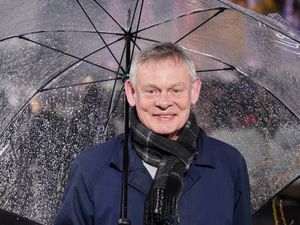
Speaking about Martin Frizell’s appearance on the show, Mitchell said: “When I see Martin Frizell sitting there, I can see the exhaustion.
“It takes me right back to everything that I lived through with Barbara.
“I’ve seen the devastation it causes to someone you love, and so many people are going through it as we speak. So many people feel isolated and alone.”
Alzheimer’s is described as the most common cause of dementia, which is the name for a group of symptoms associated with an ongoing decline of brain function, according to the NHS website.
It is a “progressive condition” that can affect memory, thinking skills and other mental abilities, with symptoms developing gradually over many years and which often become more severe.