
The miners' strike 40 years on: The day relations between the police and miners changed forever
The baking sunshine glistens in the vast man-made lake, while residents of the vast new housing estates walk their dogs.


Giant wind turbines tower above the university campus in the distance, framed by the glass and steel frontages of the neighbouring technology companies.
And then, jarring incongruously with the scene of serene modernity, is a scruffy-looking footbridge covered in graffiti: "Scargill No.1" it says in one place. "Tories out!" in another.
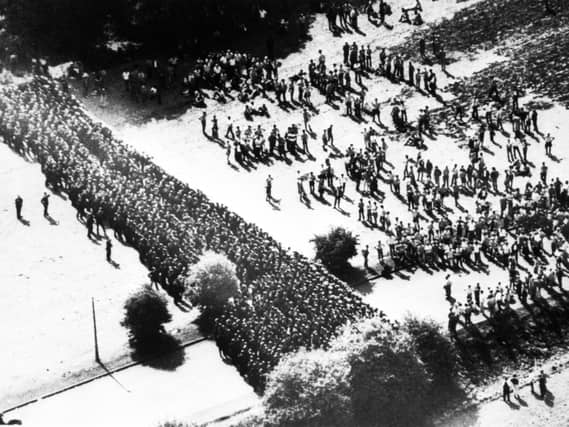
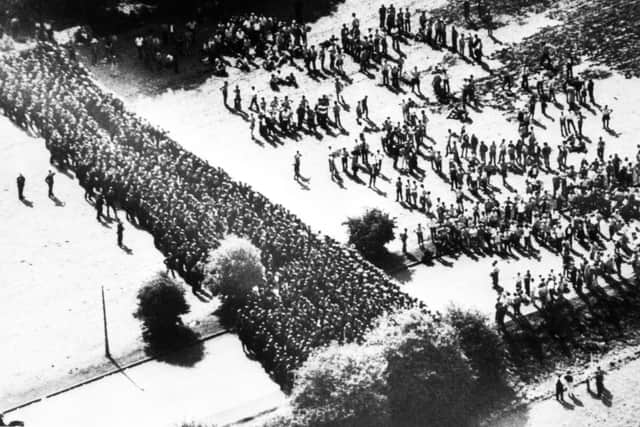
This is where the Battle of Orgreave took place. The disorder, which saw mounted police clash with hundreds of pickets, looked more akin to a skirmish during the Norman Conquest than a modern-day industrial dispute.
At least 123 people were injured, although the NUM claim the figure was higher.
Journalist Alastair Stewart described the disorder as 'a defining and ghastly moment' that 'changed, forever, the conduct of industrial relations and how this country functions as an economy and as a democracy'. Historian and former Labour MP Tristram Hunt described it as 'almost medieval in its choreography... at various stages a siege, a battle, a chase, a rout and, finally, a brutal example of legalised state violence'. The left-leaning barrister Michael Mansfield said it was 'the worst example of a mass frame-up in this country this century'.
For Scargill, this was meant to be a re-enactment of Saltley Gate. His shutdown of the Birmingham gasworks had forced Ted Heath's government into total capitulation, and turned him into the most prominent trade union leader in the country. Now, he saw the same to do the same with Margaret Thatcher.
Scargill regarded the coking works at the former Orgreave Colliery, just outside Rotherham, as of crucial strategic importance in his battle with the Government. The plant turned coal into coke for use in steel production, and in the early months of the strike, the NUM agreed to limited movement of coal to prevent damage to steel furnaces. However, Scargill and many senior figures in the NUM became convinced that the National Coal Board was abusing this agreement, and exceeding its quotas.
An informal pact, known as the Triple Alliance, had existed between the NUM and the unions in the steel and rail industries, and Scargill asked steelworkers not to handle deliveries of coal. But Bill Sirs, leader of the Iron and Steel Trades Confederation (ISTC) defied Scargill's call, saying that it would put rolling mills and billet forges out of action, putting his members at risk of job losses. Sirs instructed his members to handle any fuel they were presented with.
Scargill's policy of targeting the steel industry was also met with some opposition within his own ranks. The steel industry was a major customer of the National Coal Board, and Scargill's deputy Mick McGahey was concerned that shutting down parts of the steel industry would simply lead to a decline in demand for coal. McGahey, was particularly concerned about the Ravenscraig steelworks in Scotland, which he had campaigned to save – he knew that just a single day's stoppage could sound the death knell for Ravenscraig.
Tensions were running high in Yorkshire following the death of Joe Green, a picket who was fatally struck by a trailer while trying to stop deliveries to Ferrybridge power station. Two days after Green's death, Scargill addressed a packed rally at nearby Wakefield where he made an impassioned plea to close Orgreave.
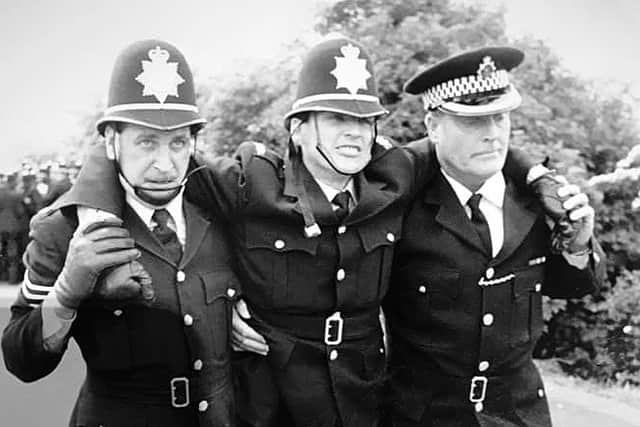
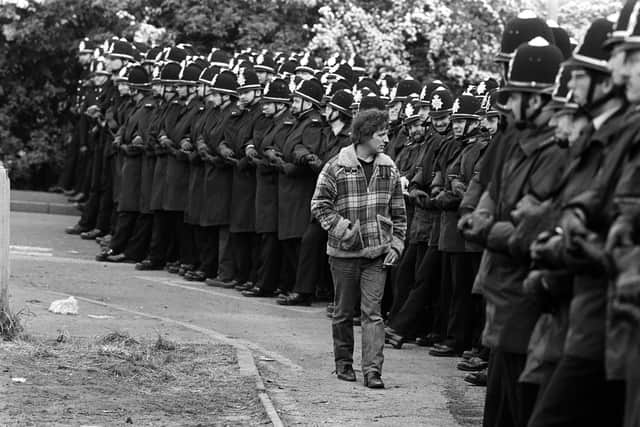
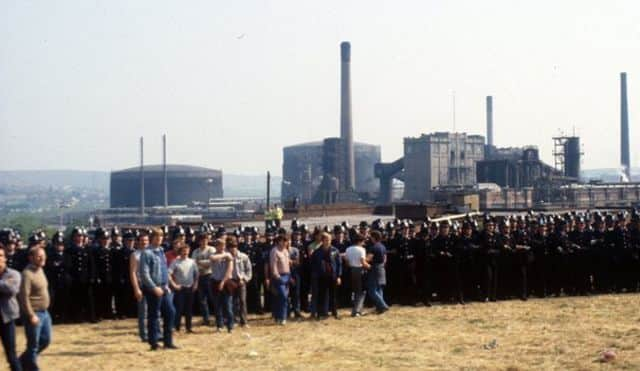
The following day, Scargill deployed 5,000 pickets from across the UK with the aim of closing the plant down. Determined there would be no repeat of Saltley Gate, South Yorkshire Police drafted in 6,000 officers from 18 different forces, and they were issued with full riot gear for the first time in the 12-week-old dispute. Among them were 42 mounted officers, and dog units were also called in. The battle lines were drawn.
On the morning of June 18, 1984, pickets began to gather at about 8 o'clock in an effort to stop the convoy of British Steel coke lorries from entering the depot. Hundreds of officers lined the road to ensure their safe passage, and a nervous stand-off took place.
According to Tristram Hunt, 'a few missiles and bricks were thrown', and assistant chief constable Tony Clement, the commander on the ground, responded by sending in the mounted police.
"It was a serious over-reaction and the miners' mood quickly turned violent," says Hunt.
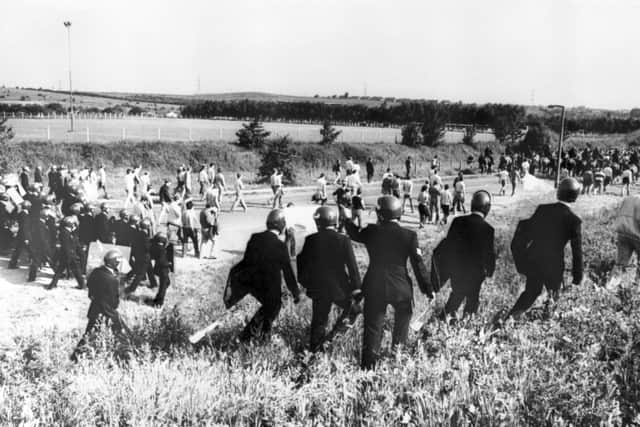
The pickets countered with a second push, Clement ordered another mounted advance and demanded that the pickets disperse. They refused and Clement ordered a third advance, backed up by baton wielding police in riot gear.
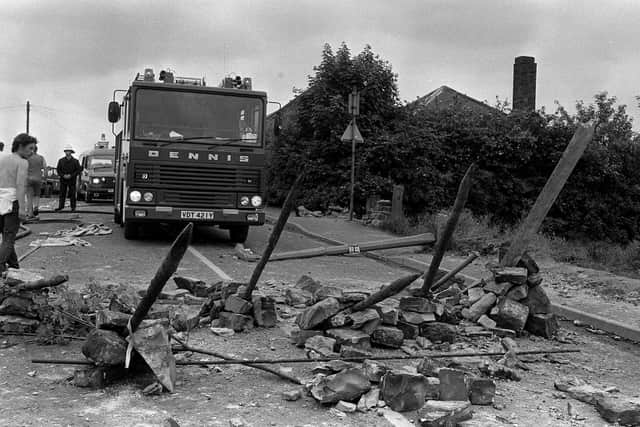
Mayhem followed, and any semblance of order quickly disappeared. Accounts vary widely, but it is broadly accepted that bricks were thrown at police, and some responded by beating unarmed pickets with their truncheons. The image of bloodied picket Russell Broomhead, allegedly beaten about the head by a police truncheon, became a potent symbol of the battle. Striking miners claimed they were forced to flee across a live railway line to escape the advance of mounted officers. The following day's newspapers were filled with pictures of injured pickets, police and pitched battles. It was the day that changed the relationship between the police and mining communities for a generation.
Pc Bob Moon, on secondment from West Midlands Police on the day of the disorder, was one of the officers who were injured.
"I caught a brick on my ankle which cracked it," he recalls. "I got a very nice letter from the Chief Constable of Yorkshire Police."
Bob blames 'political activists' for stirring up divisions. He and his fellow officers had been billeted to an RAF base, where they lived in three-bedroom semi-detached houses previously used by forces families. He recalls the first time he and his colleagues tried the village pub.
"Four of us went down in the village to a quiet looking pub," he recalls. "We were dressed in jeans and sweatshirts and just looking for a quiet couple of hours away from the mind-set of the strike.
"I went to the bar and asked for four pints. The barman looked me in the eye and said nothing. I asked again and again, but he kept staring at me and saying nothing. I wondered whether I'd got two heads or maybe I'd said something to offend him.
"Again, I asked for four pints and this time added, 'look, we just want a quiet pint, OK?' By then, the pub had fallen silent and I was aware all the customers were looking at me.
"I glanced at the boys who were sitting at a table by the door. We always sat by the door to give ourselves room to fight and drag our opponents outside and to see who came in. I turned back to the barman and raised my eyebrows without saying a word. Very quietly, he asked, ‘are you police?' We never hid what we did, so I said yes. He asked, 'are you here because of the strike?' I told him, 'we wouldn’t be here on ****ing holiday, would we?'
"He laughed and started pouring the beer. He explained the pub had been visited numerous times by men dressed like us, but were political activists and they had upset the locals. I asked him what he meant by upset. He shrugged and said most of them now carried weapons. I took the tray of beer over to the boys and a young girl, about 17, came over and sat down at the only spare chair at the table.
"Her father was a retired miner and she told us he had visited the miner’s social club the previous week and been beaten up when he left. She had tears in her eyes.
"While she was speaking, the whole pub was quiet. Everyone seemed to be watching us and we were watching them out of the corner of our eyes. I was waiting for a sign to indicate trouble, but I didn’t see one. What I saw was a group of people who wanted to talk, but couldn’t – people who were scared.
"The village was a working village, a place where some people had refused to strike – and one of the places visited by activists. The people had been intimidated, threatened and some of them had been attacked.
"They were honest, peaceful people and all of the trouble had come as a shock. They did not want it, had not invited it and did not understand the violence.
"To them, the activists were bad enough, but then there were armies of police from other parts of the country. Their whole world had been turned upside down."
For Lyndon Whitehouse, there was little time to frequent the local hostelries.
"We paraded at Tipton at 2am and travelled to south Yorkshire on a daily basis," he says.
"We used to get back around 7pm and were back on duty at two. On one occasion, I suffered an ankle injury and was taken to Rotherham General Hospital which was packed with police and miners."
Kevin Horne, a 36-year-old striking Yorkshire miner at the time, recalls events somewhat differently.
"We parked up in an estate and walked down past the old spoil tip," he says.
"We were halfway down when the police came into sight in a field down at the bottom and we stopped and just gasped.
"My mate said to me 'it’s like an army' because there were 5,000 police officers marching in blocks. And these weren’t on the frontline they were in reserve, with horses and dogs. It was frightening."
Like many pickets that day, he believes they were set up by police officers, who were intent on a ruck.
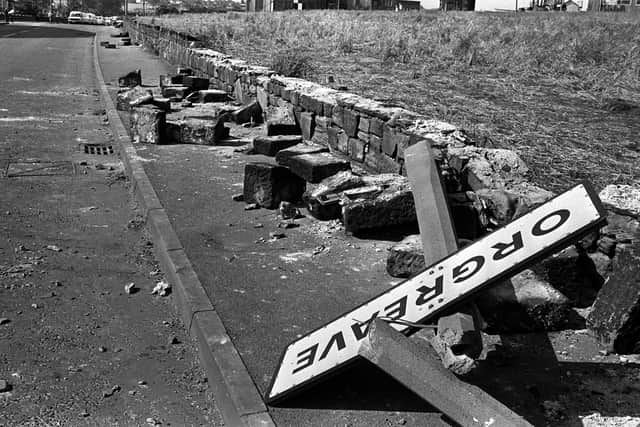
"There were coaches from south Wales, Scotland and Durham and the police were waving them in. This had never happened before, there were signposts saying 'this way to Orgreave'. They took us there to give us a good hiding and that’s exactly what they did. They wanted to break the miners."
Assistant Chief Constable Tony Clement denied that there was any intention to attack the miners, but made clear that the police were ready for violence. "If it was going to be a pitched battle, it was going to be on my terms," he said.
Peter Wright, the chief constable at the time, insisted the response was proportionate.
"The numbers of police officers there has been increased as the number of pickets increased and any police reaction was to something the miner pickets were doing," he said on the day of the drama.
Skirmishes continued throughout the weeks that followed, and on May 30 Scargill himself was famously arrested. He was fined £250 for causing wilful obstruction.
After the trials of the 95 pickets collapsed, 39 sued South Yorkshire police for assault, false arrest and malicious prosecution. The force eventually settled out of court, paying £425,000 in compensation in 1991. But it never admitted liability.
In 2012 South Yorkshire Police referred itself to the Independent Police Complaints Commission following allegations in a BBC documentary that some officers might have colluded in writing court statements. But in 2015 the IPCC concluded there was no 'direct evidence' of senior officers within the force instructing colleagues to commit perjury and announced it would not hold a new investigation into claims police used 'excessive force'.
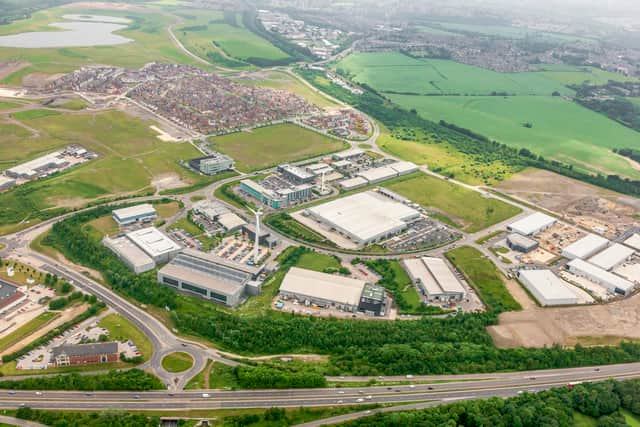
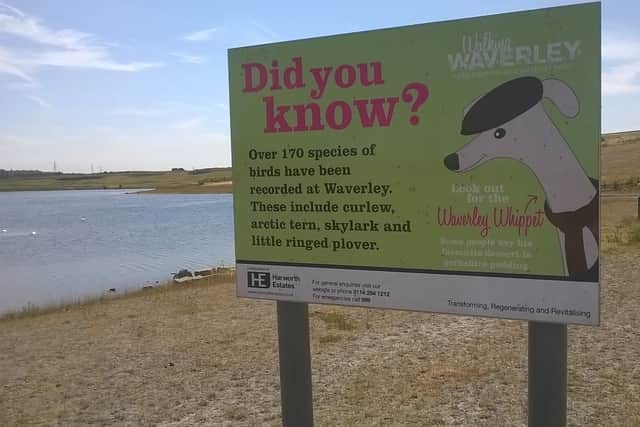
Today, few people in Orgreave talk about the battle. The coking plant closed in 1990, and the site was redeveloped by the Harworth Group, the former property arm of the National Coal Board which reinvented itself as a developer specialising in brownfield reclamation.
Now rebranded as Waverley, the area has been gentrified, and is largely occupied by young professionals, and you detect little nostalgia for the days of coal.
A man sitting on a bench overlooking the lake tells how the area has changed since his youth.
"It's a lot better. It was a messy area around here, it's a lovely environment here now, people appreciate it."
Comment Guidelines
Iconic Media encourages reader discussion on our stories. User feedback, insights and back-and-forth exchanges add a rich layer of context to reporting. Please review our Community Guidelines before commenting.