
Step back to the 1970s, when the sound of heavy machinery, the glow of furnaces and the bustle of factory floors were woven into everyday life across Wolverhampton, the Black Country and Staffordshire.
This gallery brings together archive photographs capturing life inside and outside the region’s factories and workplaces. From roaring furnaces and pneumatic hammers at historic toolmakers to quiet, ivy-clad works, purpose-built industrial estates, picket lines and factory closures, these images offer a vivid glimpse of the people, places and working lives of a region at the heart of Britain’s industrial story.
Do you remember these workplaces, or did you or someone in your family work there? Share your memories and stories in the comments.
- Take a look at these 31 pictures capturing the spirit of Wolverhampton and the Black Country.
- You can enjoy this and more with our weekly FREE Nostalgia Newsletter - with scores of archive pictures and exclusive features on the history of Wolverhampton, Staffordshire and the Black Country - all sent to your inbox every week. Sign up here.
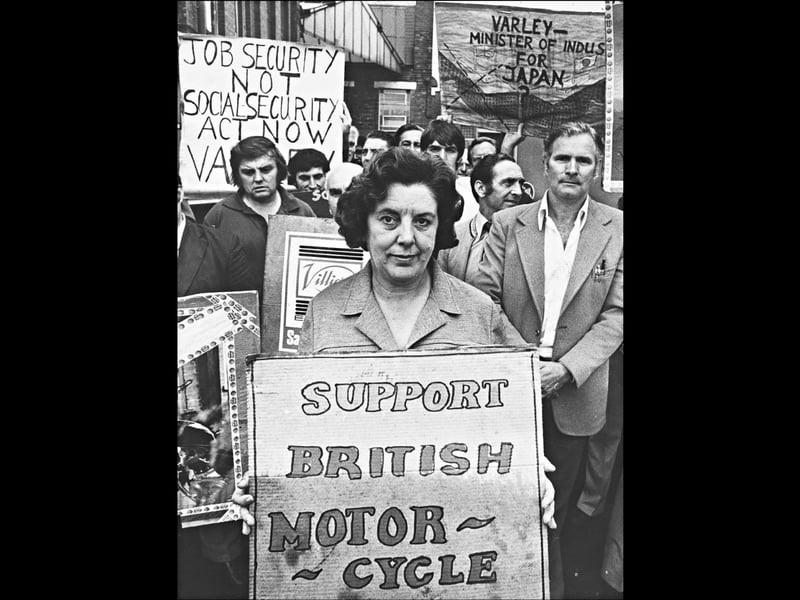
1. Pickets, placards, and a lifetime’s loyalty on the line in the battle for British manufacturing
Holding a handmade sign declaring "Support British Motor Cycle," Jean Fallon stands resolute at the forefront of a demonstration in August 1975. Behind her, fellow workers hold placards addressing Eric Varley, the Minister of Industry, demanding "Job security, not social security". The photo captures the devastating human cost of the collapse of Norton Villiers Triumph (NVT). For long-serving employees like Ivy Cook - who had worked at the Marston Road factory in Wolverhampton for 38 years alongside her husband Idris, a Rhondda ex-miner with 29 years of service - the sudden crisis left whole families facing the dole. It remains a striking snapshot of the personal and political fights waged to save the West Midlands motorcycle industry. | Express & Star archive
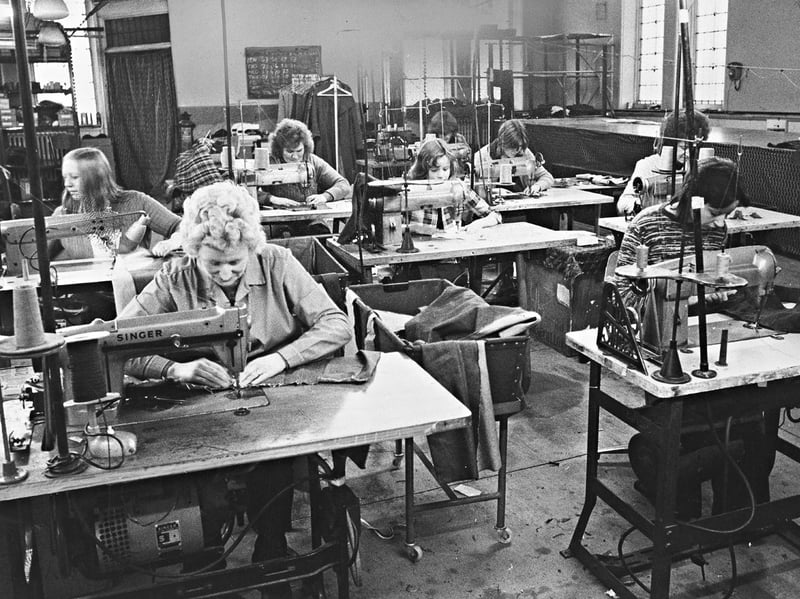
2. Uncertain futures at the sewing machines as factory workforce faces council redevelopment threat
Seated at their Singer machinery in February 1976, women construct garments inside a converted former Methodist church on High Street, Chasetown. The 20-strong workforce at Tricorne Fashions faced sudden job uncertainty when Lichfield District Council designated the factory site for new housing development. General Manager William Essex vowed to fight the decision at a planning inquiry, having just secured two major orders that would have expanded the team by another 30 workers. With bobbins, fabric bins, and industrial sewing equipment filling the hall, the photograph captures a poignant moment of local textile manufacturing caught in the path of urban redevelopment. | Express & Star archive
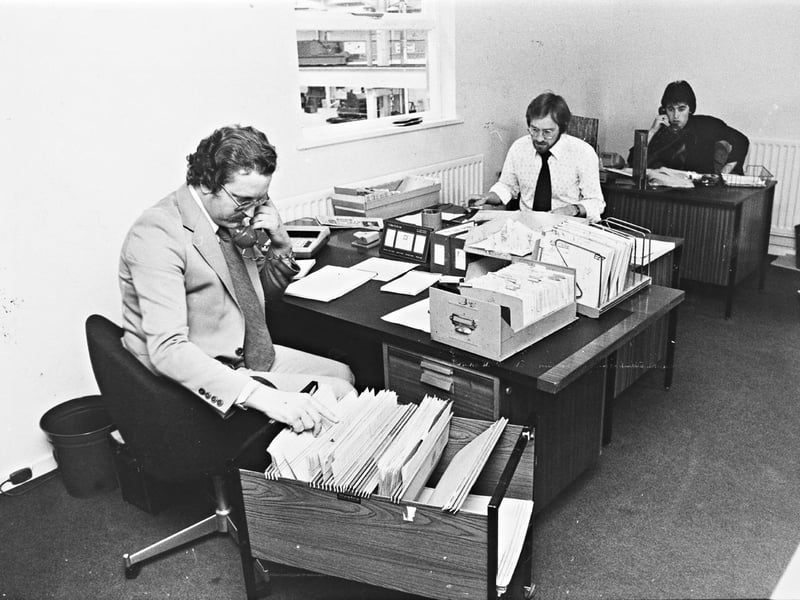
3. Steely determination on the phones as sales team settles into new 1970s headquarters
Hard at work on the rotary dial phones and flicking through index files, three members of the sales team at Gardner Steel Ltd are captured in July 1979 following the company's major move to Halesowen Industrial Park. Part of a group boasting an annual turnover of £20 million, the steel stockholders relocated from Cradley Heath to expand operations, introducing new product lines like cold reduced, galvanised, and zintec sheets. With wide-collared shirts, ties, and desk trays stacked high with paperwork, this busy office scene offers a fantastic snapshot of late-70s Black Country commerce in action. | Express & Star archive
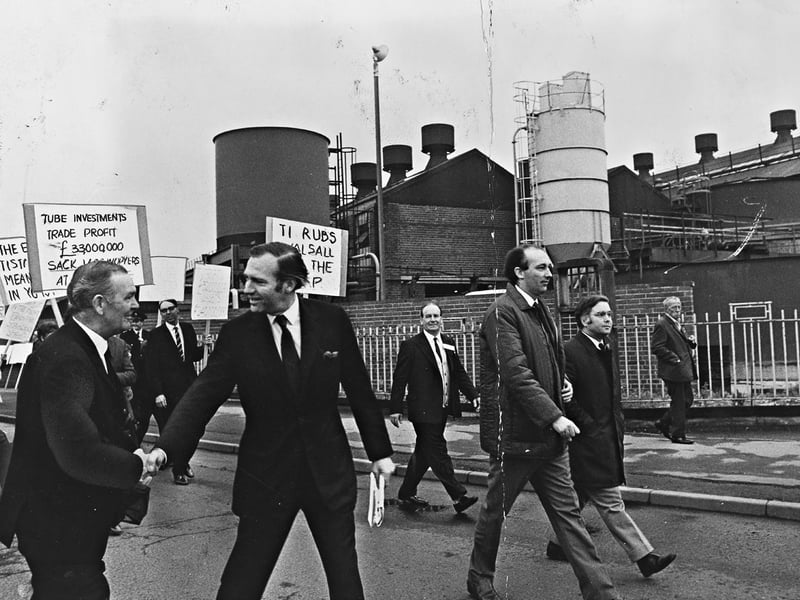
4. Handshakes, placards, and the battle to save four thousand Black Country jobs
Wednesbury MP John Stonehouse (centre) shakes hands with supporters in July 1972 as thousands gather to protest the proposed shutdown of a major local manufacturing site. Four thousand people marched through Walsall town centre in opposition to Tube Investments' decision to close its TI Stainless Steel factory on Green Lane. Led by action group chairman Alan Colpitts alongside local political figures including Deputy Mayor Councillor Sid Wright and prospective Labour candidate Bruce George, the demonstration highlighted deep community outrage over industrial job losses in the Black Country. Protesters in the background hold placards citing company profits, contrasting sharply with the suited marchers heading down the street. | Express & Star archive