
Want to know what 'fizzog' means? We speak to the woman creating a definitive Black Country dictionary
Distinctive words and lost dialect will all be part of the new dictionary.

The Black Country dialect is one which causes a lot of debate and, at times, derision, with the accent itself often ranking low on studies into “desirable” accents.
It can also be, for someone from outside the region, a little hard to understand, with words and phrases that can sound foreign to those not born and bred in places like Cradley Heath, Tipton, Blackheath and Gornal.
However, while it can divide people, it is also an accent and a dialect which is fascinating to many people and also one fiercely and proudly defended by others as part of their cultural identity.
A Wolverhampton University academic counts herself among those with having a real fascination with the dialect, having devoted a quarter of a century to researching the Black Country dialect.
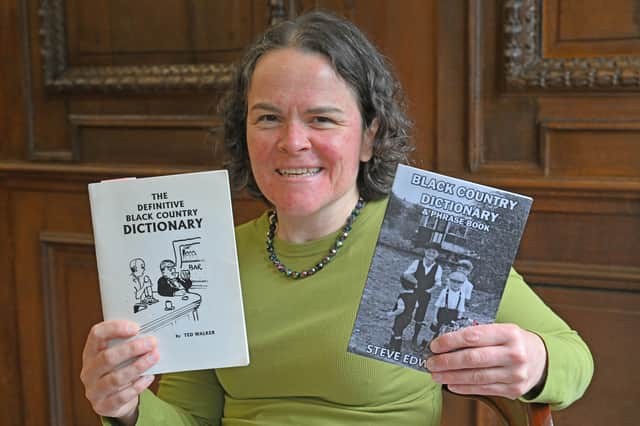
Dr Esther Asprey, who is senior Lecturer in English Language and Linguistics at the university, has begun the process of researching and working with other people from across the region to create a definitive Black Country Dictionary.
She said it was an accent she’d been exposed to from an early age from her family and spoke about how the idea for the dictionary came about.
She said: “I heard it as a young child as, while I’m not from this area, my family are and my dad’s family are from Bilston, so I would talk to my grandmother and not understand a word she was saying.

“She was a lovely woman and very fond of me and we used to talk, but someone would have to say what she was saying to help me out.
“I’ve been researching the Black Country dialect for about 25 years and did my doctoral research on the Black Country Dialect and tried to write down the words and structure and it’s been in the back of my mind for a long time.
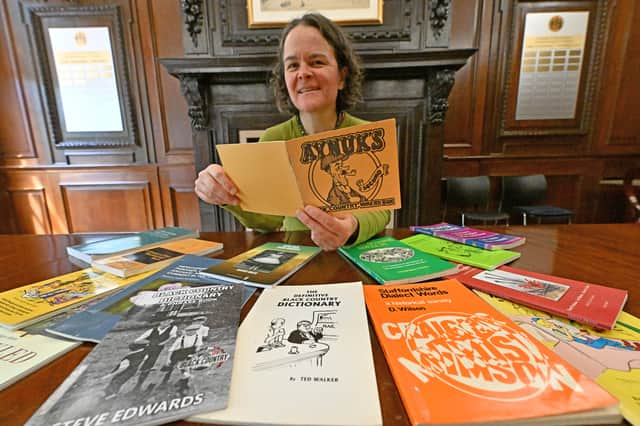
“We’ve got all these lovely books, but they’re all written by one person who speaks the dialect, so you’ll get one book written by a person from Wednesbury and another from Cradley Heath, so there’s variety, but I wanted to do something more co-operative and democratic.”
Dr Asprey said the process had begun with getting people together and talking about words that they remember, such as “Wammel”, which she said has different meanings to different people, being either a dog or a horse which pulled the narrowboats.
She said the dictionary was also about improving the reputation of the dialect and the accent, noting that it did rank lowly in surveys and polls.
She said: “I’m afraid that in the industrial area regions of the British Isles and Ireland, the accents are rated unfavourably.
“You go to Dublin and Liverpool and they don’t top polls of what’s the most attractive accent or the most intelligent accent and the Black Country regularly comes bottom in all of these polls that they keep doing.
“These are polls where they compare a very tightly controlled set of speech or someone reading a passage out and people will not say that it’s the most intelligent, so it’s not surprising there’s a stigma around it, but I still think it’s interesting and part of our history.”
Dr Asprey also said that the dictionary could also help to pin down words that may have changed meaning or been forgotten over time and help to raise the profile and said she hoped to produce a living document that could grow in the future.
She said: “I think it’s a case of raising the profile of the words we don’t hear so much any more and try to find the ones that, perhaps, are not getting used anymore and write them down before we lose them because of their heritage.
“It’s also about making sure that the ones less used are documented and make sure that everyone’s understanding of the meaning is there, so that even if we don’t agree on the meaning, we’ve got a record of it.
“I certainly think it’s important and while not everyone will think it is a serious enterprise, as a linguist, I certainly think it is and it’s no less serious than charting minority languages.
“I would like people to have a sort of living document that charts the language that people have heard in their childhood and that they might still use and I’d like people who maybe don’t realise how rich it is to have the means to access some of these words and see how varied it all is.”
To find out more and to take part in the project, email Dr Esther Asprey at [email protected]
Comment Guidelines
Iconic Media encourages reader discussion on our stories. User feedback, insights and back-and-forth exchanges add a rich layer of context to reporting. Please review our Community Guidelines before commenting.