
When the glamour of Monaco came to the West Midlands - 40 years on

Forty years ago Birmingham attempted to recreate the glamour of the Monaco Grand Prix. It didn’t go entirely according to plan
For an event billed the ‘Monaco of the Midlands’, it didn’t get off to the most scintillating of starts.
The practice session was delayed by almost three hours following rumours that vandals had stolen the bolts from the barriers, and it was then discovered that others had been incorrectly installed. The second day, when the actual racing took place, was marred by the tail end of a hurricane, and the kind of torrential rain which made the past few days seem like an April shower.
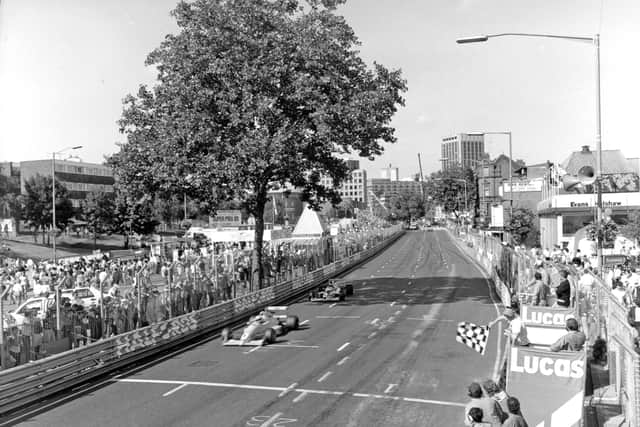

It is 40 years this bank holiday weekend since roads around Birmingham city centre were turned into a race track for the first time, and you could hardly have blamed the civic leaders for wondering what they had done.
The idea of a road race around the streets of Birmingham had first been mooted in the early 1960s by Councillor Peter Barwell. In 1966 he found an ally in former sports car racer Martin Hone. As the owner of a successful nightspot in the city, Hone was invited to a council sub-committee where he was asked for suggestions to boost the city’s profile. He replied: “As a city internationally famous for the manufacture of cars but with not many 'firsts' to our name, how about I organise the first-ever street race in Britain?"
It is fair to say his idea was not met with unqualified support. Aside from the matter of funding, there was also the small problem that a law had recently been passed prohibiting street racing in the UK, so that any such event would require an act of parliament. The sub-committee thanked Hone for his time and quietly dropped his idea in the ‘unrealistic pipe dreams’ file.
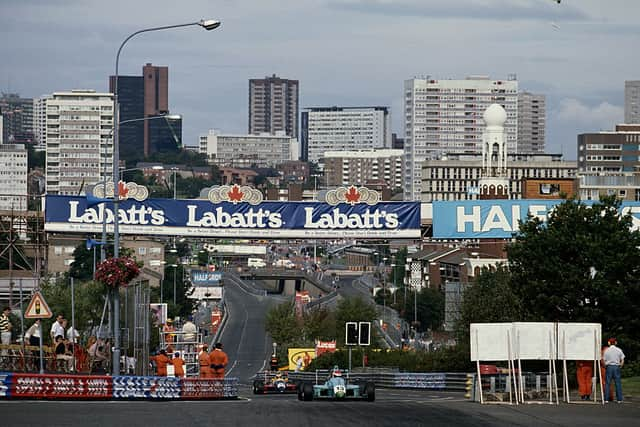
Having been asked for this thoughts, Hone didn’t give up easily though, and he secured the support of racing drivers Stirling Moss, Graham Hill and Jackie Stewart. While he was still unable to convince them that street racing was a viable option, he did convince them to put him in charge of a 14-day motoring pageant to celebrate the car industry. The event included a veteran car run following a 2.1 mile circuit around the ring road, with a parade of Grand Prix cars proving the finale, led by Stirling Moss in a Lotus 18. Traffic laws meant the race cars had to stick to the 30mph speed limit, but it proved to be a popular spectacle.
The success of the event gave momentum to Barwell and Hone’s plan, with Hone presenting a detailed paper to a meeting of the council - which was met with a horrified response from councillors who feared the ratepayer would be landed with an enormous bill.
The car shows continued over the years that followed, though, often featuring the latest Formula One cars, being driven by top drivers including Moss, James Hunt and Derek Bell, building up public support. After years of dogged persuasion, the Birmingham Road Racing Bill was finally passed by Parliament in November 1984, although it came with a clause that the event would have five years to turn a profit, otherwise it would be scrapped.
The Birmingham Superprix would be a round of the FIA Formula 3000 Championship, a tier below Formula One which meant it could not use the ‘Grand Prix’ title, and would be held over two days, the practice laps being held on Sunday, August 25, with the race proper the following day, which was Bank Holiday Monday.
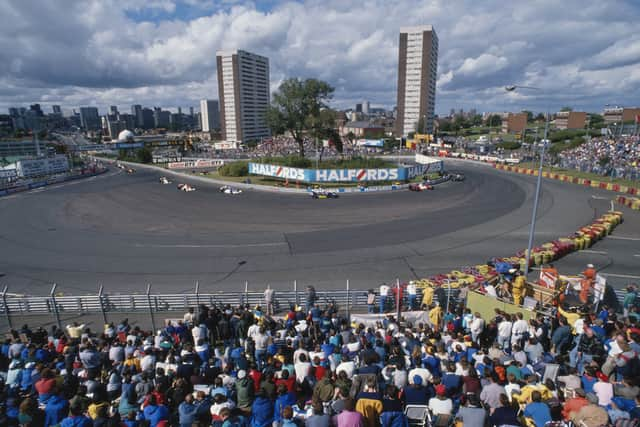
The course, which was centred on Bristol Street, running down the Belgrave Middleway to a hairpin formed out from the roundabout before heading back up the opposite carriageway, was unusual in that it ran anti-clockwise - it went against the normal traffic flow to discourage boy racers from holding their own unofficial contests. The Bristol Street Motors provided the pitstop, with the showroom being turned over into a media centre. The market acted as a support paddock, while the cars were stored in a multi-storey car park.
Temporary hospitality boxes were installed a the start and finish line, and there was a tent area for teams entertain guests. The advantage of using regular roads was the crowds could get much closer to the action than at any other British circuit, with thousands of spectators being within a few feet of the cars.
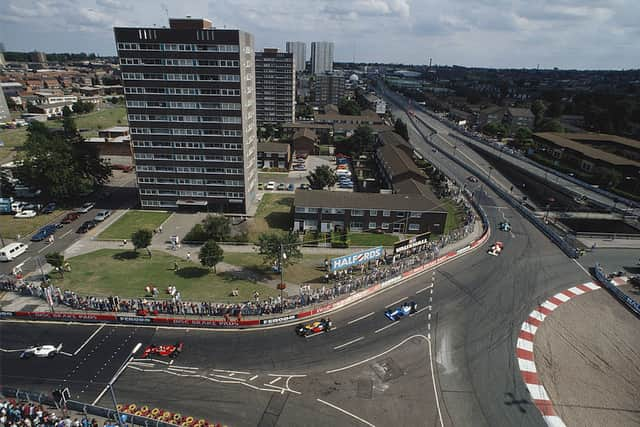
On the opening morning, the drivers staged an impromptu football match to keep the crowds occupied while the problems with the barriers were sorted. According to Motorsport magazine, the drivers had mixed feelings about the circuit.
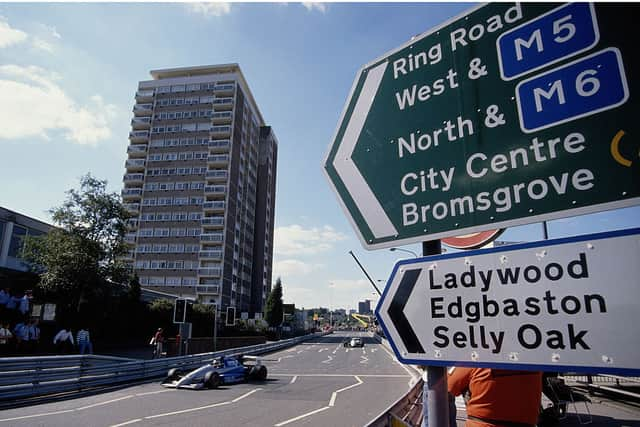
“The general consensus was that it was a demanding, bumpy circuit but those with the right attitude saw it as a challenge to their craft and on the whole approved,” said a report from the time.
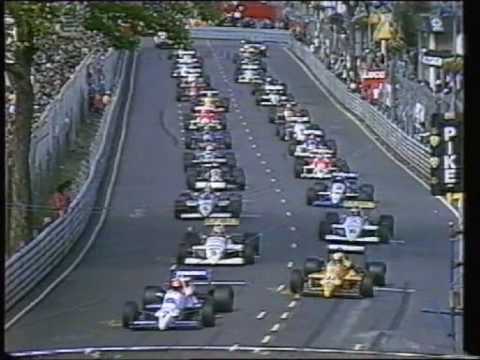
On race day itself, a celebrities v professionals Renault 5 Turbo race formed the warm up, but then the skies opened up. Hurricane Charley, which earlier in the month had wreaked havoc across Florida, decided that the Birmingham Superprix would be a fitting place to go out with a bang. Localised flooding caused the starting lights to fail, and two of the cars stalled on the grid. Eventually the race started on a flag, and the conditions made for an interesting spectacle to say the least. The race was eventually halted after 24 of the scheduled 51 laps after Andrew Gilbert-Scott’s Lola hit another crashed car to block the circuit. Luis Perez Sala, who had lost his nosecone during the battle, was declared the winner.
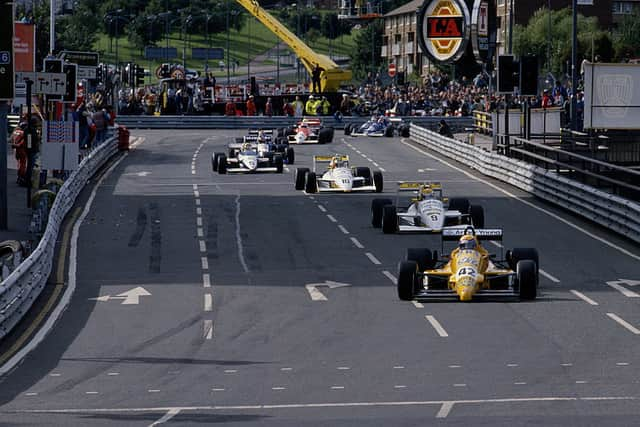
There were grumbles among some drivers afterwards that the race should not have taken place, although none of them actually decided to pull out. Motorsport magazine observed that races had been held in worse conditions in the past, although said that the road surface did appear to retain more water than a purpose-built race track.
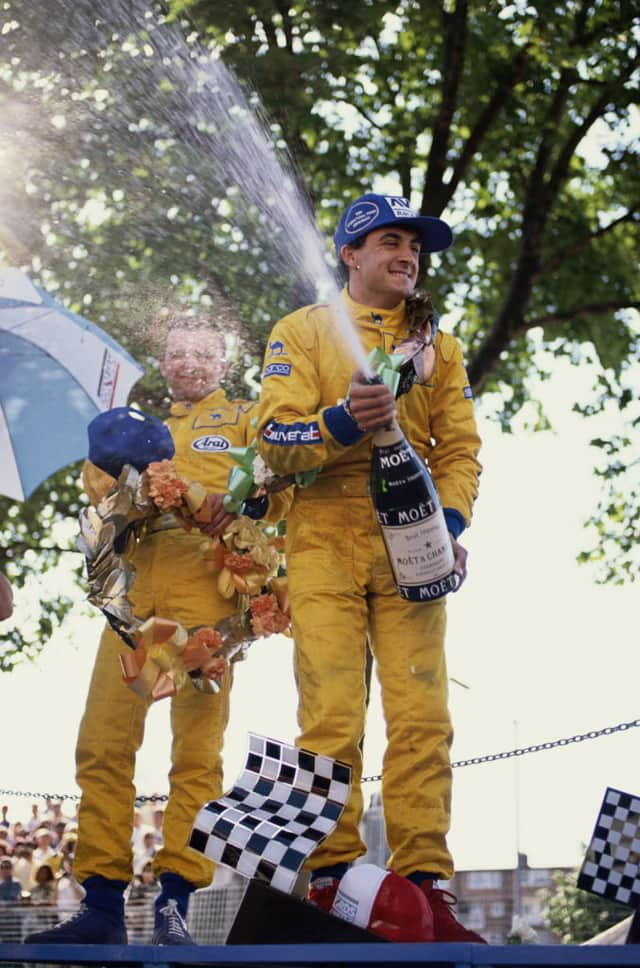
Despite the faltering start, the Superprix continued for four further years, with thankfully better weather, and proved a popular addition to the motorsport calendar. However, initial concerns about the cost to the ratepayer were beginning to come to reality, and the prospect of it turning a profit receded due to rising costs, and the fact that attendances had hit a ceiling of about 50,000. Further complications arose from the fact that new rules meant that the circuit would need to be lengthened.
Birmingham Council put the running of the circuit out to tender, but there were not takers. The dream of bringing the glamour of Monte Carlo to inner-city Birmingham had reached the end of the road.
Comment Guidelines
Iconic Media encourages reader discussion on our stories. User feedback, insights and back-and-forth exchanges add a rich layer of context to reporting. Please review our Community Guidelines before commenting.