Star Comment: Now the hard work starts for Reform's new-look 'front-bench'
A year ago, a reshuffle of the Reform's 'front bench' team would have been seen as little more than a footnote on the political pages of the broadsheets.
Just a few weeks ago, the prospect of Robert Jenrick as Chancellor of the Exchequer would have seemed absurd.
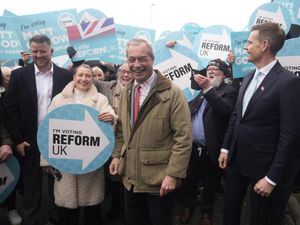
But we live in rapidly-changing times. Reform has now held a steady lead in the opinion polls for the past nine months and, love him or hate him, when Nigel Farage unveils his government-in-waiting to the general public, we have to take him seriously.
The appointment of Wolverhampton-born Jenrick as the party's economic spokesman, ahead of multi-millionaire businessman Richard Tice, is an intriguing one. Unlike Tice, Jenrick is the consummate career politician, having joined the Conservative Party as a teenager, and fought his first parliamentary seat at the age of 28. Now, barely a month after defecting from the Tories, he is being promoted as the man to 'fix Britain's broken economy' and cut the welfare bill.
There is an interesting role, too, for another recent defector, Suella Braverman, who will become the party's spokesman on education and equalities, declaring that her first act in government would be to scrap the Equality Act and set a target of getting 50 per cent of school leavers going into trades rather than university.
Of the two, it would seem that Mr Jenrick has by far the harder job. While Mrs Braverman's talk of ripping up 'woke' laws and getting youngsters into 'proper jobs' may be music to the ears of Reform's predominantly working-class supporters, marrying a populist economic agenda with pledges to cut taxes and welfare, and turbocharge economic growth may prove much more problematic.
Nigel Farage has made a bold move in giving such high-profile roles to those who some would consider to be the least popular members of the last Conservative government. Clearly, he believes their experience in government will help give a gravitas to the party which had previously been lacking. On the other hand, it will from now on become much more difficult for Reform to portray itself as the voice of the anti-establishment, the fresh, exciting antidote to the failed politics of the past.
One thing is for certain, for Mr Farage the hard work starts now.
He describes his party as the real opposition in Britain. And if he wants to be taken seriously as a viable alternative to the old guard, Reform will need to offer more than tub-thumping rhetoric about 'broken Britain' and how the established parties have failed.
It is time for answers, not questions, for policies, not problems. Voters will be waiting with baited breath to see if his new front-bench team can rise to the challenge.