'Like the majority of these women, Katherine Harley believed in peaceful protests' - Your Letters: June 23
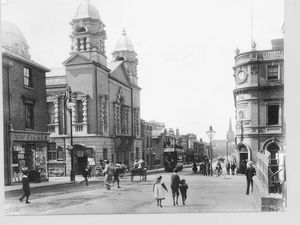
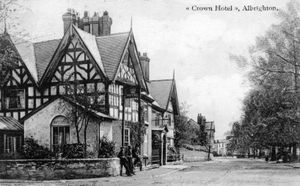
PICTURE FROM THE ARCHIVE: The Crown Hotel, Albrighton, from a postcard sent by a C Tanner, dated May 12,1907, with the message: ‘Bishton Manor, Wolverhampton. Dear Madam, I was very pleased to get your letter and will try and write to you in the week, after I have been to Albrighton. It is about 2 1/2 miles from here.’
SUFFRAGETTE WAS NOT A MILITANT
The impression was given in the Star that Katherine Harley was a militant Suffragette. I wish to correct that as her name has been mentioned regarding the possible replacement of the statue of Clive of India in the square in the town of Shrewsbury.
She like many women campaigned for universal women's suffrage ie the right of women to vote in General Elections. Like the majority of these women she believed in peaceful protests and was a Suffragist. In 1913 she helped organise the Great Pilgrimage in which an estimated fifty thousand women marched over the course of a month to Hyde Park. They converged on London along three different routes having made their way through many towns and cities. Photographs of the time show many men as well as women among those who sympathised with their aims lining the routes. The Prime Minister Herbert Asquith praised these women showing that their peaceful protests did have an effect on public opinion.
Katherine Harley is on the lists in Condover Church and St Mary’s Church in Shrewsbury of those killed in the World War 1. She had run a couple of war time hospitals in France being awarded the 'Croix de Guerre' by the French. After being asked to move to the Balkan front she created an all women motorised ambulance unit. The women brought hundreds of Serbian casualties day and night from the front line dressing stations to hospitals a journey of at least 10 hours but as much as 30 hours after rain and snow. She was later killed aged 61 by shell fire in the besieged city of Monastir, in Serbia, where she had been rescuing injured Serbian women and children by ambulance. At the suggestion of a French general she was given a grand military funeral attended by many hundreds of Serbian troops as well as generals and the Crown Prince of Serbia.
She is buried in an English military cemetery in Thessaloniki Greece where her epitaph on a large memorial states in Serbian and English "Instead of flowers the gratitude of the Serbs shall blossom there".
Ronald Repath, Much Wenlock
POET IS FED UP THIS MORNING
A false face on things
Too much laughter, not real
Big big smiles and congratulations
Pats on backs, huggings
A mutual love fest
‘Stop it!’ That’s the new one
As in, ‘stop being so wonderful!’
As in, ‘stop being so am-a-zin!’