Peter Rhodes: Roses for remembrance
PETER RHODES on a family's loss and paying tribute to a Tommy, 100 years on.
SEPTEMBER 17, 1916, was the first real day in action for the 1st/7th Battalion of the Duke of Wellington's Regiment (West Riding). These Yorkshire Territorials had been in reserve for a couple of earlier attacks but this was to be their blooding.
ABOUT 600 of them took part in an attack on the German stronghold of Thiepval, a village on the Somme in northern France. At some stage in the battle my grandfather's brother, Private Alvin Smith, was killed.
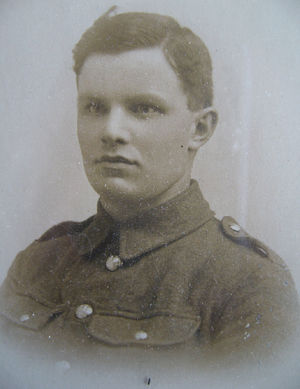
ALVIN was blown to bits. He was 20. His name is on the Thiepval Memorial to the Missing, one of 73,000 names of British and Commonwealth soldiers who have no known grave.
EXACTLY 100 years to the hour after he died, at 6pm on September 17, 2016, our extended family laid a bouquet at the war memorial and went on for dinner at the Hare & Hounds pub in his native village of Lothersdale. In doing so we kept faith with the words on the yellowing certificate recording his death which hangs in my study: "Let those who come after see to it that his name be not forgotten."
OVER the past 30 years I have researched and written about the death of this one soldier in an ordinary infantry battalion of the Great War. From the battalion diary, it seems likely that Alvin Smith was one of several soldiers killed when their own trench mortars fell short, a "friendly-fire" incident. By a million-to-one chance, one of those mortars struck the battalion's store of hand grenades. The carnage would have been appalling. After so long it is impossible to find out exactly what went wrong. The Stokes mortars were newly issued and the mortar men may have been inexperienced. The trenches occupied by Alvin's battalion had been seized from the Germans only the night before. Had anyone told the mortar crews that the "German" trenches shown on their maps were now full of British Tommies?
IF such an accident happened today in Iraq or Syria there would be a huge outcry and endless public inquiries. In the 1914-18 war the volunteers and conscripts of the British Army died like cattle with a minimum of paperwork and no room for complaints. Alvin's family picked up the pieces. His sweetheart, Amy, married someone else. The family's in memoriam notices in the local newspaper, the Craven Herald & Pioneer, continued for five years and then stopped.
WE are a blessed generation. We have never known the national tragedy of the Somme or Passchendaele when the dead were numbered in hundreds of thousands and the death notices in local newspapers ran page after black-bordered page. Today, we are told it is a national tragedy that The Great British Bake Off is transferred from BBC to Channel 4 and that Mel and Sue are leaving.
WHAT soft and gentle times we live in. How fortunate we are to be able to make tragedies out of TV trivia. With luck, we will never know the drawing-down of blinds, or the sort of tragedy that comes in a buff envelope from the War Office, delivered to your door by a tearful telegram boy.