West Midlands families ‘torn apart’ by road deaths as region sees increase in pedestrian deaths
People have been urged to remember West Midlands families ‘torn apart’ by road deaths in the wake of increased pedestrian fatalities.
West Midlands Road Safety Commissioner Mat MacDonald presented data to the Transport Delivery Overview and Scrutiny Committee meeting around the number of people killed or seriously injured (KSI) on the region’s streets.
But while the overall number of KSIs have reduced in the past few years, Mr MacDonald said the figures remained ‘unacceptably high’.
Of particular concern was the number of pedestrian fatalities which stood at 21 in 2025 – making up almost half of the overall 50 deaths in the year.
Mr MacDonald said: “They do represent a completely unacceptable proportion of pedestrian fatalities amongst the mix of those killed or seriously injured on our road network.
“Obviously, it bears remembering that behind each of these numbers is an avoidable tragedy which has torn apart the lives of family, friends and communities of those around the individual affected.

“Nationally, the average of pedestrian fatalities as a proportion of KSIs sits around 25 per cent.
“In 2022, we were near that but in the last two years that number has risen significantly. The figures remain unacceptably high.”
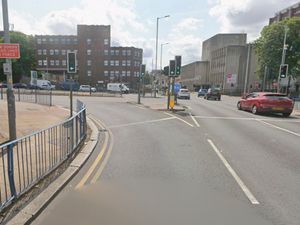
He said work is being carried out to investigate the cause of deaths, looking at issues such as locations where incidents are taking place and looking at pedestrian crossing facilities to see if they are suitable.
‘Clusters’ have also been found where two or more pedestrians have been killed in the same location. A total of 20 were identified with three quarters of them being in Birmingham and none in Dudley.
There has been a drop in the overall number of KSIs in 2025 with 1,078 compared to 1,157 recorded in 2024.
But Mr MacDonald said a lot more work was needed to tackle the problem and highlighted initiatives being undertaken across the region.
He said: “Since 2022, our fatalities have reduced. 2022 was a particular nadir in these figures.
“We must be cautious to not over interpret this as a trend without us doing extra things to make sure we are properly protecting people as they travel.
“It bears thinking about, on the larger road networks, average speed enforcement (ASE) is a useful tool.
“We know ASE assets reduced personal injury collisions by 39 per cent where they are installed.
“However, that approach to enforcement and camera operation is not applicable to smaller roads where collisions might be taking place so a different approach is required to tackle some of these crashes.
“Two of the things we should improve on are driver education and also road infrastructure.
“The fatal collision review panels which were set up in 2024 have assessed a few different collisions of fairly extreme severity to look at whether there are infrastructure causes that underpin them.
“It’s a really useful exercise and will contribute to the picture we’re building about better understanding the risks that pedestrians face as they get about day to day.
“We are developing in partnership with Agilysis a speed management protocol and that’s in keeping with the Regional Road Safety Action Plan.
“Healthy streets is a longer term objective which will be a much more involved process.
“What is does is not only deters speeding by changing the layout of the roads and making safer driver habits for those behind the wheel, it also creates a streetscape where people are more likely to walk or to take journeys outside their vehicle and reduce the number of journeys taken by car.
“Also look at junctions and crossings more generally. These are locations that are often the source of crashes, conflict and danger on roads and work towards developing some regional guidance and standard.”