£14.5m scheme to provide thousands of electric car chargers across the West Midlands is backed despite concerns
A £14.5 million initiative to provide thousands of electric car chargers across the West Midlands has been backed – despite a raft of concerns being raised.
West Midlands Combined Authority’s Investment Board agreed to move forward with the scheme and give delegated authority to senior officers to approve a business case and negotiate contracts with suppliers.
Get the latest headlines delivered straight to your inbox with the Express & Star’s free newsletter
But members said there were a number of issues that worried them including the lack of political input to the project until this point.
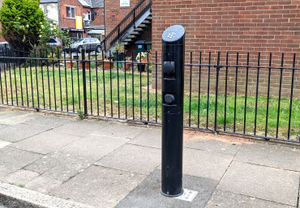
The aim is to deliver 9,500 electric charging points across the region, which will generate revenue for the local authorities.
Jim O’Boyle, Cabinet Member for Jobs, Regeneration and Climate Change at Coventry City Council, voted against giving power to officers.
He said: “In Coventry, we worked directly through DfT (and) over 2,500 electric charge points are already on our city streets.
“We’ve done that whilst not top slicing one single penny in order to pay people to come up with agreements and legal contracts that are already in place.
“Around two per cent works out at around £300,000. That’s hundreds of thousands of pounds going out directly in order to support staff in this organisation and I don’t think that’s right.
“I’m not accepting any of these recommendations which gives further power to Combined Authority officers who are not accountable to the public to go away and spend £300,000 to recruit people to hold up projects. That’s not acceptable.”
Walsall Council leader Mike Bird said instead of charging points on streets, as proposed in this scheme, the authority should have looked at charging stations.
He said: “The success of electrification in Coventry is something we should have traded upon and found out what problems they’ve encountered and how they have overcome them.
“My experience to date, two or three of these were proposed in Walsall, the outcry from residents was, “Oh I don’t want that outside my door!”, because it means sometimes a car is parked outside their door all day.”
He added: “There is a political circumvention in that we don’t have any handle of what’s being spent here any more.
“Not just here but across the whole of the Combined Authority. Elected members should be involved in looking at that business case.
“We get held accountable for the failures and the successes of local authorities and the Combined Authority when we haven’t been involved in the decision making until this very late stage.”
Andrew Page, of Transport for West Midlands, said he couldn’t comment on governance arrangements.
He added they needed to employ staff to manage the accounts and ensure local authorities get their revenue from the charging points.
A report to the Board said: “The funds must be used to primarily benefit residents without off-street parking, whilst also allowing some provision for other groups such as tourists, customers, commuters, taxis, and commercial vehicles – provided that residents are the primary beneficiaries and it increases scale and commerciality.
“The main aims of the grant fund are to deliver a step-change in the deployment of local, primarily low power, on-street electric vehicle (EV) charging infrastructure across England, and accelerate commercialisation and investment in the local charging infrastructure sector.”