Proposals to transform roads in key area of Birmingham
Birmingham City Council is planning to introduce major changes for a number of roads within the Knowledge Quarter.
The Labour-run authority is currently proposing two transport projects in the city centre area, described as one of the region’s key investment areas.
The James Watt Queensway ‘Super Crossing’ project in particular aims to improve walking, wheeling, cycling and public transport connectivity into the Knowledge Quarter and Aston University campus.
The council also wants to “reduce conflict” at the crossing by making movements “clearer” and safer for pedestrians and others.
It is proposing to do this by:
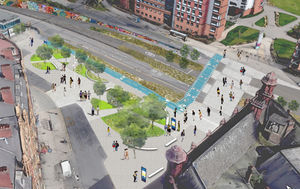
Reducing the width of the road at the crossing point by removing three lanes, to create a “shorter, safer crossing” for people walking and wheeling
Realigning the existing crossing with a parallel cycle crossing connecting to the existing A34 route
Future-proofing provision for the proposed cycle route extension along James Watt Queensway and Moor Street Queensway
Improving the streetscape with high-quality materials and planting
There is also a second project currently being consulted on – one that has ambitions of reducing motorised traffic passing through Birmingham’s Knowledge Quarter, as well as improving both safety and connectivity.
The council adds it wants to create a street environment that feels more “pleasant, welcoming and suitable for all users”.
The proposals for Cardigan Street include a two-way bus gate between the access to Millennium Point car park and Gopsal Street, as well as a one-way segregated cycle track in each direction.
Other plans include:
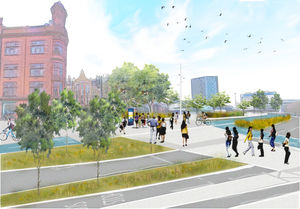
Adding new bus shelters in Cardigan Street, as well as planting new trees
Removing and rearranging some pay and display parking bays to accommodate wider pavements outside the busy Aston University Sports Centre in Woodcock Street
Installing a new traffic signal-controlled crossing on a raised table on Lister Street
Making permanent the modal filter at the Holt Street junction with Lister Street
“Following the consultation period, we will review all responses and make any necessary changes to the plans,” the council wrote.
“Should the decision be made to proceed with the scheme, the proposals will be implemented under Traffic Regulation Orders (the legal document needed to make changes on roads).”
The council has previously said that it cannot tackle the “climate emergency” without fundamental changes to the way people and goods move around the city.
“We need to work with our partners to secure investment and make Birmingham a place where walking, cycling and using public transport are the best and preferred modes of travel for most people,” its transport plan reads.
“Even then, we must all fundamentally change our travel habits and reduce the overall amount we travel by car.”
It added: “Over-dependence on private cars is bad for our health, the health of our families, bad for our communities and bad for business, as measured by the millions of pounds of lost productivity caused by congestion every year.”
A public consultation on the two proposed projects, which closes on March 1, can be found on Birmingham Be Heard here.