‘Rectifying the injustices families who have lost loved ones on West Midlands’ roads is driving road safety commissioner
‘Rectifying the injustices families who have lost loved ones on West Midlands’ roads is what drives the region’s safety tsar.
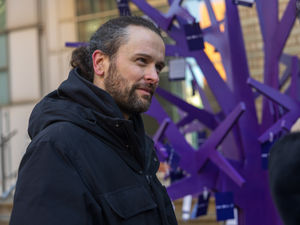
Mat MacDonald was appointed as the West Midlands Combined Authority’s Road Safety Commissioner with the aim of stopping deaths and serious injuries through reckless driving.
Get the latest headlines delivered straight to your inbox with the Express & Star’s free newsletter
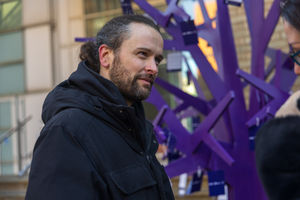
In his first 12 months in the role, the NHS doctor has been working on progressing key developments including reducing speed limits, introducing red light cameras, improving safety measures and encouraging more sustainable transport.
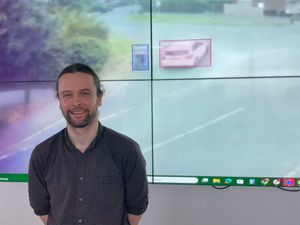
And he said a lot more is to come if the region is to achieve the ‘Vision Zero’ aim of having no deaths or serious injuries on West Midlands’ roads by 2040.
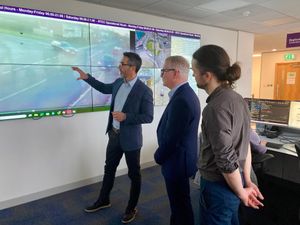
Mat said: “In my campaigning work, I had the privilege of meeting several families who have suffered the most unimaginable losses on our roads in terms of people who have been killed and seriously injured.
“Rectifying the injustices they have faced is really what has propelled me into this work.
“Knowing Mayor Richard Parker shares that sense of injustice and shares that desire to change the system on our roads which is failing people too often, has been a really incredible opportunity for me.”
One of his major pieces of work has been the development of the joint working agreement on speed and red light enforcement. Work is ongoing on how that can be funded and rolled out across the region.
He said: “This has been a really important milestone. It will help us deliver more average speed enforcement across the region and it already is.
“Birmingham has taken this on and they have got a programme of a few average speed enforcement locations they are starting to roll out.
“They’ve also done some great work on reducing the speed limits from 40 to 30 on some of the bigger roads that go through the city.
“That is already having a noticeable impact on the speed people take on those roads which will ultimately prevent collisions and reduce the number of people being killed.”
Having access to people such the Mayor and transport bosses across the region has helped overcome challenges.
Plans to pedestrianise a road where four-year-old Mayar Yahia was killed on her way home from an Eid celebration in Birmingham in 2024 has been delayed.
But Mat was able to sit down with the leadership of Birmingham City Council and has had assurances the scheme will go ahead.
His position also gave him the opportunity to feed into the development of the first national road safety strategy in more than a decade.
Mat said: “It’s a really exciting first step. At the highest level, people are stopping this acceptance we all have that 1,600 people should be killed on our roads every year.
“That is just an unacceptable figure when we know with the right infrastructure and the right laws we can prevent death or serious injury altogether.
“Currently the equivalent of a jumbo jet full of people is killed on our roads every six weeks.
“If there was a jet crashing every six weeks, you can be damn sure that planes would be grounded and the aviation industry would come to a standstill while it investigated what was going on.
“Whereas we seem to passively accept that level of death on the road.
“That level of danger existing holds us back in so many different ways in terms of children’s freedom, the way we connect with one another in our neighbourhoods and in terms of what our streets look and feel like.”
He believes current efforts are starting to have an impact, particularly on the number of serious injuries, although the full picture of the differences being made will become clear in the coming years.
Mat said there is a lot more work to do and initiatives are being brought forward in the coming year. With major transport schemes coming forward, Mat said it was vital safety formed a major part from the start.
But convincing people who are wedded to travelling by car still remains a major challenge.
He said: “We have shaped our infrastructure and laws to make cars the easiest form of travel.
“Most people, quite rightly, don’t sit around pontificating about how to get from A to B. They choose the easiest option to them.
“When you look at cities which have much higher rates of cycling and walking, such as Copenhagen, the reason people travel by bike is because it’s often the easiest way to get about.
“What we have to do is make it safer and easier for people to travel without using a car.
“Ridding people of the financial obligations that come with owning a vehicle and freeing our streets of the burden of congestion is something the vast majority of people would get behind.
“It’s a question of safety and what is best for our communities and how we can sustainably connect with each other that future proofed.
“There’s a real concerted effort coming from the Mayor down to making sure we can realise our objectives.
“Collisions have a cost. We can never put a monetary value on a human life but we can on a figure on the economic damage caused by collisions and it’s £444 million per year in our region.
“Ensuring when we are building shiny new things we are getting it right first time and we are baking in infrastructure which will make it much safer will prevent so much heartache but also save our region a considerable amount of money.”