Why rail nationalisation will mean better services and lower fares according to Wolverhampton MP
Last week, West Midlands Railway was taken back into public ownership. Wolverhampton North East MP Sureena Brackenridge explains why she thinks it will be good for the region.
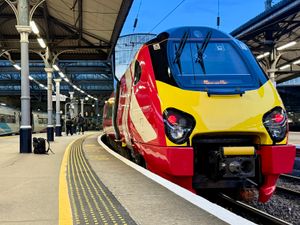
On Thursday, I was really pleased to welcome the Secretary of State for Transport, Heidi Alexander, to Wolverhampton train station. There could hardly be a more fitting place to make an important announcement about the future of our railways: West Midlands Trains is coming into public ownership.

This is great news for passengers, staff and taxpayers alike. For too long, our railways have been run primarily for the benefit of private shareholders rather than the passengers who rely on them. Public ownership means rail services run in the public interest, not for private profit.
What does that mean in practice? It means fares that can be kept affordable, not prioritising shareholders' profit. It means simpler, modern ticketing that reflects how people travel. It means profits reinvested into better reliability and improved performance. And, crucially, it means a joined-up public service focused on long-term value rather than short-term returns.
Perhaps most significantly, this change comes at a time when train fares have been frozen for the first time in 30 years.
Rail services operated by West Midlands Trains will officially transfer to public ownership on February 1, when the company’s current contract expires, and this transition will happen at no extra cost to the taxpayer. It will become part of Great British Railways, the new body set up by the Government to oversee the rail system across England, Wales and Scotland.
I know from speaking to residents across Wolverhampton and Willenhall just how vital our railways are. Whether it’s commuting to Birmingham for work, visiting family, or taking a leisure trip to places like Stratford or Lichfield, West Midlands Trains touches countless lives. It is a vital artery through our region.
But it is bogged down by service delays, slow improvements, and patterns of travel that simply don’t work for people in our area. The Labour Government recognises this and has vowed to end the railway rip-off we’ve endured for decades. Freezing fares was the first step. Bringing services back into public hands is the next.
West Midlands Trains is back in the hands of the passengers who rely on it. Crucially, and at no cost to the taxpayer, the Government has taken back control of this vital service.
Wolverhampton station is the fourth busiest in the region. More than 5.2 million journeys start or end here every year, alongside our busy tram and bus networks. I was proud to see it at the heart of this announcement and at the centre of a new era for transport in the West Midlands.
Our railways helped build Wolverhampton and the Black Country. From these tracks, early pioneers powered the industrial revolution and helped shape the modern world. We owe it to that history, and to future generations, to have a railway that works for the people it serves.For the failed experiment of privatisation, this really is the end of the line!
All change, please. All change.