HS2 starts digging Euston tunnel despite uncertainty over station
The first of two machines which will dig HS2’s tunnel to Euston has been launched, despite uncertainty over the development of the central London station.
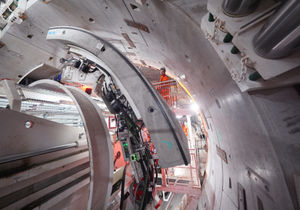
It is expected to take about 18 months for the machine – named Madeleine after Madeleine Nobbs, the former president of the Women’s Engineering Society – to complete the 4.5-mile journey from Old Oak Common, west London.
It was switched on by Chief Secretary to the Prime Minister Darren Jones and rail minister Lord Hendy on Tuesday (January 27).
Old Oak Common will be the London terminus for HS2 services when they start, because of delays in developing Euston station.
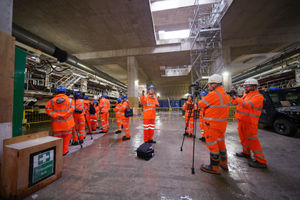
Major HS2 construction work at Euston has been halted since March 2023 because of funding doubts.
In October 2023, then prime minister Rishi Sunak announced the project would rely on private investment in an attempt to save £6.5 billion of taxpayers’ money, and it would not be carried out by HS2 Ltd.
In June 2025, the Labour Government said a Euston Delivery Company would be formed to oversee development of the area, and it is exploring the potential use of private finance.
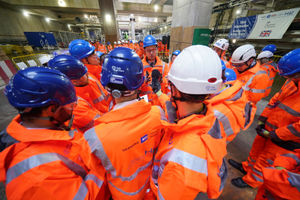
Euston Tunnel will be a twin-bore tunnel reaching depths of up to 50 metres.
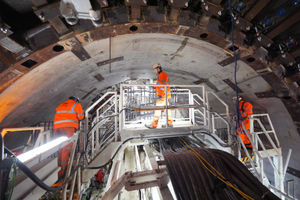
Madeleine is 190 metres long, and was manufactured in Germany by Herrenknecht AG and transported to Old Oak Common in pieces.
A 750-tonne crane lifted the components into an underground box at the eastern end of the station, where it was reassembled.
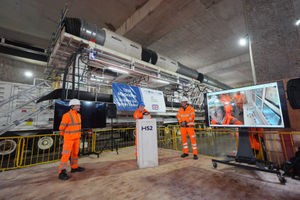
A second machine will be launched in the coming months.
They will excavate and construct the tunnel as they move, slotting concrete segments into place.
Mr Jones said: “There’s nothing boring about tunnel boring.
“Today’s launch was a brilliant moment for the UK’s railways, building on six major rail tunnel and road milestones completed ahead of schedule last year.
“We’re boosting the links between our big cities across the country to create more opportunities for people to trade, meet and socialise with each other, turning the corner on years of decline.”
Lord Hendy said it was “brilliant to switch on” the machine as it is “an engineering marvel” and “brings HS2’s journey to Euston another step closer to reality”.
He added: “We’re putting HS2 back on track, and taking the railway into central London is crucial to unlocking its full potential to deliver more jobs, more homes and a long-term boost to the whole British economy.”
A revised cost and schedule for HS2 will be published this year following a comprehensive review by chief executive Mark Wild, who began his role in December 2024.
Mr Wild said the launch of Madeleine was “a show of confidence that HS2 will be built into central London”.
He continued: “Over the past 12 months, I have been leading a comprehensive reset across HS2 to get it back on track and I am confident that we’re on the right path to delivering HS2 safely and efficiently.
“The start of tunnelling here today is a part of the strong foundations we can build upon to completing HS2 and deliver better journeys for rail passengers.”
HS2 was originally planned to run between Euston and Birmingham, then on to Manchester and Leeds, but the project was severely curtailed by the Conservatives when in power because of spiralling costs.
The first phase was initially scheduled to open by the end of this year.
This was pushed back to between 2029 and 2033, and it has since been confirmed that even this will not happen.
In 2013, HS2 was estimated to cost £37.5 billion (at 2009 prices) for the entire planned network, including the now-scrapped extensions from Birmingham.
In June 2024, HS2 Ltd assessed the cost for the line between London and Birmingham would be up to £66 billion.