'Absolute fiasco from start to, was going to say finish but...' - Fresh anger as further delays to HS2 confirmed
There’s been a fresh wave of anger over the divisive HS2 project after a major setback was confirmed.
The railway project has been under intense scrutiny as it continues to be plagued by serious challenges such as rising costs and delays.
Earlier this year, HS2 CEO Mark Wild acknowledged that construction had been ‘harder than thought’ and ‘needed a reset’ involving a review of the project’s cost and schedule.
In a recent update, HS2 revealed that the aim of getting trains running between Birmingham’s Curzon Street Station and London’s Old Oak Common Station in the target window of 2029 to 2033 could not be achieved.
This was despite HS2 insisting that significant progress had been made throughout 2025, with the project now at an “advanced stage of a comprehensive reset”.
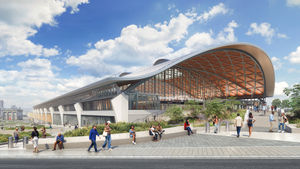
This news came just weeks after HS2 became the centre of a heated exchange between Labour’s West Midland Mayor and Reform’s Richard Tice, who argued that scrapping HS2 would “save tens of billions”.
This prompted a defiant response from Mayor Richard Parker, who pointed out that axing the project would “rip out billions of investment already flowing into the West Midlands”.
“That might work for Tice and Farage’s social media strategy but it doesn’t work for the people who rely on real jobs and real growth,” Mr Parker added.
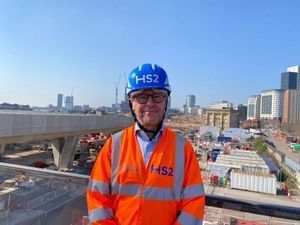
But it’s clear deep frustration continues to linger over the controversial project.
Reacting to the latest development, the Stop HS2 campaign wrote that the setback will come as “no surprise to most people”.
Several residents blasted the project as a “white elephant” on social media, with reader Youssef Ka writing: “The price tag and timeline for this project is just unbelievable.”
“For another 50 quid they could’ve moved Birmingham to the outskirts of London,” Andrew Wylie said.
Mick Reynolds added: “Absolute fiasco from start to, was going to say finish but…”
David Hairsine meanwhile simply referred to it as a “farcical pantomime”.
But HS2 has been keen to highlight that the project is more than just a railway, describing it as a “catalyst for regeneration and growth across the West Midlands region”.
Political leaders in Birmingham have also said the high-speed railway has a crucial role to play in the future of the region and its economy.
Back in October, Mayor Richard Parker said the Birmingham and North Solihull Gateway – which includes Birmingham City FC’s planned Sports Quarter – was a key opportunity for investors.
According to the West Midlands Combined Authority, this gateway will be “underpinned by HS2 linking central Birmingham to central London in just 49 minutes”.
Before that, at an event in February 2024, Birmingham Council leader John Cotton said HS2 was “already delivering a positive economic legacy right across our region.”
“We’ve seen a significant increase in regeneration and investment activity within a one and half mile radius of our two HS2 stations,” he told an event.
He continued that figures, which showed that the project could drive an ‘economic uplift’ of billions in the region, represent “better lives for families”.
Amid the exasperation on social media, there were some readers who wanted to see the project continue and the benefits realised.
One wrote: “As long as I can get to London for less than £150 and it’s fast then it’ll be worth the wait.
“This line will free up space for more passenger and freight trains on existing mainlines.”
‘Failures of the past’
In an end of year update, HS2 CEO Mark Wild said he made a commitment to address “the failures of the past and get HS2 on track”.
“It’s clear that we can only do so with a fundamental reset,” he continued.
“Over the last year we’ve been through the programme with a fine tooth comb and we’re now very close to establishing a clear path forward.
“However, we’ve not stood still. We had to deliver a safe and productive year while HS2 was reset and I want to thank the 34,000 people working on the project every day for their tremendous hard work.
“The solid progress they’ve made in the last year gives us strong foundations to build upon.”
A number of changes have been made already as part of the reset, including ‘toughening up’ cost controls; strengthening the leadership team and reshaping HS2 into a ‘less bureaucratic organisation’.
It has also established a new construction schedule to prioritise completing the initial phase of the railway between Old Oak Common in London and Birmingham Curzon Street Station.
HS2 went on to insist it was at “peak production”, with all 23 miles of deep-bore tunnels having now been excavated on the opening section of the railway between those two stations.
“Figures show 70 percent of the project’s vast earthworks programme has now been delivered,” it continued. “Almost 300,000 tonnes of steel has been used – 69 per cent of that required for the railway.
“HS2 is now focused on completing the complex civil engineering programme across the 140-mile route, ahead of the next vital stage when the track, signalling and communications systems are installed.”
HS2 also said it has increased the number of staff in front-line construction and added the government’s spending review would “provide greater certainty”.
It continued that there were a number of construction achievements this year, including:
The installation of the very first high-speed platforms at Old Oak Common.
Completion of the project’s biggest natural river realignment, with a 749-metre section of the River Cole near Coleshill being realigned to make way for new viaducts and embankments.
Successful excavation of two twin-bore tunnels – the 8.4-mile Northolt Tunnel in London and the 3.5-mile Bromford Tunnel in the West Midlands.
Completion of the 2.1-mile-long Colne Valley viaduct.