
Cycle route plans for a major Birmingham road approved

Cycle route plans for a major Birmingham road have been given the green light – but one councillor has criticised the project’s ‘concerning’ pace.
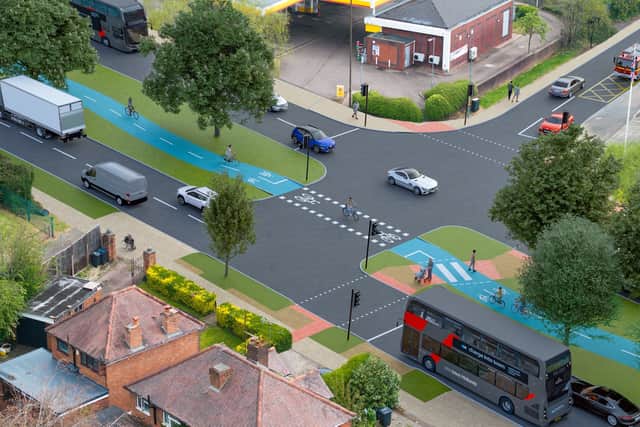
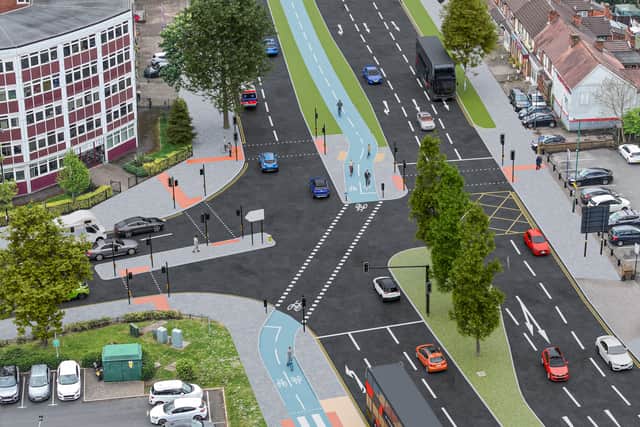
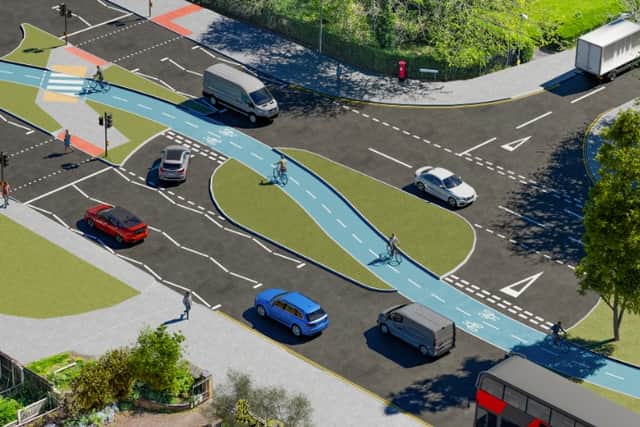
The city council wants to extend the current route on the A38 from Selly Oak to Longbridge through a £22.5m project, creating a ‘connected corridor’ for cyclists from the city centre.
The Labour-run council has claimed the new 6km stretch of cycle route will help cut dependency on cars and provide a safer environment for both pedestrians and cyclists.
Coun Roger Harmer, leader of the Liberal Democrats at the council, welcomed the proposals at Tuesday’s cabinet meeting amid the “standard of driving that sadly some drivers have in this city”.
But he continued he was worried that the transformation of the city’s roads to introduce cycle routes was not being done fast enough.
“We do need segregated bike routes, particularly on the main arterial routes,” Coun Harmer said. “But when [the project is completed], it’ll be nearly a decade after the first half of the A38 was done.
“That pace is a real concern because for people to get around the city safely on a bike, you need a basic network of these cycle ways – not just a couple of main roads.

“What is the plan to get to that point? At this pace of change, I’m very concerned it’s something I’ll never see and many others won’t either.”
Coun Majid Mahmood, the Labour cabinet member for transport, responded: “All construction projects do take quite a significant amount of time, especially if there’s a change in highway infrastructure because of legislation.
“We have to go for detailed consultations with the public.”
The cycle route plans have attracted support from residents, with 55 per cent of the 846 respondents in a public consultation saying they supported them.
Martin Price, co-chair of campaign group Better Streets for Birmingham, backed the project earlier this year and said that he was “incredibly pleased” to see the proposals being brought forward.
“This scheme, along with cross-city bus proposals, will enable many more reliable and safe journeys along the A38,” he said.
“This is in stark contrast to today’s provision where people walking have to share the pavement with cyclists, where cyclists are sometimes crammed into a corner of the lane, and where buses lack journey time reliability.”
Mr Price added that redesigning Brum’s streets was “one powerful way” the council could address the city’s road safety emergency.
“Transforming the city’s transport is fundamental to meeting the challenges of the next decade and beyond,” the council has said in a recently-published report.
It added that tackling the climate emergency “cannot be achieved without a wholesale shift towards public transport and active modes”.
Cabinet members at the council approved the project’s outline business case at today’s meeting.
It will be funded by a Department for Transport external grant (£14.5m) and local match funding (£8m), which will be made up of £4m from the Clean Air Zone and £4m from bus lane enforcement.
Comment Guidelines
Iconic Media encourages reader discussion on our stories. User feedback, insights and back-and-forth exchanges add a rich layer of context to reporting. Please review our Community Guidelines before commenting.