New proposals to ensure the safety of women and girls on the West Midlands public transport network have been unveiled.
A new strategy to keep women and girls in the West Midlands safe while they use public transport has been unveiled
West Midlands Safer Travel Partnership has launched a new three-year strategy to reduce crime and anti-social behaviour on the region’s public transport network and make sure people feel safer.
Key new initiatives include revising design standards for bus shelters, tram stops and bus stations to prioritise safety of women and girls travelling alone.
It includes making sure areas are well lit, promoting public help-points with video links to female control room staff, as well as more training for staff on the public transport network.
The Partnership will also harness the latest technology, including AI analysis, to help identify anti-social hotspots and trends to both detect and prevent issues.
Data shows women rely on public transport more than men, making 30 per cent more trips.
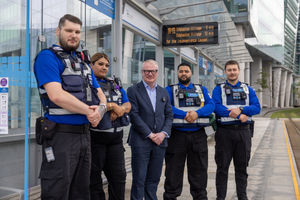
West Midlands Mayor Richard Parker went out on patrol with safety officers to see how people are kept safe on the network.
He said: “I want to make journeys easier, more affordable and crucially safer for everyone – especially women and girls.
“This new strategy shows exactly how we’re working with the police and our transport partners to make that a reality.”
“We know people can feel less safe at night, so we’re taking action to reassure them.
“That means looking at how we design stations, stops, and shelters and how we deploy our transport safety officers.
“While incidents of crime and anti-social behaviour are rare, we have a dedicated team working around the clock to keep people safe.”
Simon Foster, West Midlands Police and Crime Commissioner, added: “Making our public transport network, safer for women and girls is a top priority.
“By combining better design, new technology and dedicated officers, we are tackling crime and anti-social behaviour, while ensuring passengers feel safe and confident whenever they travel.”
A survey of public transport users found that there is a huge difference in perceptions of safety between travelling during daylight hours and at night.
People also felt trains were safer than trams or buses and waiting at bus stops was a leading concern.
Inspector Ivan Merc, police manager for the West Midlands Safer Travel Partnership, said: “The use of public transport remains an incredibly safe way to travel and alongside our flagship Project Empower, which encourages the reporting of unwanted sexual behaviour on the transport network, the release of the strategy will enable us to continue to work closely with our partners to make travel safe for all.”
And Superintendent Sue Peters, British Transport Police, said: “The West Midlands Safer Travel Partnership is vital in addressing violence against women and girls on public transport in the West Midlands.
“By bringing together key stakeholders and partners from the region to plan joint working to tackle this, we can make the transport network safer for everyone.
“BTP will not tolerate sexual harassment and sexual offences. Tackling violence and intimidation against women and girls is a key priority for the force.
“We take all reports of unwanted sexual behaviour seriously and would encourage the public and passengers to save our text number 61016, so they can discreetly report incidents to us.”