Revealed: Motorists in Black Country and Staffordshire cover almost 10 billion miles in a year
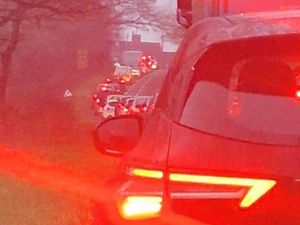
Drivers covered enough mileage on Black Country and Staffordshire roads last year to take them around the world hundreds of thousands of times, figures show.
But as road traffic rises, the walking and cycling charity Sustrans said the figures ‘call for urgent action’ to protect public health from pollution.
Newly released Department for Transport data shows cars, taxis, lorries and other road vehicles covered almost four billion miles across the Black Country last year, equating to about 163,400 times round the world.
And over in Staffordshire, vehicles covered 5.9 billion miles on the county’s roads in the same year, equalling about 238,000 trips around the equator.
Across Britain, the number of vehicles on the roads is more than 10 times higher than in 1949. They covered more than 300 billion miles in the last year alone.
Cars and taxis drove much of this increase, and account for four-fifths of road traffic today.
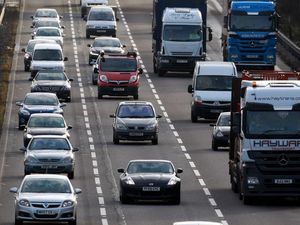
Rachel White, head of public affairs at Sustrans, said this over-reliance on cars is ‘damaging our health and our environment’, with current transport policies not doing enough to promote sustainable modes of transport.
Broken down into areas of the Black Country, the place where vehicles covered the most miles in 2018 was Sandwell, with 1.3 billion miles driven - the equivalent to about 53,500 trips around the equator.
In Dudley it was 1 billion miles, about 41,800 trips round the globe, and in Walsall it was 953 million miles, about 38,300 trips round.
The lowest was Wolverhampton, with 743 million miles covered in 2018 – about 29,800 trips round the world.
It’s a slight rise in most areas since figures released 10 years ago.
With more motors on the go, the Local Government Association warned congestion, rundown roads and air quality would be likely to worsen.
Backlog
The group’s transport spokesman, Martin Tett, also said greater government funding was needed to deal with a £9.3 billion road repair backlog.
He added: “If we’re to truly tackle air pollution, we need government support to enable us to deliver effective local plans, and robust national action to help the country transition to low-emission vehicles and power generation.”
The data showed that an average stretch of road in Wolverhampton sees 4,206 vehicles pass through it each day. In Dudley, it’s 4,455, Sandwell is 6,525, Walsall 4,809 and Staffordshire is 4,107.
All have seen a slight rise in the number of cars driving through compared to 2009, except for Dudley, with noted a three per cent drop.
According to the DfT, road vehicles make up a quarter of the UK’s carbon dioxide emissions, though improved fuel efficiency and growing sales of low-emission vehicles have seen CO2 pollution fall slightly since 2000, despite road miles rising.
A spokeswoman said the Government would invest more than £50 billion to reduce road congestion and potholes between 2015 and 2025, with further funds allocated for improving railways and public transport.
She added: “But we know we must reduce congestion while at the same time making our transport greener than ever, and our £1.5 billion Road to Zero strategy outlines a series of ambitious steps to encourage the transition to ultra-low emission vehicles.”