Council faces setback over divisive regeneration scheme for 'forgotten' Birmingham neighbourhood
Birmingham City Council has confirmed that it faces a huge setback for its controversial plans to regenerate Druids Heath.
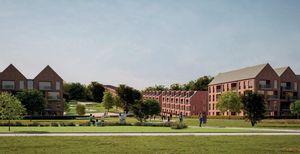
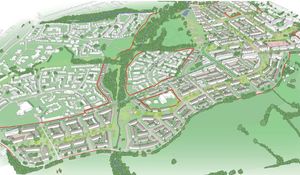
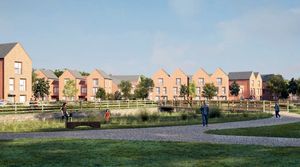
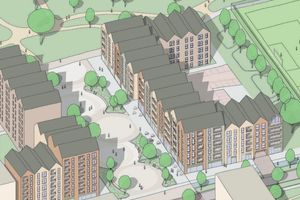
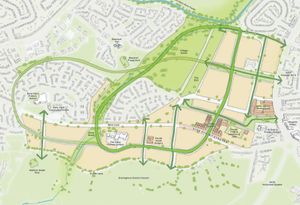
The massive scheme is set to transform the area and provide thousands of new homes, new infrastructure, transport links, improved green spaces and much more.
But there have also been recurring concerns over the potential impact on the community; the levels of demolition and fears existing residents will be priced out of the area.
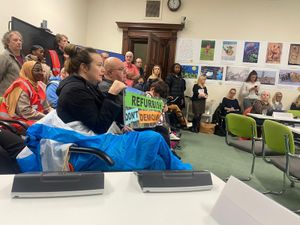
Tensions previously boiled over at a council meeting last October when the plans were narrowly approved by Birmingham’s planning committee.
Amid this uneasiness, residents in the area threatened a legal challenge towards the end of last year, calling on the council to overturn its decision to grant outline planning permission.
Central England Law Centre, representing Druids Heath local Alison Parr, has argued that the council failed to disclose the full Financial Viability Assessment.
This assessment was used to justify why the planning application only details around 11 percent affordable housing (400 out of 3,500 homes), despite the council saying it would deliver 51 per cent.
The Labour-run council continues to insist that it is committed to making just over half of future homes “affordable”.
However, in a moment which could spark delays for the project, it today confirmed that it has requested the court quash the original planning decision following a legal challenge from “a small number of residents”.
It also admitted that this challenge could cause delays as the scheme potentially goes through the planning process once again.
“Should the planning application be quashed, the basis of the challenge will be addressed by making the Financial Viability Assessment for the scheme public,” a council spokesperson told the Local Democracy Reporting Service.
“We know the community is keen to see regeneration plans move forward, and we regret the delays that this challenge causes, particularly the demolition of cleared tower blocks, which cannot be achieved without planning consent.”
They continued that the Financial Viability Assessment contained commercially sensitive information that could not be released while the council were in a procurement process to identify their preferred partner.
The council spokesperson said this meant that it was not available to the planning committee when they made their original decision.
“The legal challenge sought to gain eight concessions from Birmingham City Council,” they went on to say. “Only one was accepted.
“For over two years, the council has worked with the community to create a plan for the regeneration of Druids Heath, holding discussions with more than 1,000 residents, of which 68 per cent support the scheme.
“The council’s commitment to delivery remains.
“The council will progress the scheme through the planning process as soon as feasibly possible dependent on the court’s decision, honouring its commitments to residents.”
They added: “The outcome of the legal challenge makes no change to the affordable housing proposed.
“Birmingham City Council and Lovell remain committed to delivering 51 per cent affordable housing on this scheme and will re-provide new homes for existing tenants.
“This forms part of the partnership agreement between the council and Lovell.”
‘This community deserves transparency’
Following the revelation that the council had requested to quash the planning application, CEO of Central England Law Centre Elayne Hill said: “This case demonstrates why transparency matters.
“Where key information is withheld, communities are denied the opportunity to understand and scrutinise what is being proposed properly.”
Alison Parr, Druids Heath resident, said: “I am happy that the Council has admitted it needs to be more open with me and everyone in Druids Heath, by offering to withdraw the planning decision.
“This community deserves transparency and to know what will happen to our homes, so that we can plan our lives instead of feeling in limbo.”
The council has previously acknowledged that homeowners are “particularly concerned” about being priced out of the area.
“In response, the council has committed to delivering a shared equity scheme to prevent this from happening,” a spokesperson for the local authority said.
“It is already running an early acquisitions programme for residents who do want to leave the estate, of which 22 residents have decided to within the last 12 months.”
October’s planning meeting also heard that the levels of demolition were necessary as “most homes in Druids Heath require millions of pounds in investment to bring them up to only minimum standards”.