Four Birmingham attractions set to evolve under huge developments over the coming years - here's what's changing
Birmingham is a place that is constantly evolving, with huge developments taking shape across the city all the time.
Amid this constant change, a number of Brum’s most iconic sights are set to be transformed in the coming years.
Sports venues such as Villa Park and Edgbaston Stadium will be changed forever as massive schemes get under way in a bid to attract social and economic benefits to the city.
Elsewhere, the historic Jewellery Quarter has seen a major development in the heart of the neighbourhood given the green light by council planners.
Other plans for the planned transformation of Birmingham Botanical Gardens, which could ensure the future of the attraction, were also approved in 2025.
Here’s a look in detail at how the above four attractions, some of Birmingham’s most well-known, could change in the years to come.
1) Villa Park
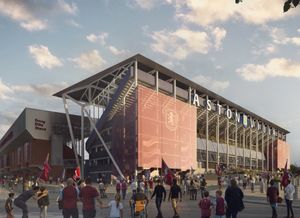
Major proposals to extend Villa Park’s North Stand were officially approved by council planners in 2025.
Aston Villa was previously seeking permission to add nearly 6,000 seats to the stand, taking the stadium’s capacity to almost 49,000.
Along with the new club shop and The Warehouse venue, the expansion of the stand is set to “modernise” the stadium’s surroundings and complete the transformation of the wider northern precinct.

A council report said the North Stand plans would complete a vision “that ensures Villa Park is not only a top-tier football stadium but also a year-round destination for fans and the local community”.
The expansion of the stand is also required due to Birmingham being named as a host city for Euro 2028.
“There is an ambition for Villa Park (as a host stadium) to reach a spectator capacity of over 50,000 for this tournament,” the report said. “This planning application is key to this being achieved.
2) Edgbaston Stadium
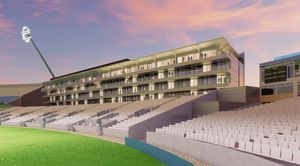
Plans for a new hotel and stand at Edgbaston Stadium, one of Birmingham’s most iconic sports venues, were also approved this year despite the design splitting opinion.
The development will see the current Priory and Raglan Stands at Edgbaston Stadium replaced with a new 3,191-seat facility and a 146-bed hotel.
The hotel is set to boast views over the outfield as well as a coffee shop and restaurant/bar, which would be open to the public on non-matchdays.
The plans were previously described as part of a larger redevelopment of the cricket ground, which aims to create a destination combining “elite sport, conferencing and events” with community use.
The proposal’s design was met with a mixed response during a planning committee meeting however, with Coun Martin Brooks describing it as “not particularly good”.
Planning chair Lee Marsham responded: “As with all things with design, beauty is in the eye of the beholder.”
Following the committee’s decision to approve the plans, Edgbaston strategy director Craig Flindall said they were grateful to the city council for sharing their vision “to bring increased economic and social benefits to the region through international sport”.
3) Birmingham Botanical Gardens
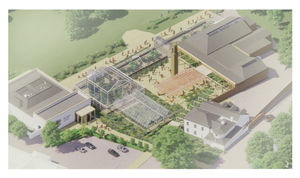
The planned transformation of Birmingham Botanical Gardens took a crucial step forward after it secured millions in funding this year.
The restoration project is set to provide “urgently needed” repairs at the attraction, which boasts more than 10,000 plants across its 15-acre site.
Those behind the plans, which were approved in 2025, have said they will restore the Gardens’ historic glasshouses, enhance visitor amenities and improve sustainability.
In July, it was confirmed that the gardens had been awarded around £9m from The National Lottery Heritage Fund towards its restoration.
“This vital and timely funding made possible by National Lottery players will ensure that urgently needed repairs and restorations are carried out to secure the future of this treasured historic site,” the attraction said in a statement.
“Without intervention, the Victorian glasshouses, identified as at risk by Historic England, would have faced closure within two years.
4) Jewellery Quarter
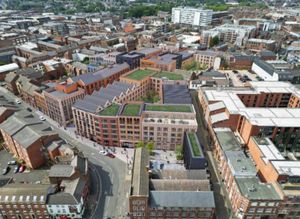
Major plans for a new development in the heart of Birmingham’s historic Jewellery Quarter were given the green light last summer.
Those behind the project now have permission to build 422 apartments across four blocks, along with residential courtyards and commercial floorspace.
A council officer’s report said the proposed development, to be built on land close to Newhall Street and St Paul’s Square, could provide “new and meaningful connections within the Jewellery Quarter”.
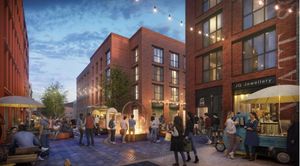
It continued that the commercial floorspace will support the “economic vitality” of the area by providing space for creative, local businesses.
“The scheme would also contribute towards the city’s ongoing need for new housing by providing high density, high quality one, two and three-bed apartments,” the report went on to say.
“The proposed development presents an opportunity to unlock this otherwise unviable site for redevelopment.”